How to Merge PDF Files: The Ultimate Step-by-Step Guide
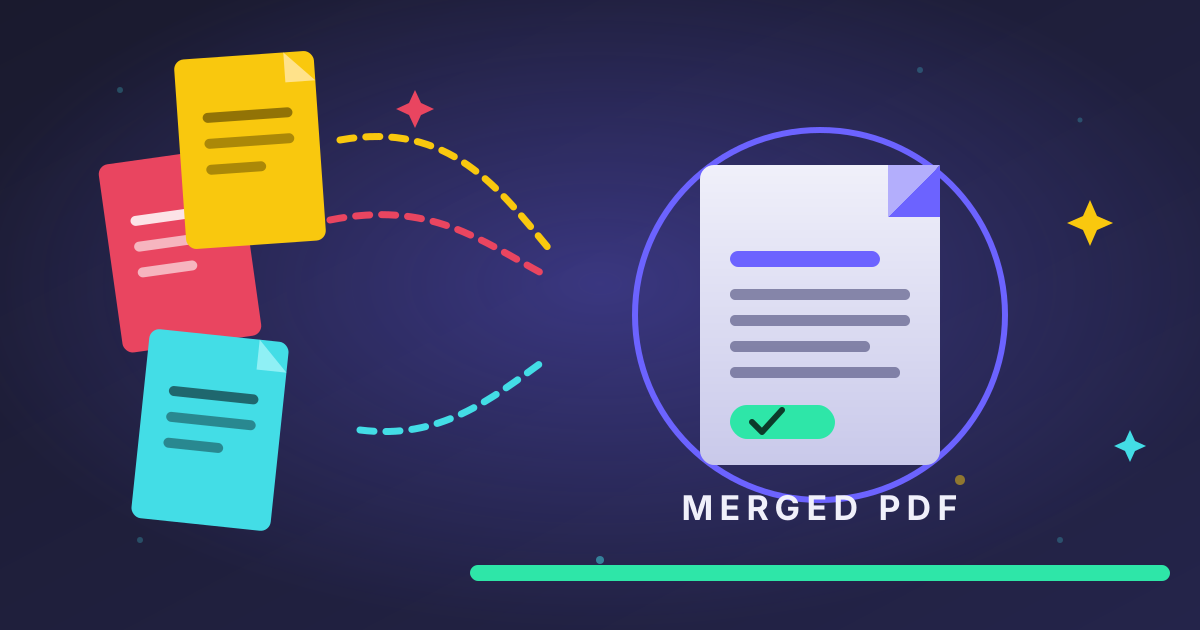
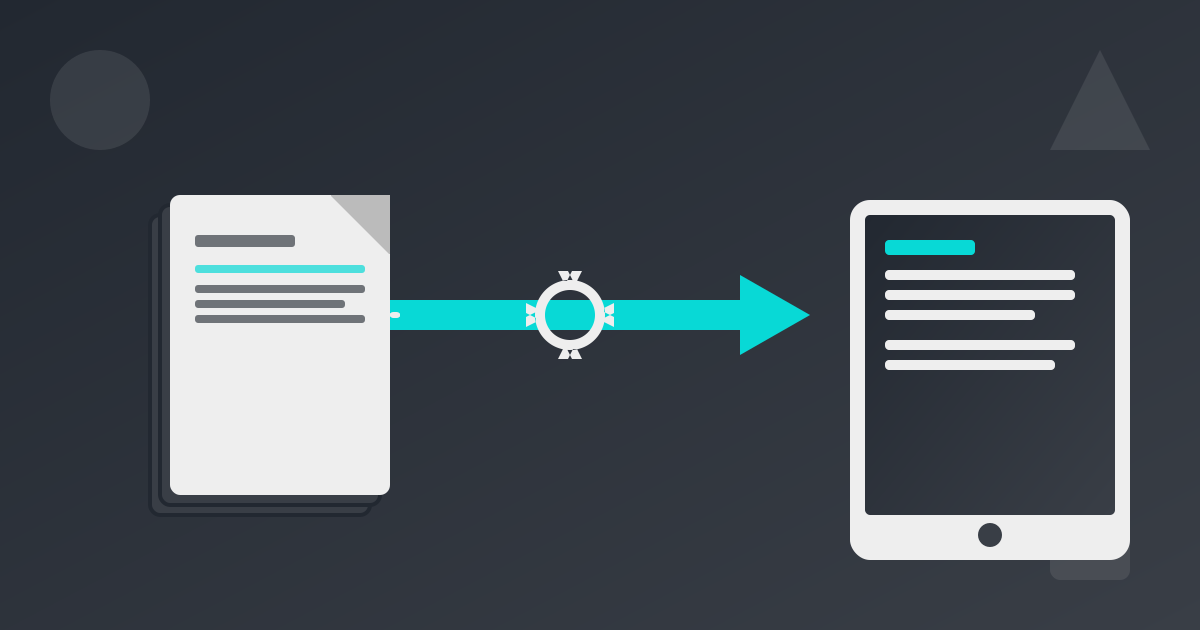
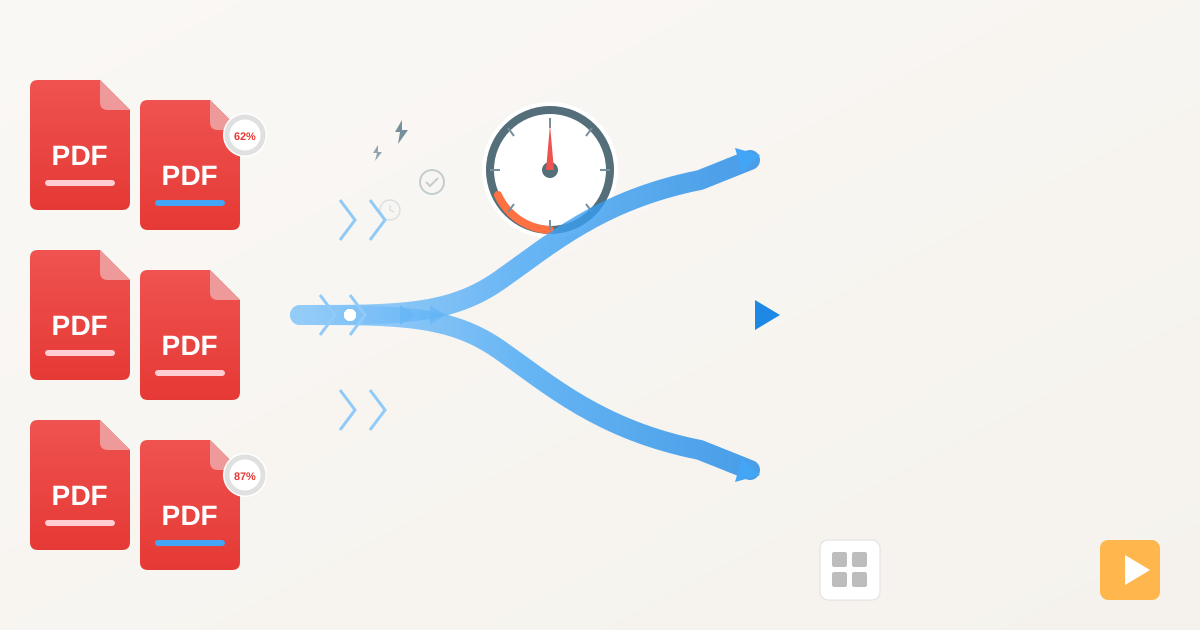
Are you drowning in a sea of separate PDF files? A project report scattered across a dozen documents, an application with multiple attachments, or a collection of scanned receipts that you need to submit as a single file? Juggling individual PDFs is not only frustrating but also inefficient. It complicates sharing, printing, and organization. Fortunately, there's a simple and powerful solution: merging them into a single, cohesive document.
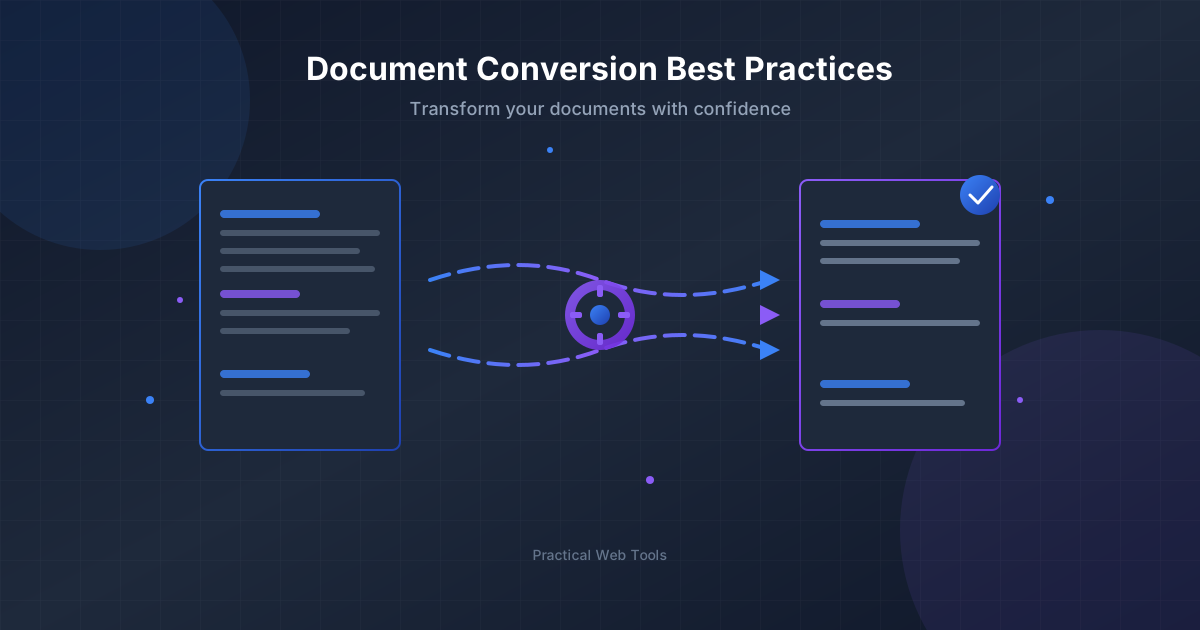
This comprehensive guide will walk you through everything you need to know about combining PDF files. We'll cover the significant benefits of merging, provide step-by-step instructions for various methods—including free online tools and built-in desktop software—and share best practices to streamline your workflow. By the end, you'll be able to consolidate your documents with confidence, saving time and eliminating digital clutter.
Why Merge PDF Files? The Benefits of a Single Document
Before diving into the 'how,' let's explore the 'why.' Combining multiple PDFs into one isn't just a neat trick; it's a fundamental step towards better document management and productivity. Here are the key advantages:
Improved Organization and Document Management
Imagine your project folder. Instead of seeing report_part1.pdf, report_charts.pdf, report_appendix_A.pdf, and report_final_v2.pdf, you just have Complete_Project_Report.pdf. A single, consolidated file is infinitely easier to track, name, and file. It creates a clutter-free digital workspace, allowing you to find what you need without hunting through multiple documents.
Simplified Sharing and Collaboration
Sending an email with ten separate PDF attachments is a recipe for confusion. The recipient might open them in the wrong order, miss one entirely, or be overwhelmed by the sheer number of files. By merging them first, you can send a single, professional-looking attachment. This ensures your information is viewed in the intended sequence and makes the experience much smoother for your collaborators, clients, or colleagues.
Streamlined Printing and Archiving
Printing multiple files one by one is a tedious process. You have to open each file, send it to the printer, and then manually collate the pages. A merged PDF allows you to print the entire document in one go, with all pages already in the correct order. The same principle applies to long-term digital archiving. Storing one comprehensive file is safer and more efficient than managing a collection of disparate parts that could get separated or lost over time.
Enhanced Presentation and Professionalism
Whether you're submitting a business proposal, a portfolio, or an academic paper, presentation matters. A single, well-ordered document appears more polished and professional than a collection of separate files. It shows that you've taken the time to organize your content thoughtfully, making it easier for the reader to digest.
How to Merge PDF Files: The Easiest Method
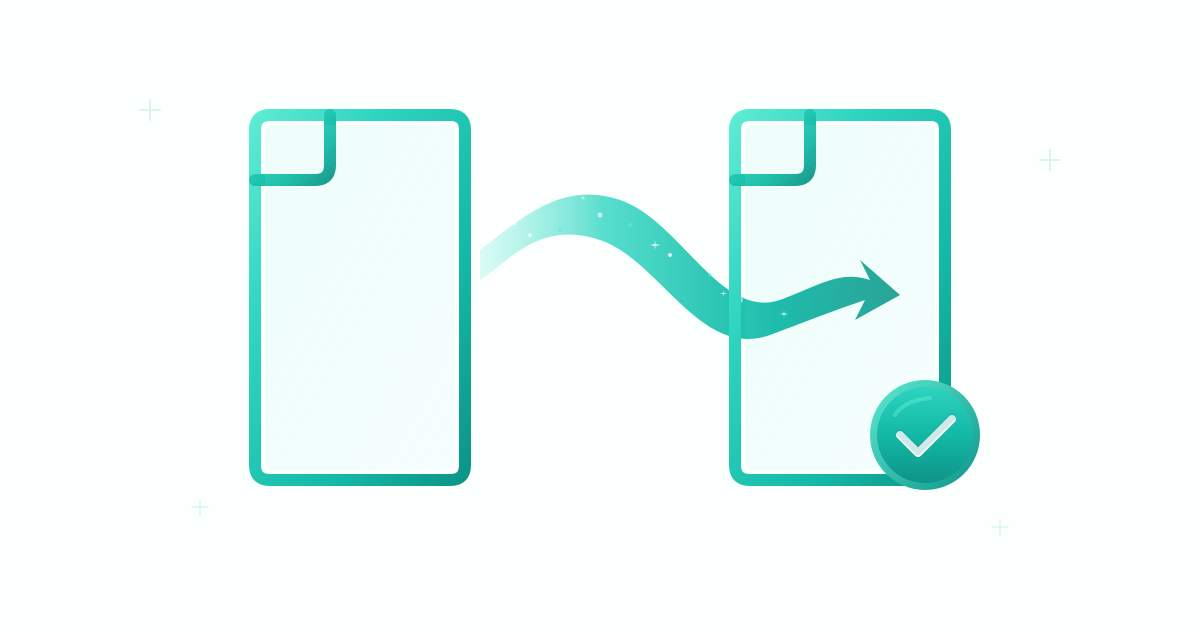
The quickest and most accessible way to combine PDF files is by using a free, browser-based tool. You don't need to install any software, and you can do it from any computer or mobile device with an internet connection.
Step-by-Step Guide to Using the Practical Web Tools PDF Merger
Our Merge PDFs tool is designed to be fast, secure, and incredibly user-friendly. Here’s how to combine your files in under a minute:
Step 1: Navigate to the Merge PDF Tool Open your web browser and go to the Practical Web Tools Merge PDFs page.
Step 2: Upload Your PDF Files You can add your files in two simple ways:
- Drag and Drop: Simply drag your PDF files from your computer and drop them into the upload box on the page.
- Select Files: Click the "Choose Files" button to open your file explorer and select all the PDFs you want to merge. You can select multiple files at once by holding down the Ctrl key (or Cmd on Mac) while clicking.
Step 3: Arrange Your Files in the Correct Order Once uploaded, you'll see a preview of each file. This is your chance to set the correct sequence. Simply click and drag the file previews to reorder them. The file on the far left will be the first part of your new document, followed by the next one to its right, and so on. This visual interface makes it easy to ensure your final document flows correctly.
Step 4: Merge and Download After you've arranged your files in the desired order, click the "Merge" button. Our tool will process the files instantly and combine them into a single PDF. A download link for your new, merged document will appear. Click it to save the file to your device.
That's it! Our tool prioritizes your privacy; all uploaded files are automatically deleted from our servers after a short period, ensuring your data remains secure.
Alternative Methods: Merging PDFs on Your Desktop
While online tools are convenient, you might prefer an offline solution, especially if you work with sensitive documents or don't have a stable internet connection. Both Windows and macOS offer ways to merge PDFs without needing to visit a website.
Merging PDFs on macOS (The Easy, Built-in Way)
Mac users are in luck, as macOS comes with powerful, built-in PDF manipulation tools that make merging a breeze.
Method 1: Using the Preview App
- Open the First PDF: Double-click on the first PDF file in your desired sequence. It will open in the Preview app by default.
- Show Thumbnails: Go to the "View" menu and select "Thumbnails" to open the sidebar showing a preview of each page.
- Drag and Drop: Open a Finder window with your other PDFs. Drag the additional PDF files directly into the thumbnail sidebar in Preview. A line will appear showing where the new pages will be inserted.
- Reorder Pages (Optional): You can now drag individual page thumbnails within the sidebar to fine-tune the order.
- Save the Merged File: Go to "File" > "Export as PDF..." (or "Save As..." on older versions) and give your newly merged document a name. Using "Export as PDF" ensures all changes are flattened into a new file.
Method 2: Using the Finder
This is an even faster method for Mac users:
- Select Your Files: In a Finder window, select all the PDF files you want to combine.
- Right-Click: Right-click on the selected files.
- Choose Quick Actions: In the context menu, hover over "Quick Actions" and then select "Create PDF."
- Done: macOS will instantly create a new, merged PDF file in the same folder. The files will be combined in alphabetical order based on their filenames, so be sure to name them accordingly (e.g.,
01_Cover.pdf,02_Body.pdf) before you start.
Merging PDFs on Windows
Windows doesn't have a direct, built-in tool as intuitive as macOS's Preview, but you still have excellent options.
Using Adobe Acrobat Pro DC
If you have a subscription to Adobe Acrobat Pro, you have access to the most powerful PDF editor available.
- Open Adobe Acrobat Pro.
- Go to the "Tools" tab and select "Combine Files."
- Click "Add Files" to select your PDFs, or simply drag and drop them into the window.
- Arrange the files by dragging them into the correct order.
- Click the "Combine" button in the top-right corner.
- Save your newly created merged PDF.
This is a premium, paid solution, but it offers the most control and features.
Using Free Third-Party Software
For users who want a free offline solution on Windows, several third-party applications are available. Tools like PDFsam Basic are popular choices. They are dedicated desktop programs that you install on your computer. While powerful, be cautious during installation to avoid any bundled adware or unwanted software.
Common PDF Merging Scenarios and Solutions (FAQ)
Here are answers to some frequently asked questions about merging PDFs, helping you tackle specific challenges.
How do I merge PDF files while maintaining the original quality?
Most reputable PDF merger tools, including our online tool and native desktop apps like Preview, are non-destructive. They combine the files without re-compressing images or text, so the quality of your original documents is fully preserved. The final file size will simply be the sum of the individual file sizes.
Can I merge password-protected PDF files?
Generally, no. If a PDF is protected with a password that restricts editing or printing, you will need to enter the password to unlock it before you can merge it with other documents. You must have the authority and the password to modify the file.
What if I only need a few pages from one PDF?
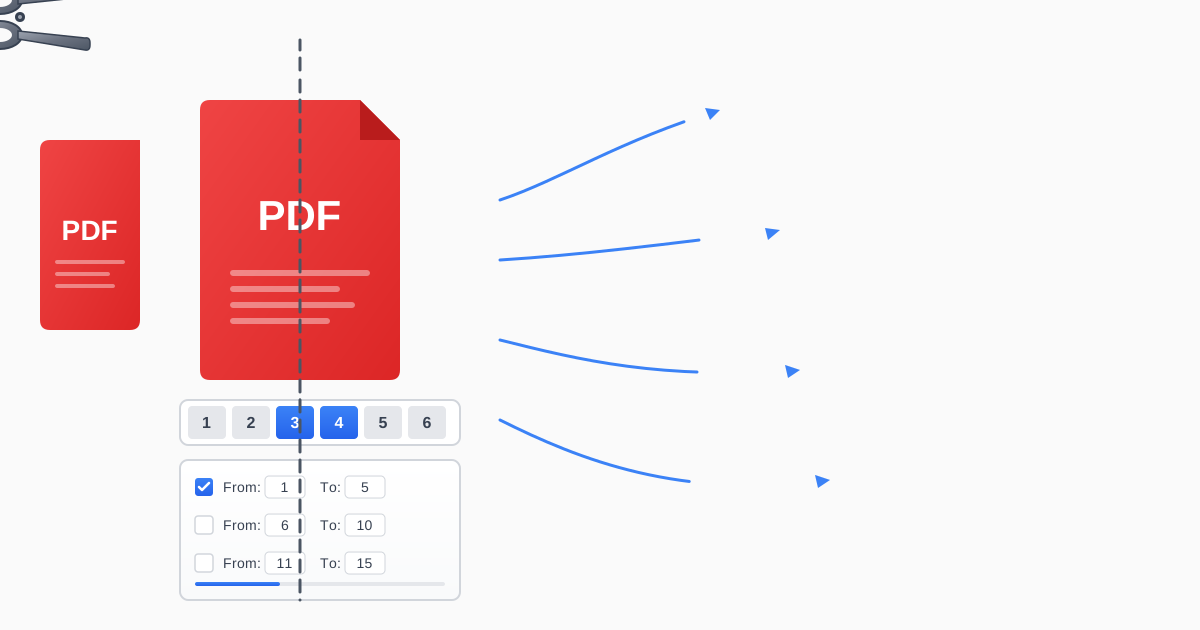
This is a very common scenario. You have a 100-page report but only need to include pages 10-15 in your final merged document. The best workflow is to first extract the pages you need and then merge the resulting smaller file. You can do this with our free Split PDF tool, which lets you easily select and save specific page ranges from any PDF.
What if my files are in different formats, like Word and Excel?
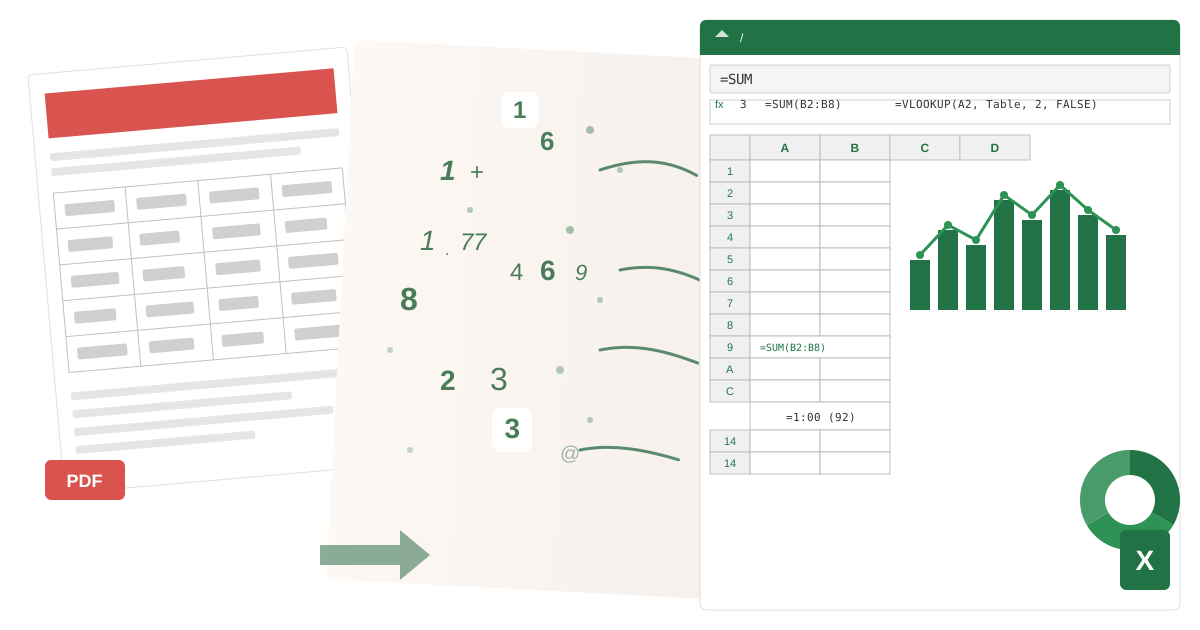
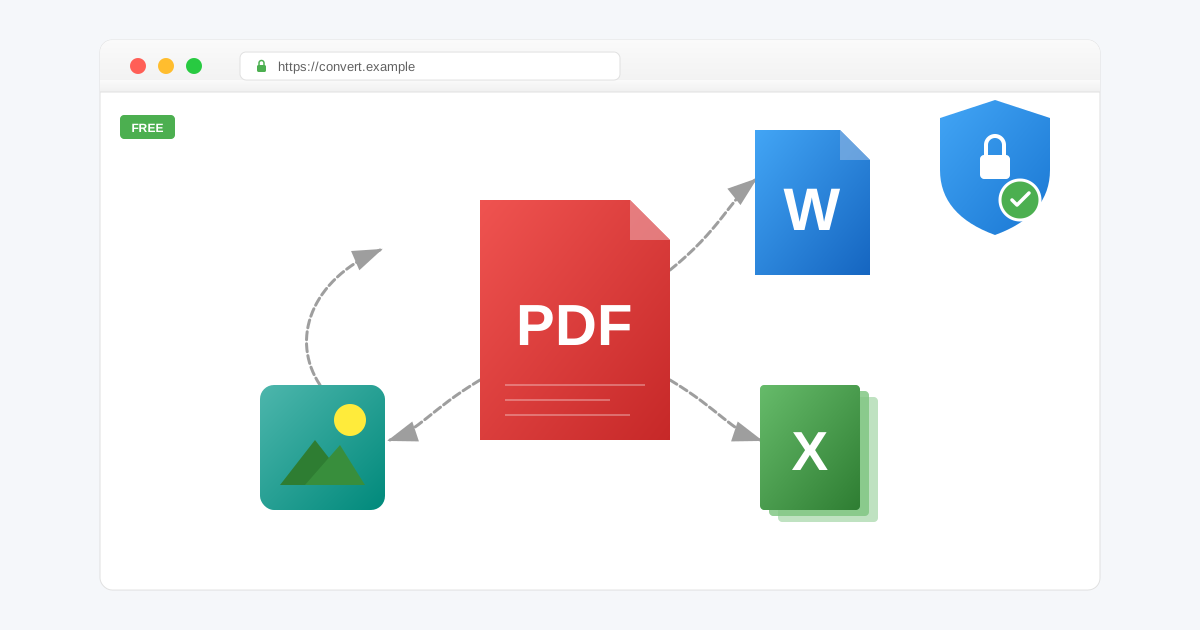
To merge different file types (e.g., a Word document, an Excel spreadsheet, and an image) into a single PDF, you must first convert each file to the PDF format. Once every component is a PDF, you can use a merger tool to combine them into a single, cohesive package. This process ensures consistent formatting across all sections of your final document. After merging, if you ever need to extract the data back into its original format, tools like our PDF to Excel converter can be incredibly useful for pulling tables and data back out.
Best Practices for a Smooth Merging Process
Following a few simple tips can make the merging process even more efficient and error-free.
- Name Your Files Clearly: Before you start, rename your files to reflect their order (e.g.,
01_CoverPage.pdf,02_TableOfContents.pdf,03_Chapter1.pdf). This makes arranging them much easier, especially when using macOS Finder's automatic merge feature. - Double-Check the File Order: Always take a moment to review the sequence of your files in the merger tool's preview window before clicking the final button. It's much easier to fix the order at this stage than to split and re-merge the document later.
- Review the Final Document: After you download your merged PDF, give it a quick scroll-through from beginning to end. Check that all pages are present, in the correct order, and that the formatting looks as expected.
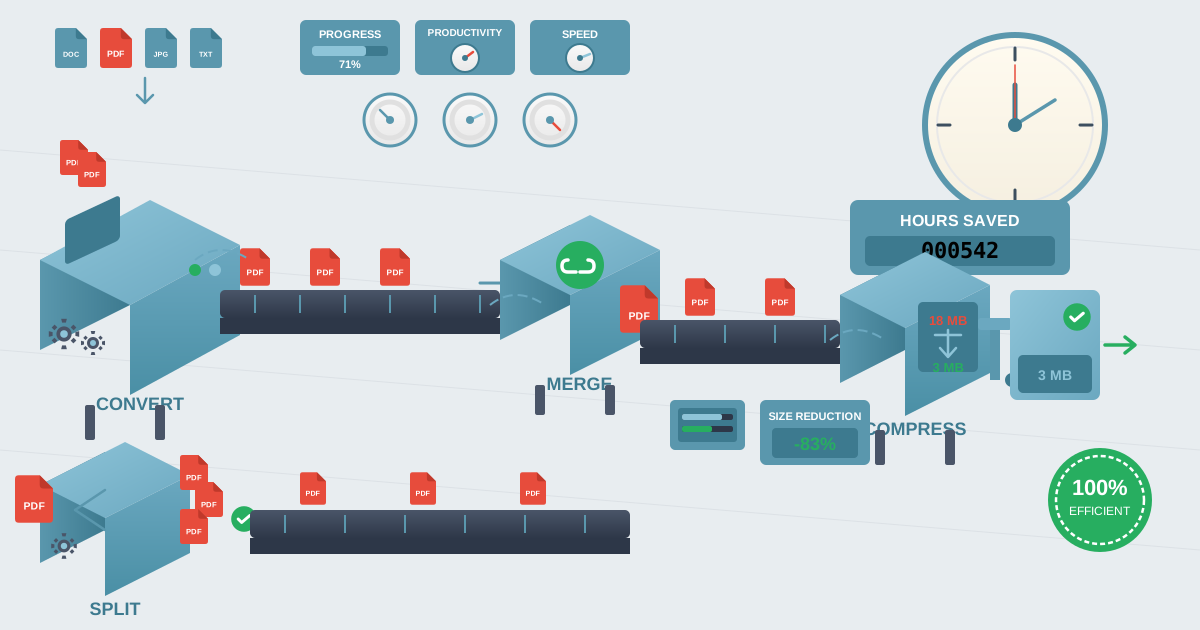
- Consider the Final File Size: If you're merging many large, high-resolution PDFs, the final file size can become quite large, which may be an issue for emailing. If this happens, you may need to use a PDF compression tool to reduce its size without significantly impacting quality.
Conclusion: Your Go-To Solution for Combining PDFs
Merging PDF files is a fundamental digital skill that transforms scattered documents into organized, professional, and easy-to-manage files. Whether you prefer the universal accessibility of an online tool or the offline power of a desktop application, there is a solution that fits your needs.
For a fast, free, and secure way to combine your documents without any software installation, the Practical Web Tools suite has you covered. You can consolidate your reports, applications, and projects in just a few clicks, from anywhere, on any device.
Ready to organize your documents and simplify your workflow? Try our free Merge PDFs tool today and combine your files in seconds!