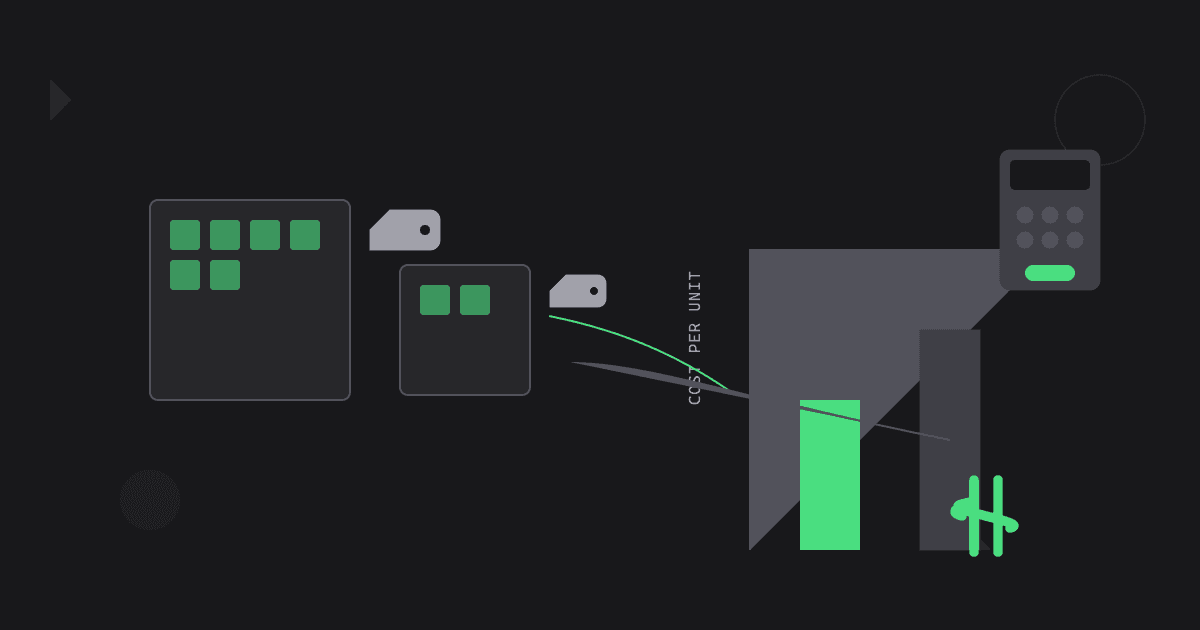
You’re standing in the grocery store aisle, faced with a classic dilemma. On the left is the standard 16-ounce bottle of ketchup for $3.29. On the right, the giant 32-ounce "family size" for $5.99. The bigger one must be the better deal, right? It's a common assumption—one that retailers often rely on.
But what if the smaller bottle was on an unadvertised special? What if the math just doesn't add up? This moment of confusion is where most shoppers either make a guess or just grab what they usually buy. But the savviest shoppers know the secret: a simple calculation called price per unit.
Try Price Per Unit Calculator: free, no sign-up.
Understanding and using this metric is one of the most powerful and immediate ways to cut down your shopping bill, whether you're buying groceries, hardware, or even digital subscriptions. This comprehensive guide will transform you from a hopeful guesser into a confident, data-driven consumer who always knows which size is actually cheaper.
What Is Price Per Unit and Why Does It Matter?
Price per unit is a measurement that tells you the cost of a product for a standardized amount or unit. It cuts through the confusion of different package sizes, brands, and promotions to give you a single, comparable number: the cost per ounce, per pound, per gram, or per item.
The formula is beautifully simple:
Total Price ÷ Total Quantity = Price Per Unit
For example, let's look at our ketchup dilemma:
- Bottle 1: $3.29 ÷ 16 ounces = $0.205 per ounce
- Bottle 2 (Family Size): $5.99 ÷ 32 ounces = $0.187 per ounce
In this case, the family size is indeed cheaper per ounce. But it's not always this straightforward. Mastering this calculation matters because it empowers you to:
- Make Informed Decisions: Stop relying on marketing cues like "Value Size" and start relying on hard data.
- Maximize Your Budget: Consistently choosing the item with the lower unit price can lead to hundreds, if not thousands, of dollars in savings each year.
- Identify True Sales: Easily spot whether a "2 for $5" deal is actually better than buying a single, larger item.
- Compare Across Brands: Objectively compare the cost-effectiveness of a store brand versus a name brand, stripping away the packaging and marketing.
The "Bigger is Better" Myth: When Bulk Buying Backfires
The assumption that buying in bulk is always cheaper is a persistent myth. While often true, there are numerous scenarios where the larger package costs you more per unit. Retailers are aware of this bias and can use it to their advantage.
Here are common reasons why the smaller size might be the better deal:
- Promotional Pricing: The most frequent culprit. A smaller item might be on sale, making its unit price temporarily lower than the everyday price of its bulk counterpart.
- Loss Leaders: Stores sometimes deeply discount popular, smaller-sized items to attract customers, hoping they'll buy other, full-priced products while they're there.
- Tiered Product Lines: A brand might price its "gourmet" or "artisan" line (often in smaller packages) differently from its standard line, but a sale can flip the value proposition.
- Simple Mispricing: Sometimes, it's just a matter of pricing strategy. The store might have a higher margin on the bulk item because they know consumers assume it's a better value.
A Real-World Example: Coffee Beans
Let's compare two bags of coffee from the same brand sitting side-by-side on the shelf.
| Item | Total Price | Package Size | Price Per Unit (Ounce) |
|---|---|---|---|
| Bag A (Standard) | $8.99 | 12 ounces | $0.749 |
| Bag B (Value Size) | $19.99 | 24 ounces | $0.833 |
As you can see, the "Value Size" bag costs over 8 cents more per ounce! A shopper who blindly grabbed the bigger bag would have paid more for their coffee without realizing it.
How to Calculate Price Per Unit Manually (Step-by-Step)
While many stores provide unit pricing on shelf tags, they can sometimes be inconsistent, hard to read, or use different units (e.g., comparing price per ounce to price per 100 grams). Knowing how to do the math yourself is a crucial skill. All you need is your phone's calculator.
Here’s how to do it in five simple steps:
Step 1: Find the Total Price This is the sticker price of the item. If there's a "buy one, get one" deal, make sure you're calculating based on the effective price per item.
Step 2: Find the Total Quantity Look for the net weight or volume on the package. This could be in ounces (oz), fluid ounces (fl oz), pounds (lb), grams (g), liters (L), or a simple count (e.g., 100-count vitamins).
Step 3: Ensure Consistent Units This is the most critical step. You cannot compare apples to oranges. If one product is priced in ounces and another in pounds, you must convert them to the same unit. Remember: 1 pound = 16 ounces.
Step 4: Perform the Calculation
Divide the total price by the total quantity.
Price ÷ Quantity = Unit Price
Step 5: Compare the Results The item with the lower unit price is the better value, financially speaking.
Beyond the Supermarket: Where Unit Pricing Saves You Money
The power of unit pricing extends far beyond the grocery aisle. Applying this mindset to all your purchases can unlock significant savings.
- Hardware Stores: When buying rope, wire, or lumber, compare the price per foot or per meter.
- Subscriptions: Compare an annual subscription to a monthly one. Divide the annual price by 12 to get the monthly unit price and see the savings.
- Gasoline: This is so common we don't even think about it. The price per gallon/liter is a classic example of unit pricing.
- Real Estate: A fundamental metric for property is the price per square foot. While not the only factor, it provides a crucial baseline for comparison. Just as a savvy investor uses this baseline before diving deeper into a property's true potential with a House Hacking Calculator, you should use unit pricing as your first step in any purchasing decision.
Advanced Unit Pricing Strategies for Maximum Savings
Once you've mastered the basic calculation, you can layer on more advanced strategies to become a true shopping expert.
Factor in Spoilage and Consumption
That 5-pound bag of salad greens with a fantastic unit price is no bargain if you throw half of it away. Be realistic about how much you can consume before the product expires. Sometimes, paying a slightly higher unit price for a smaller quantity is cheaper in the long run if it means zero waste.
Consider Storage Space
Buying 100 rolls of paper towels might offer the best unit price, but do you have the space to store them? Your living space has value, and clutter has a cost. Factor in the "cost" of storage when considering extreme bulk purchases.
Combine Unit Pricing with Sales Cycles and Coupons
A product's unit price isn't static. By tracking prices, you can learn the sales cycle for your favorite items. The goal is to wait for the item with the inherently lower unit price to go on sale, maximizing your savings. Add coupons on top of that, and you're achieving peak value.
Quantify the Brand vs. Generic Choice
Unit pricing provides an objective way to measure the "brand tax." You might find that the name-brand pasta costs $0.12 per ounce, while the store brand is $0.07 per ounce. For a family that eats a lot of pasta, this 5-cent difference per ounce adds up to significant savings over a year. You can then decide if the perceived quality difference is worth the premium.
Optimizing these small, consistent expenses is a cornerstone of building long-term wealth. For freelancers and small business owners, this mindset is especially crucial. Optimizing every expense, from office supplies (calculated by unit price!) to software subscriptions, directly impacts your bottom line. Managing these savings effectively is just as important as accurately calculating your financial obligations with a tool like a Self-Employment Tax Calculator to ensure your business thrives.
Common Pitfalls and How to Avoid Them
As you become a unit pricing pro, watch out for these common traps:
- Inconsistent Units on Shelf Tags: A store might list one item's unit price per ounce and a similar item's price per pound. This is often done to make comparisons difficult. Always default to your own calculation using a consistent unit.
- Shrinkflation: Your favorite bag of chips might still be the same price, but the manufacturer may have reduced the net weight from 10 ounces to 8.5 ounces. This is a hidden price increase that only unit price calculation will reveal.
- Ignoring Quality: The cheapest toilet paper per sheet isn't a good deal if you have to use three times as much. Quality is a valid factor. Use unit price as your baseline, then layer your personal quality assessment on top.
- Forgetting Your Actual Needs: Don't let a great unit price entice you to buy something you won't use. The cheapest item is the one you don't buy unnecessarily.
These consistent, small savings from smart shopping can have a massive impact on your long-term financial health. It’s the same powerful principle of incremental gains that fuels goals like financial independence. It might seem like a long road, but every dollar saved is a dollar that can be invested towards your future, a journey you can start to map out with our Coast FIRE Calculator.
Conclusion: Shop Smarter, Not Harder
In the battle for your dollars, knowledge is your greatest weapon. The price per unit calculation is the key to cutting through marketing noise and making genuinely informed financial decisions every time you shop.
Stop guessing and start calculating. The next time you're faced with a wall of different sizes, take the extra 30 seconds to pull out your phone, do the simple math, and know for certain you're getting the best deal. Your budget will thank you.
Ready to take control of more of your financial life? Explore our suite of free, privacy-focused finance tools at Practical Web Tools and empower yourself to make smarter decisions with your money today.