DFS Lineup Optimizer: Build Winning Daily Fantasy Lineups (2026)
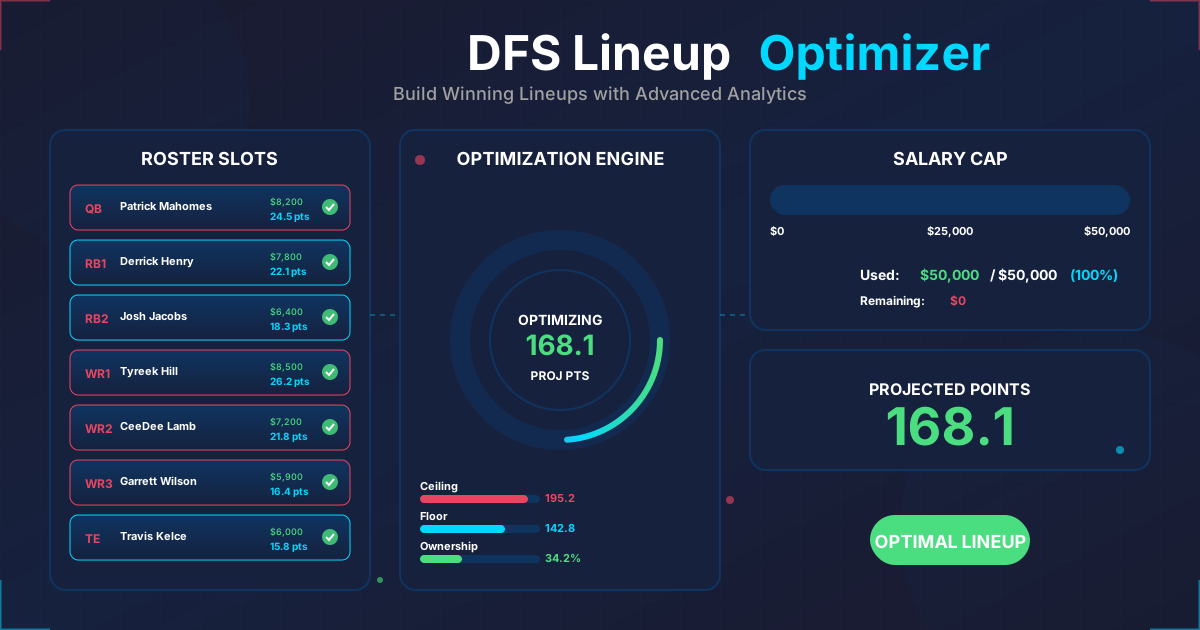
DFS Lineup Optimizer: Maximize Your Fantasy Points
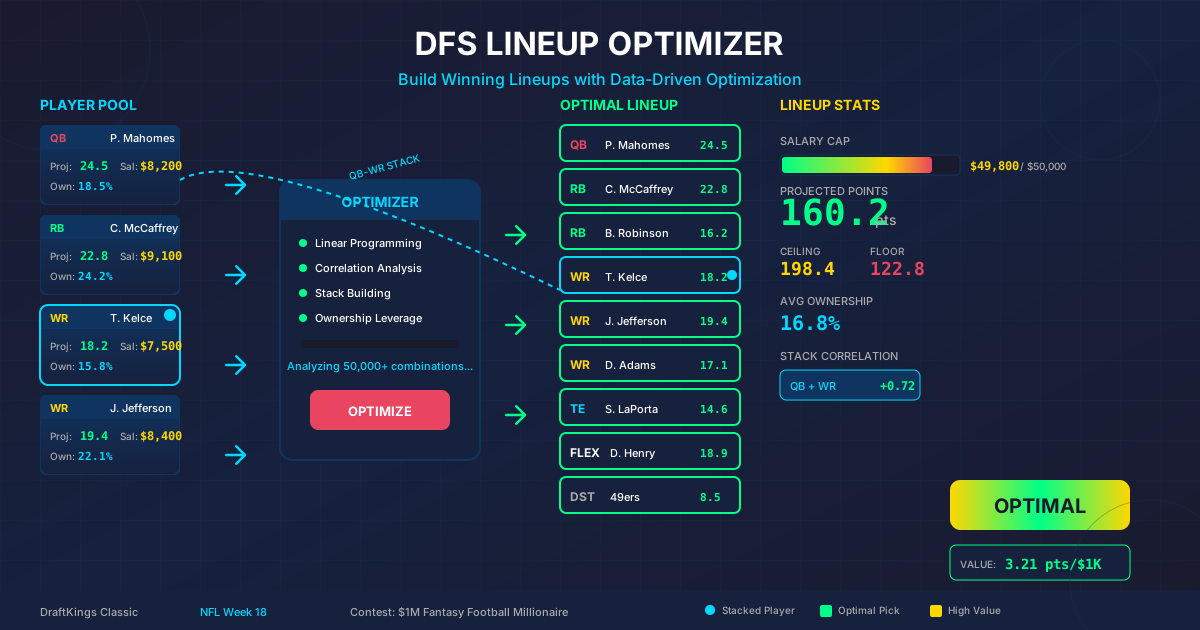
Building optimal DFS lineups means balancing projected points against salary constraints. Our free optimizer helps you construct mathematically sound lineups that maximize expected output within your budget.
What Is DFS Lineup Optimization?
DFS optimization uses algorithms to find the best combination of players that fits within the salary cap while maximizing projected fantasy points. Instead of manually testing combinations, optimization finds the mathematical best.
Quick Answer: Given projections and salaries, an optimizer solves: "Which combination of players maximizes total points without exceeding the salary cap?" A $50,000 salary cap with 8 roster spots has millions of possible lineups—optimization finds the best ones in seconds.
How to Use Our Free DFS Optimizer
Use the DFS Lineup Optimizer →
Input your projections and constraints to generate optimal lineups.
Step-by-Step Instructions
-
Select Contest Type: GPP (tournament) or cash game
-
Import Player Pool: Add salaries and projections
-
Set Constraints: Lock/exclude players, stack rules
-
Generate Lineups: View optimized rosters
-
Export: Download lineups for your platform
Input Fields Explained
| Field | Description | Example |
|---|---|---|
| Platform | DraftKings or FanDuel | DraftKings |
| Sport | NFL, NBA, MLB, etc. | NFL |
| Salary Cap | Maximum spend | $50,000 |
| Projections | Expected points | 18.5 |
| Ownership % | Expected ownership | 25% |
The Optimization Problem
Mathematical Framework
DFS optimization is a constrained optimization problem:
Objective: Maximize Σ(projected_points) Subject to: Σ(salary) ≤ cap, roster_rules_satisfied
Example: NFL DraftKings
Roster requirements:
- 1 QB, 2 RB, 3 WR, 1 TE, 1 FLEX, 1 DST
- $50,000 salary cap
With 200+ players, there are billions of valid lineups. Optimization finds the best.
Key Optimization Concepts
Projected Points
Your point projections drive everything:
- Use consensus projections or create your own
- Small projection differences compound across lineups
- Quality projections > sophisticated optimization
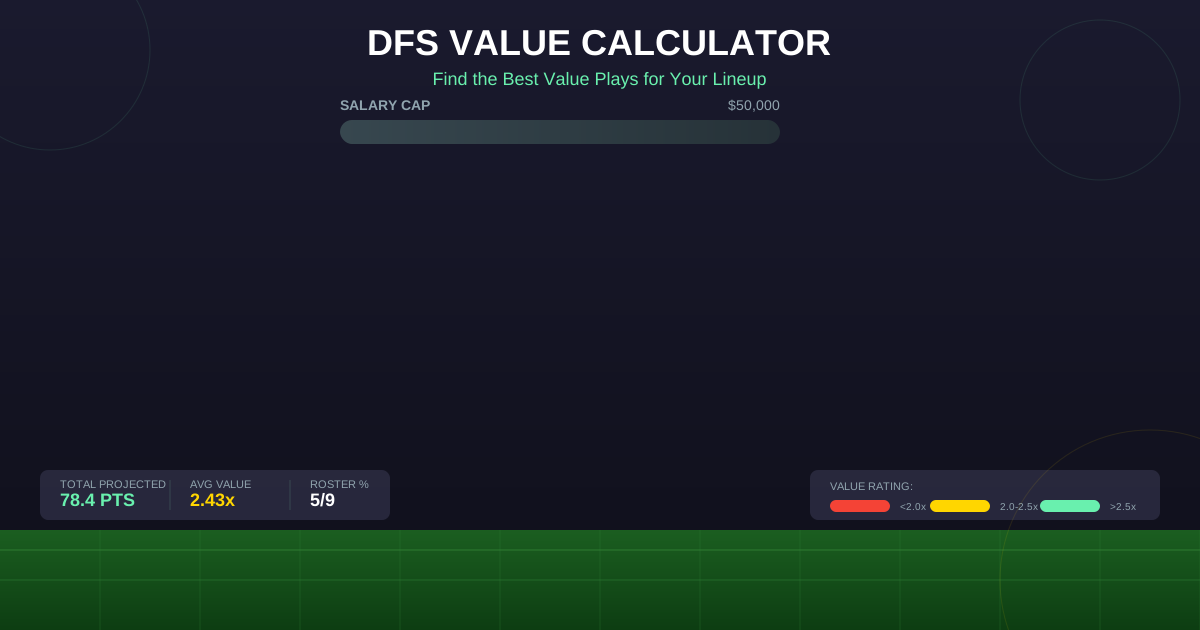
Value (Points per $1,000)
Value = Projected Points / (Salary / 1000)
| Player | Salary | Projection | Value |
|---|---|---|---|
| Player A | $8,000 | 20 pts | 2.50 |
| Player B | $5,500 | 16 pts | 2.91 |
| Player C | $4,200 | 11 pts | 2.62 |
Player B offers best value—more points per dollar.
Ceiling vs. Floor
- Ceiling: Maximum realistic output
- Floor: Minimum expected output
Cash games: Prioritize floor (consistency) GPPs: Prioritize ceiling (upside)
Optimization Strategies
Cash Game Optimization
Goal: Consistent scores that cash
Settings:
- Higher minimum projections
- Lower ownership tolerance
- Chalk-heavy lineups
- Focus on floor
GPP (Tournament) Optimization
Goal: Lineups that can win
Settings:
- Include contrarian plays
- Correlation/stacking rules
- Unique combinations
- Focus on ceiling
Multi-Lineup Generation
For GPPs, generate multiple unique lineups:
- 20-150 lineups common for large-field GPPs
- Vary exposure across player pool
- Ensure lineup diversity
NFL DFS Optimization
Stacking Strategies
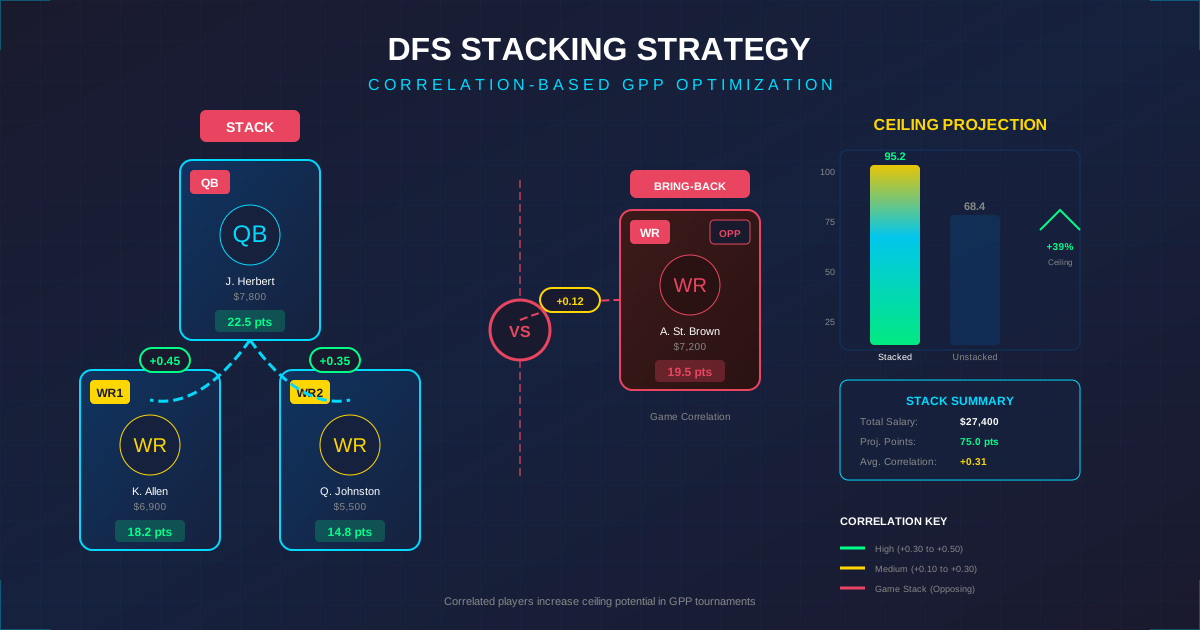
QB-WR Stack:
- Correlate QB with pass catchers
- When QB throws TD, stack scores double
Bring-Back:
- Include opposing player
- Captures shootout upside
Example Stack:
- Josh Allen (QB) + Stefon Diggs (WR)
- Bring-back: Davante Adams (opposing WR)
Position Scarcity
NFL position values vary:
- QB: Premium for elite, value at low tier
- RB: Scarce bell cows command premium
- WR: Deepest position, most value plays
- TE: Bimodal—elite TEs or punt
Game Environment
Prioritize:
- High totals (more scoring)
- Competitive spreads (both teams active)
- Dome/good weather
- Fast pace (more plays)
NBA DFS Optimization
Pace and Minutes
NBA scoring correlates with:
- Projected minutes
- Pace of game
- Absence of teammates
Value in Injuries
When stars sit:
- Usage concentrates
- Value opens up
- Act fast—ownership spikes quickly
Late Swap
NBA allows lineup changes until player tips off:
- Monitor injury reports
- Swap in late value
- Essential for optimization
MLB DFS Optimization
Stacking is Essential
MLB scoring is team-dependent:
- Stack 4-5 hitters from same lineup
- Target favorable pitching matchups
- Use multiple lineup stacks for GPPs
Pitcher Priority
Starting pitchers score differently:
- Ks correlate with points
- Wins add bonus
- Target strikeout pitchers vs. bad lineups
Park Factors
Environment affects scoring:
- Coors Field: Hitter boost
- Petco Park: Pitcher boost
- Weather impacts totals
Real-World Optimization Examples
Example 1: NFL Cash Game
Approach: High-floor plays, popular stacks
Lineup:
- QB: Mahomes ($8,000) - 22 pts projected
- RB1: McCaffrey ($9,200) - 24 pts
- RB2: Pollard ($5,800) - 14 pts
- WR1: Jefferson ($8,400) - 19 pts
- WR2: Lamb ($7,200) - 17 pts
- WR3: Puka ($5,600) - 13 pts
- TE: Kelce ($6,500) - 15 pts
- FLEX: Brown ($5,100) - 12 pts
- DST: Cowboys ($2,500) - 8 pts
Total: $58,300 / $60,000 | 144 pts projected
Example 2: NBA GPP
Approach: Contrarian with injury value
Strategy:
- Fade popular chalk
- Target low-owned value
- Unique player combinations
- Ceiling-focused projections
Example 3: MLB GPP Multi-Entry
Generate 50 lineups with:
- 3 different team stacks
- Variable pitcher exposure
- Correlation rules enforced
- Ownership limits (no player >40%)
Common Optimization Mistakes
-
Trusting Bad Projections: Garbage in, garbage out. Projections matter most.
-
Over-Optimizing: Sometimes the "optimal" lineup is too chalky for GPPs.
-
Ignoring Correlation: Uncorrelated lineups underperform.
-
Chasing Yesterday's Points: Past performance doesn't predict today.
-
Same Lineup Everywhere: Cash and GPP need different approaches.
Frequently Asked Questions
Do I need an optimizer to win?
Not required, but it helps. Manual lineup building is possible but time-consuming. Optimizers ensure mathematical consistency.
How important are projections?
Critical. Optimization is only as good as its inputs. Spend more time on projections than optimizer settings.
Should I use consensus projections?
They're a good starting point. Adjusting for your own insights creates edge.
How many GPP lineups should I enter?
Depends on field size and confidence. 20-50 for medium fields, 100+ for large tournaments.
Can optimizers guarantee wins?
No. They maximize expected value, but variance is high. Even perfect projections don't eliminate luck.
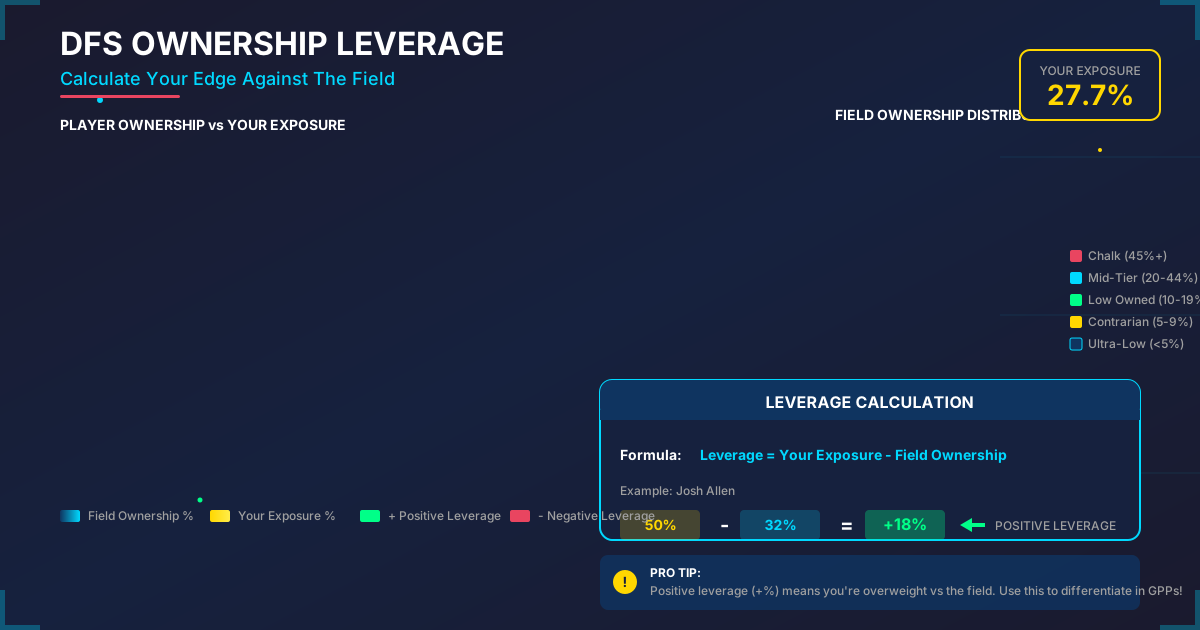
What's ownership leverage?
Being different from the field. Low-owned correct plays win GPPs; high-owned busts hurt less if everyone has them.
Advanced Optimization Features
Exposure Limits
Cap how often any player appears:
- Prevent over-concentration
- Force lineup diversity
- Balance risk across pool
Correlation Rules
Force logical connections:
- QB must have at least one receiver
- Hitters from same team grouped
- Logical game stacks
Manual Locks/Excludes
Override optimization:
- Lock must-play players
- Exclude injured or risky plays
- Build around core pieces
Building Your Own Projections
Sources to Combine
- Consensus aggregators: Baseline expectations
- Vegas lines: Implied totals and spreads
- Usage data: Target shares, snap counts
- Matchup analysis: Defensive rankings
- Weather/venue: Park factors, conditions
Projection Adjustments
Start with consensus, then adjust for:
- Information not yet priced in
- Personal research insights
- Contrarian angles
Pro Tips for DFS Optimization
-
Projections > Optimizer settings: Spend time on inputs
-
Differentiate cash vs. GPP: Different goals, different lineups
-
Use correlation: Stacks win tournaments
-
Monitor news: Late scratches create value
-
Track results: Learn what works for you
Related DFS Calculators
- DFS Value Calculator - Points per dollar analysis
- DFS Ownership Calculator - Leverage analysis
- DFS Bankroll Calculator - Contest sizing
- DFS ROI Calculator - Performance tracking
- Sports Betting ROI Calculator - Overall tracking
Conclusion
DFS lineup optimization transforms the complex problem of roster construction into a solvable mathematical exercise. Our free optimizer helps you build lineups that maximize projected output within salary constraints—whether you're grinding cash games or chasing GPP glory.
Optimize Your DFS Lineup Now →
Remember: optimization is a tool, not magic. Quality projections and sound strategy matter more than any algorithm. Use the optimizer to execute your strategy efficiently, not to replace strategic thinking.