State Sales Tax Calculator: Your Ultimate Guide for 2024

Your Guide to State Sales Tax
Ever looked at a receipt and wondered how that $99.99 item suddenly became $108.24 at checkout? The culprit is sales tax, a seemingly small percentage that has a significant impact on everything from your daily coffee to major purchases. But this tax is far from simple. It’s a complex web of state, county, and city rates that can change from one zip code to the next.
For consumers, it’s a budget line item. For business owners, it's a critical compliance issue. Whether you're a shopper trying to understand the final cost or an e-commerce entrepreneur navigating multi-state regulations, comprehending sales tax is non-negotiable. This comprehensive guide will demystify the world of sales tax. We'll break down how it works, provide a detailed state-by-state overview, and explain why a reliable calculator is the most practical tool for getting it right every time.
What Exactly is Sales Tax?
Sales tax is a form of consumption tax, meaning it's levied on the sale of goods and services. When you buy a product, the seller collects this tax from you and remits it to the appropriate government agency. It's a primary source of revenue for many state and local governments, funding public services like schools, roads, and emergency services.
What makes it so confusing is that the rate isn't a single, national number. It's a layered system:
- State Sales Tax: This is the baseline tax rate set by the state legislature. Forty-five states and the District of Columbia have a statewide sales tax.
- Local Sales Tax: This is where the complexity multiplies. Counties, cities, and special districts (like transportation or school districts) can add their own sales taxes on top of the state rate. This is why buying the same item in two different cities within the same state can result in two different final prices.
- Use Tax: Often overlooked, use tax is the counterpart to sales tax. It applies to purchases made from out-of-state sellers who don't collect sales tax (for example, buying from a small online retailer in another state). The consumer is technically responsible for calculating and paying the use tax directly to their own state. While enforcement on individuals is historically lax, states are increasingly cracking down, especially on large purchases like vehicles or boats.
Why Sales Tax Varies So Dramatically By State
If you've ever shopped in a different state, you've noticed the price difference. This variation isn't random; it's the result of specific economic and political choices made by each state.
The "NOMAD" States
Five states famously have no statewide sales tax at all:
- New Hampshire
- Oregon
- Montana
- Alaska
- Delaware
While this seems like a shopper's paradise, it's important to note that Alaska allows localities to impose their own sales taxes. These states typically make up for the lost revenue through higher income taxes, property taxes, or taxes on specific industries.
High-Tax States
On the other end of the spectrum, states like California, Tennessee, Louisiana, and Arkansas have some of the highest combined state and local sales tax rates in the country. These states often rely more heavily on consumption taxes to fund their budgets, sometimes as a way to keep income or property taxes lower or to capture revenue from tourism.
2024 State-by-State Sales Tax Rate Overview
Understanding the exact tax rate requires knowing both the state and average local tax. The "Combined Rate" listed below is a weighted average of local taxes. Your actual rate will depend on your precise location. This table serves as an excellent starting point for comparison.
| State | State Tax Rate | Avg. Combined Rate | Notes |
|---|---|---|---|
| Alabama | 4.00% | 9.25% | Groceries are fully taxed. |
| Alaska | 0.00% | 1.81% | No state tax, but localities can levy up to 7.5%. |
| Arizona | 5.60% | 8.38% | Many services are taxed. |
| Arkansas | 6.50% | 9.46% | One of the highest average combined rates. |
| California | 7.25% | 8.85% | Highest state-level tax rate in the U.S. |
| Colorado | 2.90% | 7.78% | Low state rate, but complex local taxes. |
| Connecticut | 6.35% | 6.35% | No local sales taxes. |
| Delaware | 0.00% | 0.00% | No state or local sales tax. |
| Florida | 6.00% | 7.02% | Local taxes apply in most counties. |
| Georgia | 4.00% | 7.38% | Most counties and cities add local tax. |
| Hawaii | 4.00% | 4.44% | Technically a General Excise Tax (GET) that is often passed on to consumers. |
| Idaho | 6.00% | 6.03% | Few local taxes. |
| Illinois | 6.25% | 8.84% | Groceries and prescription drugs taxed at a lower 1% rate. |
| Indiana | 7.00% | 7.00% | No local sales taxes. |
| Iowa | 6.00% | 6.94% | Most jurisdictions have an additional 1% local option tax. |
| Kansas | 6.50% | 8.70% | Local rates can be high. |
| Kentucky | 6.00% | 6.00% | No local sales taxes. |
| Louisiana | 4.45% | 9.55% | Has the highest average combined rate in the nation. |
| Maine | 5.50% | 5.50% | No local sales taxes. |
| Maryland | 6.00% | 6.00% | No local sales taxes. |
| Massachusetts | 6.25% | 6.25% | No local sales taxes. Clothing under $175 is exempt. |
| Michigan | 6.00% | 6.00% | No local sales taxes. |
| Minnesota | 6.875% | 7.52% | Some cities, like Minneapolis, have additional local taxes. |
| Mississippi | 7.00% | 7.07% | High state rate. |
| Missouri | 4.225% | 8.34% | Very complex system of local tax districts. |
| Montana | 0.00% | 0.00% | No state or local sales tax. |
| Nebraska | 5.50% | 6.97% | Most larger cities have a local tax. |
| Nevada | 6.85% | 8.24% | Relies heavily on sales tax from tourism. |
| New Hampshire | 0.00% | 0.00% | No state or local sales tax. |
| New Jersey | 6.625% | 6.60%* | Some Urban Enterprise Zones have a lower rate. *Slightly lower avg due to these zones. |
| New Mexico | 4.875% | 7.73% | Technically a Gross Receipts Tax (GRT). |
| New York | 4.00% | 8.53% | Local taxes are significant. Clothing/footwear under $110 is exempt. |
| North Carolina | 4.75% | 6.99% | Most counties levy a local tax. |
| North Dakota | 5.00% | 6.97% | Local taxes are common. |
| Ohio | 5.75% | 7.24% | County-level taxes are standard. |
| Oklahoma | 4.50% | 8.98% | High average combined rate due to local taxes. |
| Oregon | 0.00% | 0.00% | No state or local sales tax. |
| Pennsylvania | 6.00% | 6.34% | Philadelphia and Allegheny counties have additional local tax. |
| Rhode Island | 7.00% | 7.00% | No local sales taxes. |
| South Carolina | 6.00% | 7.49% | Accommodations and other specific items are taxed at higher rates. |
| South Dakota | 4.20% | 6.03% | Subject of the landmark Wayfair e-commerce Supreme Court case. |
| Tennessee | 7.00% | 9.55% | Tied for the highest average combined rate. Groceries taxed at 4%. |
| Texas | 6.25% | 8.20% | Local taxing districts can add up to 2%. |
| Utah | 5.15% | 7.25% | State rate includes some statewide local taxes. |
| Vermont | 6.00% | 6.35% | Some municipalities levy a 1% local option tax. |
| Virginia | 5.30% | 5.77% | Rate includes a 1% statewide local tax component. Groceries taxed at 1%. |
| Washington | 6.50% | 9.29% | High combined rate, many services are taxed. |
| West Virginia | 6.00% | 6.55% | Some municipalities have a local tax. |
| Wisconsin | 5.00% | 5.63% | Most counties have an additional 0.5% tax. |
| Wyoming | 4.00% | 5.39% | Local option taxes are common. |
| Dist. of Columbia | 6.00% | 6.00% | Higher rates for specific items like parking and restaurant meals. |
Source: Tax Foundation, 2024. Rates are subject to change.
The Impact of E-commerce: South Dakota v. Wayfair, Inc.
For decades, the rule for online sales was simple: if a business didn't have a physical presence (or "nexus") in a state, it didn't have to collect sales tax from customers there. The 2018 Supreme Court ruling in South Dakota v. Wayfair, Inc. changed everything.
This landmark decision established the concept of "economic nexus." Now, if an online business exceeds a certain threshold of sales or number of transactions in a state (e.g., $100,000 in sales or 200 transactions annually), it is required to collect and remit sales tax in that state, regardless of physical location.
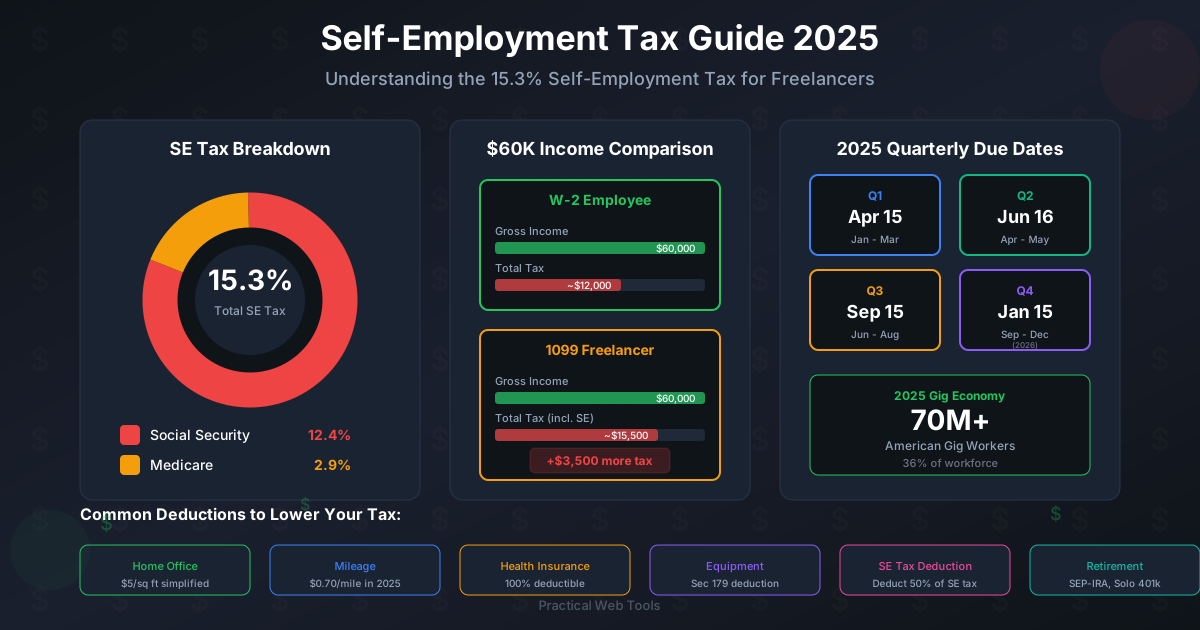
This has massive implications for online sellers, freelancers, and small businesses. Suddenly, a business based in Texas might be responsible for navigating the complex tax codes of California, New York, and Florida. This is a significant administrative burden. If you're an online seller, you're likely self-employed, and managing sales tax is just one piece of the puzzle. You also need to account for federal and state income taxes, which is where our Self-Employment Tax Calculator can be a lifesaver by helping you estimate your quarterly tax obligations.
How Sales Tax Affects Your Personal Finances
While often viewed as a minor addition to a purchase, sales tax has a real impact on your financial health. Over the course of a year, the difference between living in a high-tax state and a low-tax state can amount to hundreds or even thousands of dollars.
This is especially true for large purchases. A 9% sales tax on a $30,000 car adds $2,700 to the final price. This can affect your ability to afford the purchase or the size of your loan. Understanding these hidden costs is a crucial part of budgeting and long-term financial planning. When you're making major financial decisions, like purchasing a property, every percentage point matters. Tools like a House Hacking Calculator can help you model income and expenses, but don't forget to factor in the sales tax on materials and furnishings that will be required.
Frequently Asked Questions About Sales Tax
### What is the difference between sales tax and use tax?
Sales tax is collected by the seller at the point of sale. Use tax is paid by the consumer directly to their state on purchases where no sales tax was collected. They are typically the same rate and are designed to work together to ensure the state receives its tax revenue.
### Which states have no sales tax?
The five states with no statewide sales tax are New Hampshire, Oregon, Montana, Alaska, and Delaware. However, Alaska and Montana permit localities to charge local sales taxes.
### Does sales tax apply to online purchases?
Yes. Thanks to the South Dakota v. Wayfair ruling, most large online retailers collect sales tax based on the buyer's shipping address. Smaller retailers must collect it for any state where they have established economic nexus.
### Are groceries taxed?
This varies significantly by state. Many states fully or partially exempt groceries (defined as unprepared food) from sales tax. However, states like Alabama, Mississippi, and Tennessee tax groceries, though sometimes at a reduced rate.
### How often do sales tax rates change?
State and local tax rates can change as often as annually or quarterly. Governments may adjust them based on budget needs, so it's important to use up-to-date information or a calculator that is regularly updated.
Conclusion: Simplifying a Complex Tax
Sales tax is an unavoidable part of our economic lives. Its complexity, stemming from a patchwork of state and local regulations, can be daunting for both individuals and businesses. The price you see on the tag is rarely the price you pay, and knowing the final cost is essential for effective budgeting and financial management.
For businesses, especially in the age of e-commerce, accurate sales tax collection is a legal necessity. The best way to navigate this complexity is with the right tools. A sales tax calculator by state removes the guesswork, ensures accuracy down to the specific zip code, and saves you the headache of researching hundreds of different local rates.
Ready to tackle other complex financial calculations? Explore our full suite of free, privacy-focused finance tools at Practical Web Tools to take control of your money today.