Retirement Calculator: How Much Do You Really Need to Save?

The Million-Dollar Question: Am I Saving Enough for Retirement?
Staring at a 401(k) statement can feel like looking at a foreign language. There are numbers, percentages, and projections, but one nagging question often remains: Am I actually on track? It's a question that brings a mix of hope and anxiety to millions. You hear vague rules of thumb—save a million dollars, save 15% of your income—but these one-size-fits-all answers rarely fit anyone perfectly.
The truth is, the amount you need to save for retirement is deeply personal. It depends on your desired lifestyle, your timeline, and your unique financial situation. Thankfully, you don't have to navigate this journey in the dark. A retirement calculator is your financial GPS, a powerful tool that transforms vague goals into a concrete, actionable plan. This comprehensive guide will walk you through exactly how to use one to find your magic number and build a secure future.
Why Your Retirement Number is Unique
Before we dive into the calculator itself, it's crucial to understand why generic advice often falls short. Your retirement plan isn't your neighbor's, your parent's, or a financial guru's. It's yours. Here are the key variables that make your retirement number unique:
- Desired Lifestyle: Do you dream of traveling the world, or are you content with a quiet life at home pursuing hobbies? The cost of your post-work lifestyle is the single biggest factor in determining your savings goal.
- Retirement Age: Do you plan to work until 67, or are you aiming for early retirement at 55? The less time you have to save and the longer your retirement lasts, the more you'll need in your nest egg.
- Current Financial Health: Your current age, existing savings, and income level create your starting point. Someone starting with $100,000 in savings at 40 is in a very different position than a 25-year-old starting from scratch.
- Health and Longevity: With people living longer than ever, your retirement funds may need to last 30 years or more. Factoring in potential healthcare costs is a non-negotiable part of modern retirement planning.
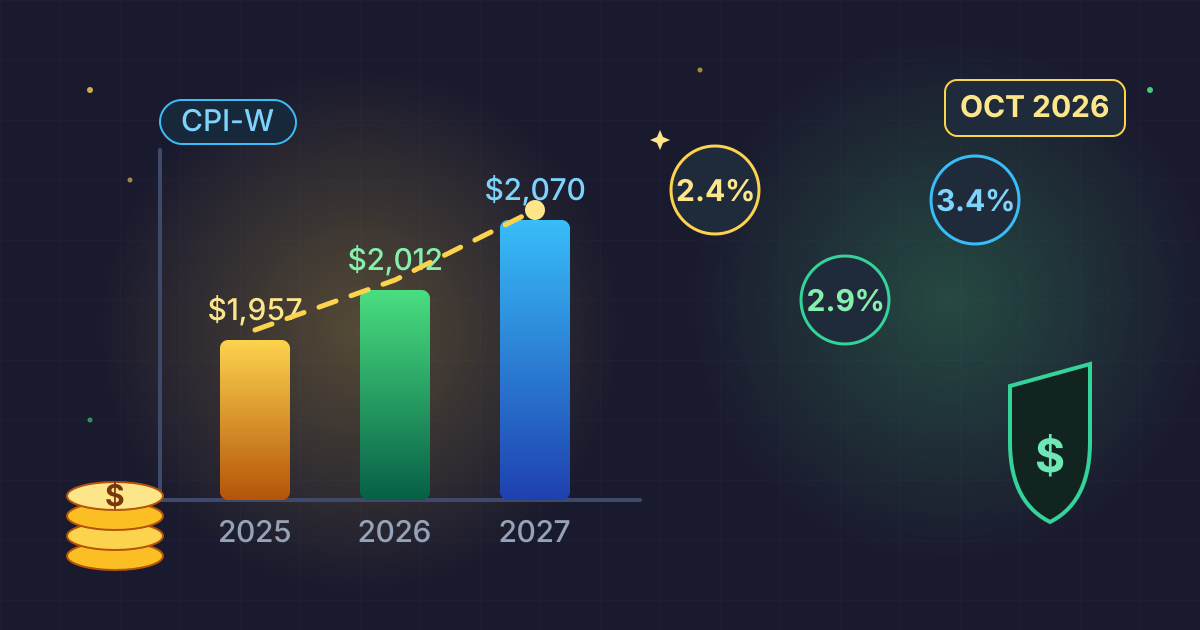
- Inflation: The $100 you have today won't have the same purchasing power in 20 or 30 years. A good retirement calculation must account for the eroding effect of inflation.
Deconstructing the Retirement Calculator: What the Inputs Mean
A retirement savings calculator works by taking a snapshot of your current financial situation and projecting it into the future based on a set of assumptions you provide. Understanding each input is key to getting a meaningful result.
Current Age
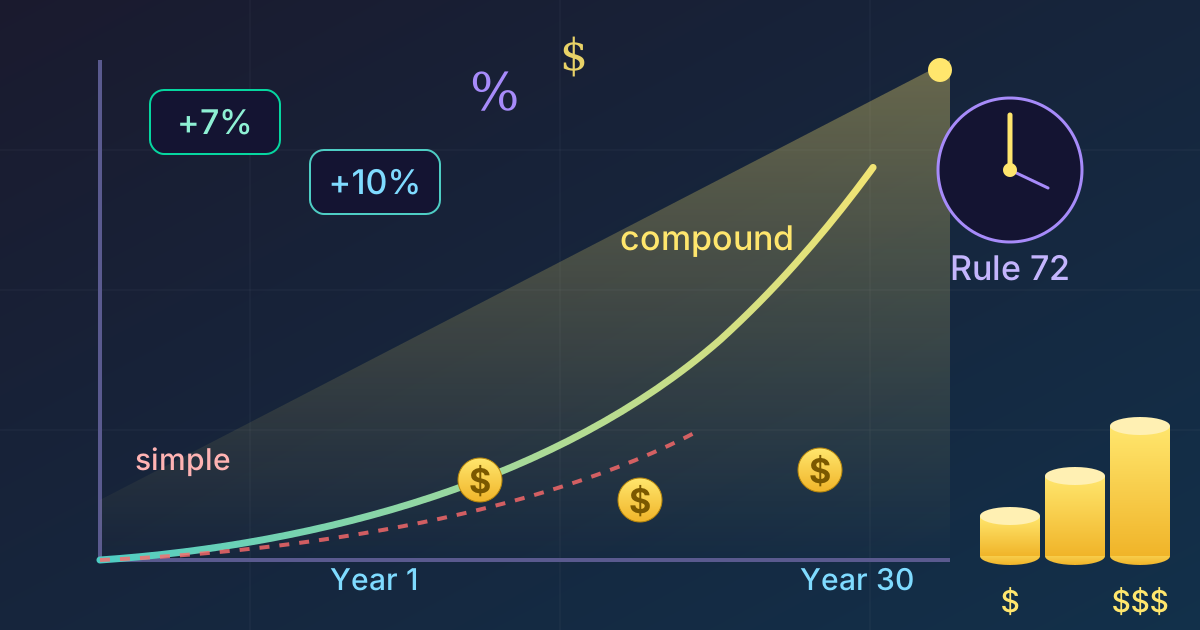
Your starting point. The younger you are, the more powerful the effect of compound interest will be on your investments.
Target Retirement Age
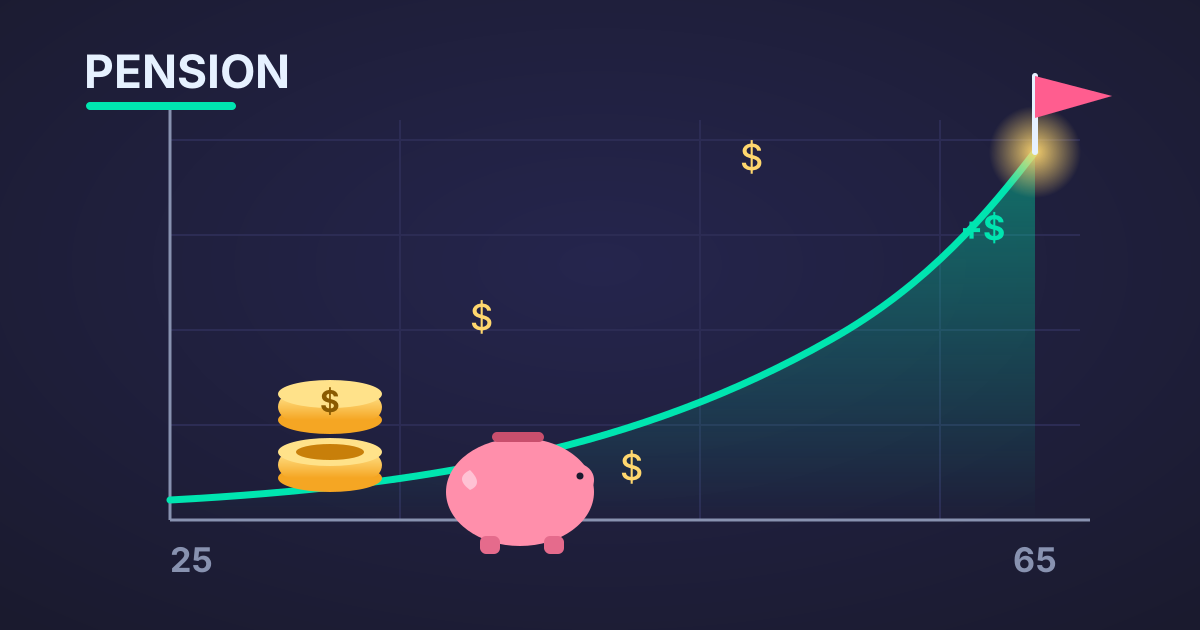
This is the age you plan to stop working. The longer you work, the more time you have to save and the less time your money needs to last in retirement.
Current Retirement Savings
Total up all the money you have in dedicated retirement accounts, such as your 401(k), 403(b), IRA, Roth IRA, and any other investment accounts earmarked for retirement.
Monthly or Annual Contribution
How much are you actively saving for retirement each month or year? Include your personal contributions and any employer match you receive.
Expected Rate of Return (Pre-Retirement)
This is the average annual return you expect your investments to generate while you are still saving. A common, historically-based estimate for a diversified stock portfolio is between 6-8% annually, adjusted for inflation. Be realistic and slightly conservative here.
Expected Rate of Return (Post-Retirement)
Once you retire, you will likely shift to a more conservative investment portfolio to preserve capital. Therefore, your rate of return will probably be lower, perhaps in the 4-5% range.
Desired Annual Income in Retirement
This is a big one. A common rule of thumb is to aim for 80% of your pre-retirement income. However, it's better to estimate your actual retirement expenses: mortgage (or lack thereof), travel, healthcare, hobbies, etc. to get a more accurate figure.
A Step-by-Step Guide to Calculating Your Retirement Needs
Ready to find your number? Let's walk through the process. Grab your financial statements and let's get started.
Step 1: Gather Your Financial Information Collect the exact figures for your current savings, monthly contributions (including employer match), and your annual income.
Step 2: Define Your Retirement Vision Think critically about your goals. When do you want to retire? What do you want your life to look like? Estimate the annual income needed to support that vision. Don't forget to factor in inflation—if your goal is $80,000 in today's dollars, you'll need more than that in the future.
Step 3: Choose a Calculator and Input Your Data Use a reputable online retirement calculator (many are available for free). Carefully enter the information you've gathered. For the rate of return, use a conservative estimate. It's better to be pleasantly surprised than to fall short.
Step 4: Analyze the Results The calculator will project the growth of your savings and tell you if you're on track to meet your goal. It will likely show you a final nest egg amount and how much annual income that could generate. Don't panic if you see a shortfall!
Step 5: Adjust the Levers and Create a Plan This is the most powerful step. The calculator is not a judgment; it's a tool for planning. If there's a gap between where you are and where you need to be, you can adjust several levers:
- Increase your monthly contribution: Can you save an extra $100 or $200 a month?
- Delay your retirement age: Working just two or three extra years can make a massive difference.
- Adjust your expected return: This is less in your control, but ensuring you have an appropriate asset allocation for your age is key.
- Lower your desired retirement income: Re-evaluate your retirement budget. Are there wants you can trim to secure your needs?
Beyond the Basics: Supercharging Your Retirement Savings
Once you have a baseline plan, you can explore more advanced strategies to accelerate your journey to financial freedom. These methods often involve thinking outside the traditional 9-to-5 until you're 65 box.
The FIRE Movement and Coast FIRE
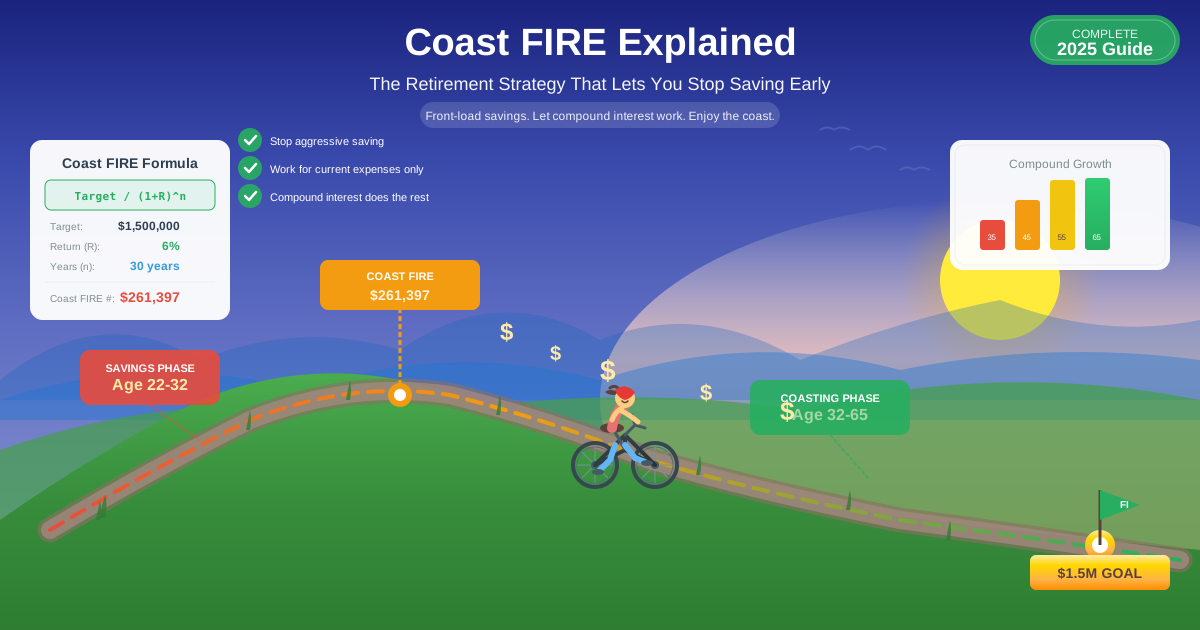
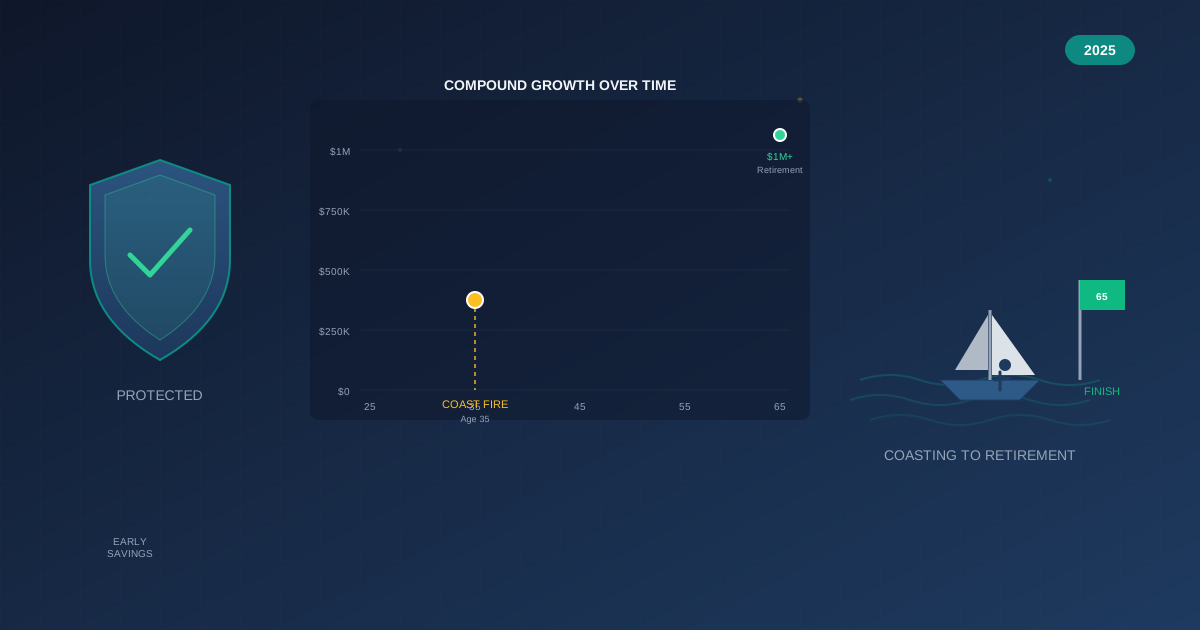
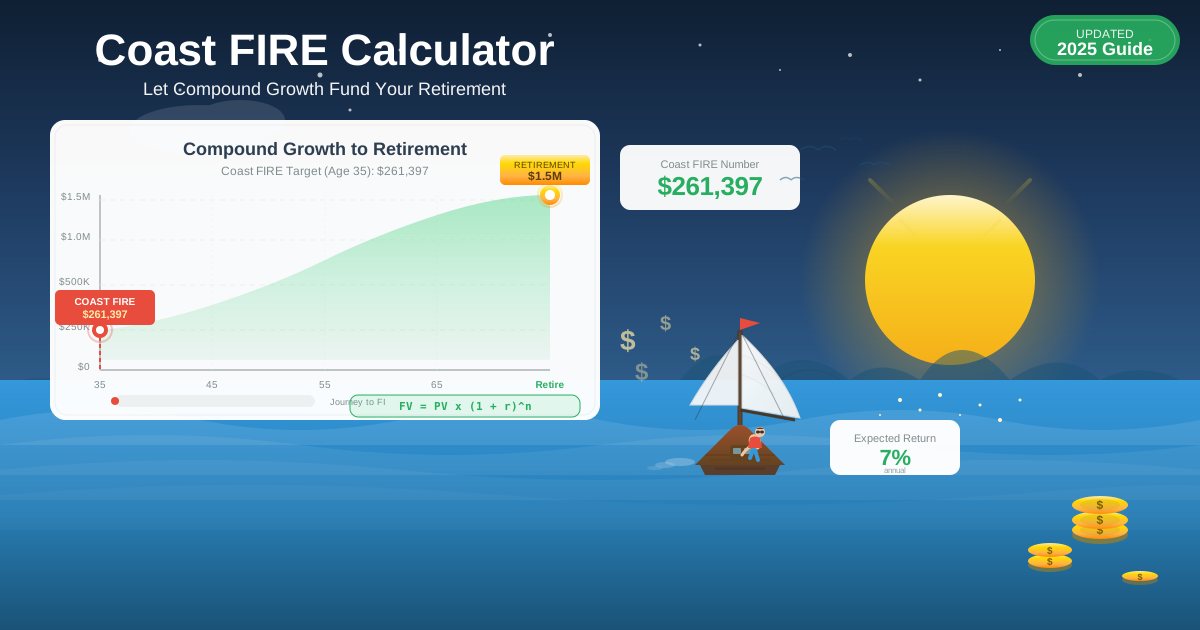
The FIRE (Financial Independence, Retire Early) movement has gained significant traction. It focuses on aggressive saving and investing to retire decades earlier than normal. A more accessible offshoot of this is Coast FIRE. This is the point at which you have enough money in your retirement accounts that, without any further contributions, it will grow to support a traditional retirement. Reaching this milestone gives you incredible flexibility to pursue a passion project, work part-time, or simply reduce your savings rate.
Curious what your Coast FIRE number is? Our free Coast FIRE Calculator can help you determine the exact point at which your nest egg can grow to your goal on its own, freeing you from the pressure of mandatory saving.
Leverage Real Estate with House Hacking
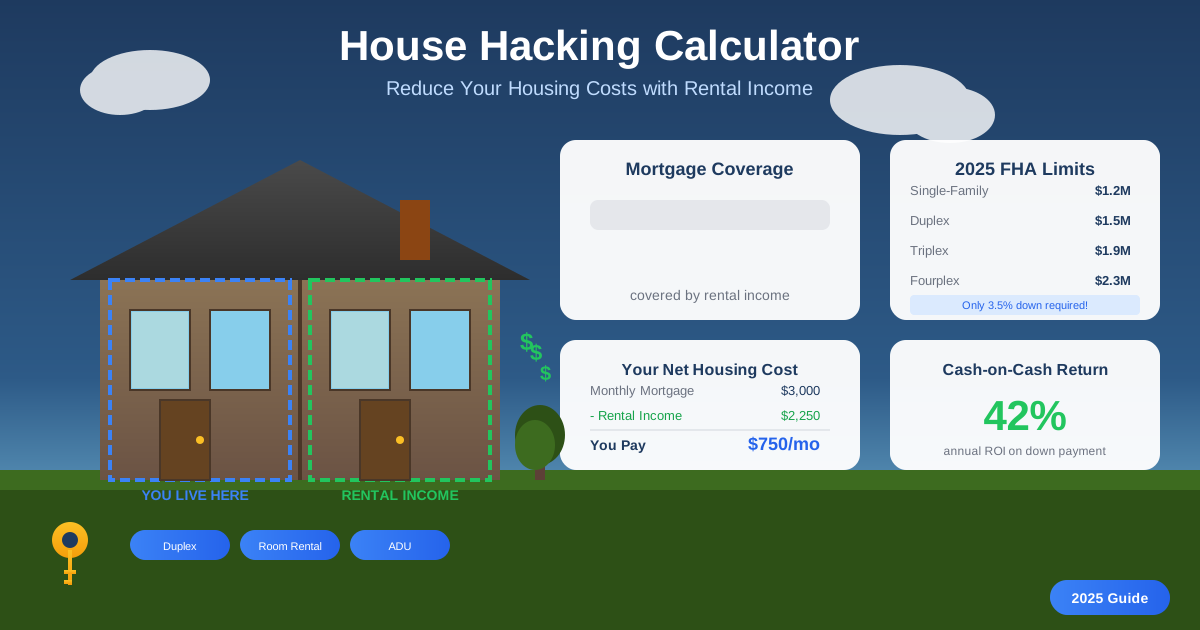
One of the largest expenses for most people is housing. Reducing or eliminating this cost can free up a tremendous amount of cash for your retirement investments. House hacking is a strategy where you generate rental income from your primary residence. This could mean renting out spare bedrooms, living in one unit of a duplex or triplex and renting out the others, or adding an accessory dwelling unit (ADU) to your property.
By having tenants pay down your mortgage and cover your housing costs, you can dramatically increase your savings rate. To explore the potential of this strategy, a specialized tool is invaluable. You can use a House Hacking Calculator to run the numbers on a potential property and see how it could accelerate your path to retirement.
A Note for the Self-Employed
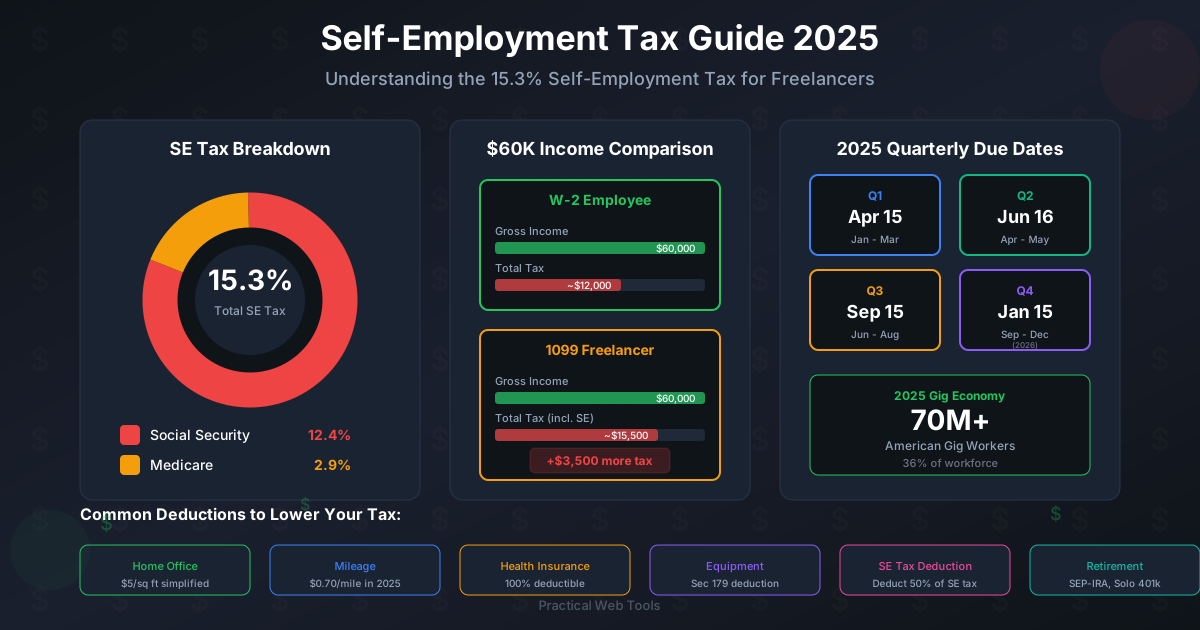
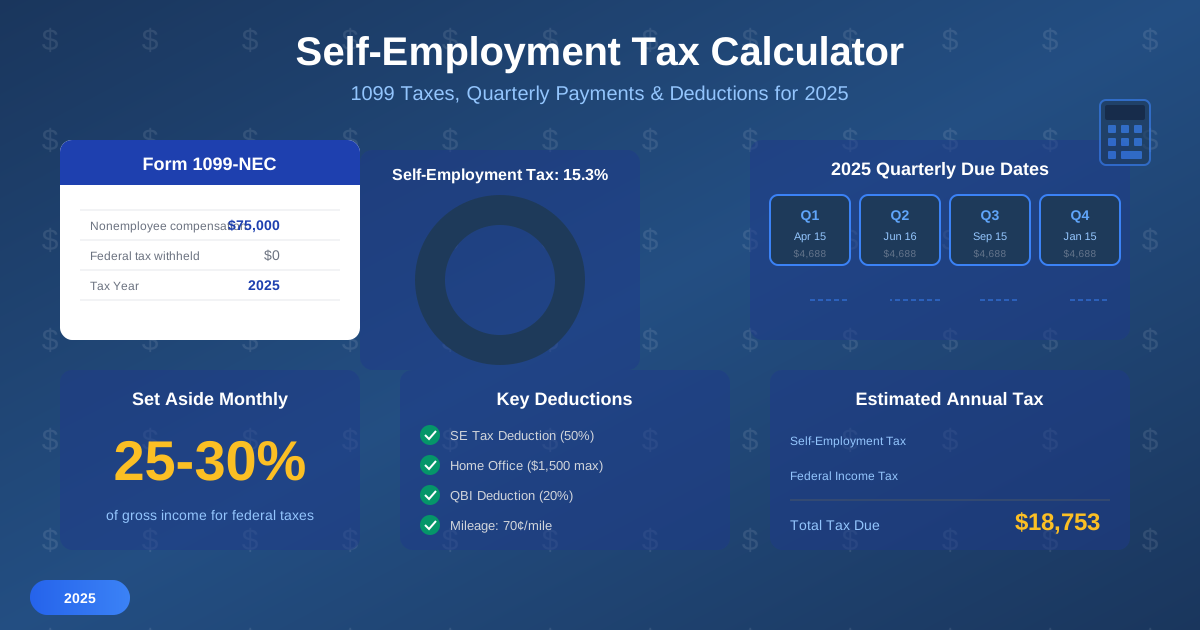
If you're a freelancer, contractor, or small business owner, you are your own HR department. You don't have an employer match, and you're responsible for both the employee and employer portions of FICA taxes. Accurately calculating your tax burden is the first step to knowing how much you can afford to put away in a SEP IRA or Solo 401(k). Using a Self-Employment Tax Calculator is an essential tool for freelancers to budget properly and maximize their retirement contributions.
Overcoming Common Roadblocks to Saving
Life happens, and financial plans can get derailed. Here’s how to handle common challenges:
- Starting Late: If you're in your 40s or 50s and feeling behind, don't despair. You have the advantage of being in your peak earning years. Maximize your contributions to tax-advantaged accounts, including catch-up contributions if you're over 50. You may need to adjust your retirement age or lifestyle expectations, but a comfortable retirement is still achievable.
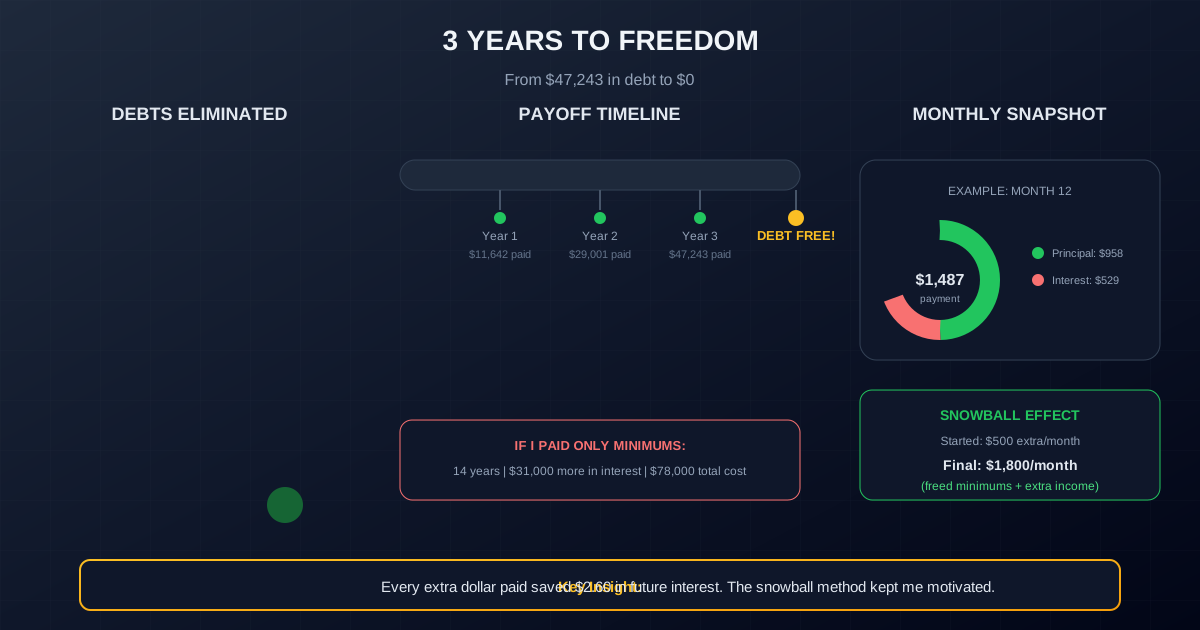
- Paying Down Debt: It can be hard to decide whether to attack debt or save for retirement. A balanced approach is often best. Focus on paying off high-interest debt (like credit cards) aggressively while still contributing enough to your 401(k) to get the full employer match—it's free money!
- Market Volatility: Watching your portfolio value drop can be terrifying. The most important thing to do during a downturn is to stick to your plan. Historically, markets have always recovered. Selling in a panic locks in your losses. If you have a long time horizon, a market dip is actually a great opportunity to buy more shares at a lower price.
Conclusion: From Anxiety to Action
The question of "how much to save for retirement" doesn't have to be a source of anxiety. By replacing uncertainty with clarity, you can turn a daunting goal into a manageable, step-by-step process. A retirement calculator is your first and most important tool in this journey.
It translates your dreams for the future into a concrete number and provides a clear roadmap to get there. It empowers you to make informed decisions, adjust your strategy as life changes, and build confidence that you are in control of your financial destiny.
Take the first step today. Don't just wonder if you're on track—find out for sure. Explore our suite of free and privacy-focused financial tools at Practical Web Tools to start building your secure and prosperous retirement.