Self-Employment Tax Guide for Freelancers (+ Free Calculator)

The leap into freelancing is exhilarating. You're your own boss, setting your own hours, and chasing your passions. But with great freedom comes great responsibility—especially when it comes to taxes. If you've ever been hit with a surprisingly large tax bill, you know the sting of misunderstanding one key concept: self-employment tax.
For many new freelancers, it's a confusing and intimidating topic. Unlike a traditional W-2 job where taxes are magically whisked away from your paycheck, you're now in the driver's seat. This guide is your roadmap. We'll break down exactly what self-employment tax is, how to calculate it step-by-step, and how you can legally reduce the amount you owe. Forget the tax-season anxiety; it's time to take control.
What Exactly is Self-Employment Tax?
First, let's clear up a common misconception: self-employment (SE) tax is not a penalty for being your own boss. It's simply the way independent contractors pay into the Social Security and Medicare systems. It's the freelancer's equivalent of FICA (Federal Insurance Contributions Act) taxes.
In a traditional employer-employee relationship:
- The Employee pays 7.65% of their gross wages for FICA taxes (6.2% for Social Security + 1.45% for Medicare).
- The Employer matches that amount, paying another 7.65% on behalf of the employee.
- Total Contribution: 15.3%
When you're self-employed, you wear both hats: you are the employee and the employer. Therefore, you are responsible for paying both halves, totaling 15.3%.
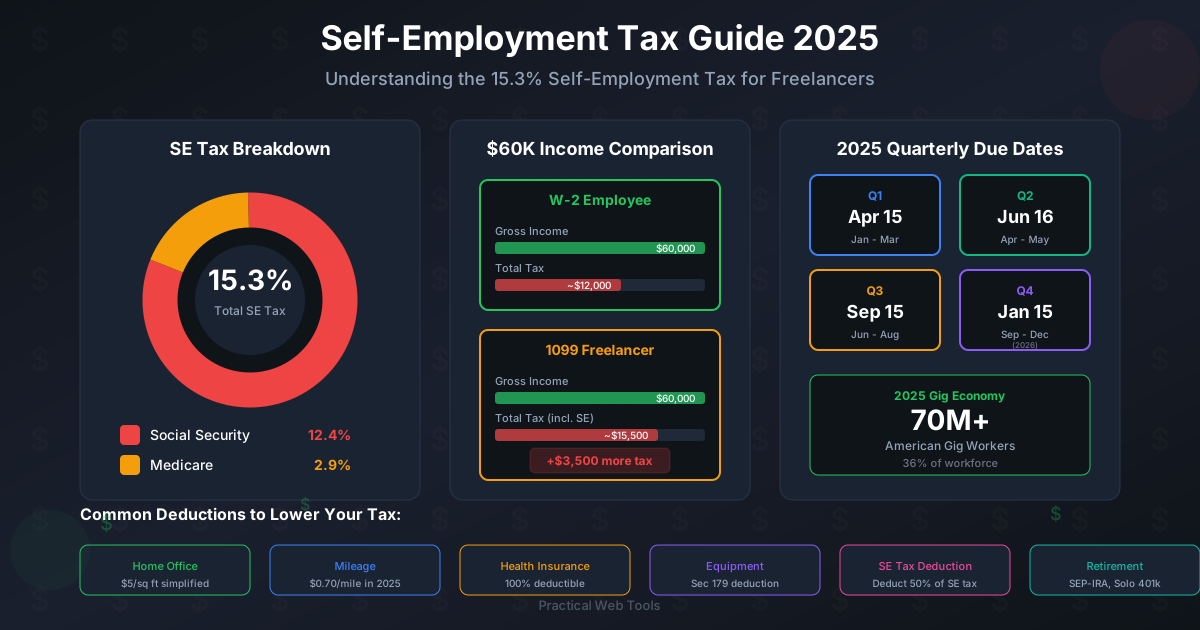
Here's the breakdown of the 15.3% SE tax rate:
- 12.4% for Social Security: This is applied to your net earnings up to an annual limit. For 2023, this limit is $160,200. This figure is adjusted for inflation annually.
- 2.9% for Medicare: This is applied to all of your net earnings, with no income limit.
Seeing that 15.3% figure can be jarring, but don't panic. As we'll see, the calculation isn't quite that simple, and there are some built-in deductions that help ease the burden.
Who Needs to Pay Self-Employment Tax?
The IRS has a straightforward rule of thumb. You must pay self-employment tax if your net earnings from self-employment were $400 or more during the year. This applies even if it's just a side hustle.
This includes a wide range of professionals:
- Freelance writers, designers, and developers
- Independent contractors and consultants
- Gig economy workers (e.g., DoorDash, Uber, Instacart)
- Small business owners (sole proprietors, partners in a partnership, LLC members)
- Anyone who receives a Form 1099-NEC or 1099-K
If you fit into any of these categories and expect to earn over $400 in profit for the year, you need to be planning for self-employment tax.
How to Calculate Self-Employment Tax: A Step-by-Step Guide
Calculating your SE tax manually can feel like complex algebra, but it boils down to a few key steps. Understanding this process is crucial for effective financial planning.
Step 1: Determine Your Net Earnings from Self-Employment
Your SE tax isn't based on your gross revenue; it's based on your profit. The first step is to calculate your net earnings.
Formula: Gross Self-Employment Income - Ordinary and Necessary Business Expenses = Net Earnings
- Gross Income: This is all the income you received from your freelance work before any expenses are taken out.
- Business Expenses: These are the costs you incur to run your business. We'll cover these in more detail later, but they can include things like software subscriptions, home office costs, marketing, and more. Diligently tracking these expenses is the #1 way to lower your tax bill.
Example: Let's say you're a freelance graphic designer. In one year, you billed clients for a total of $80,000. You spent $10,000 on a new computer, software subscriptions, and online advertising. Your net earnings from self-employment are $70,000.
Step 2: Calculate the Taxable Portion of Your Earnings
Here's a crucial step that many people miss. You do not pay SE tax on 100% of your net earnings. You only pay it on 92.35% of your net earnings.
Why? This is the IRS's way of giving you a deduction equivalent to the employer's half of the FICA taxes. It's a bit of a circular calculation, but the 92.35% shortcut (100% - 7.65%) gets you to the right number.
Example (cont.): Your net earnings are $70,000.
$70,000 (Net Earnings) * 0.9235 = $64,645
$64,645 is the amount subject to self-employment tax.
Step 3: Apply the Self-Employment Tax Rates
Now, you apply the 15.3% tax rate to the number you calculated in Step 2, keeping the Social Security limit in mind.
- Social Security: 12.4% on earnings up to the annual limit ($160,200 for 2023).
- Medicare: 2.9% on all earnings.
Example (cont.): Your taxable earnings of $64,645 are well below the Social Security limit.
$64,645 * 0.153 = $9,890.69
Your total self-employment tax for the year is $9,890.69. This is in addition to your regular federal and state income taxes.
Step 4: Simplify Everything with a Calculator
Manually tracking these steps, especially with fluctuating income, can be a headache. That's why using a dedicated tool is the smartest way to stay on top of your obligations. It removes the risk of manual error and gives you an instant, clear picture of what you owe.
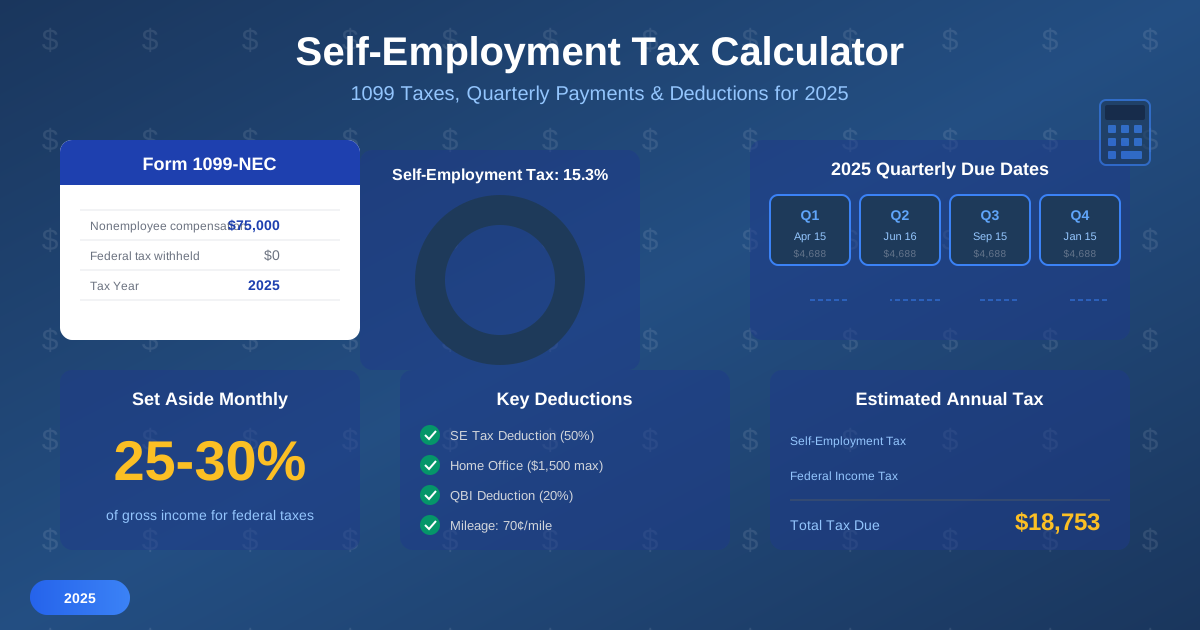
Our free and privacy-focused Self-Employment Tax Calculator automates this entire process. Simply input your net earnings, and it will perform these calculations for you instantly, giving you the exact amount you should set aside.
The Good News: You Get Tax Deductions!
While paying 15.3% can feel steep, the tax code provides several powerful deductions specifically for the self-employed to lower your overall tax burden.
The Deduction for One-Half of Your SE Tax
This is the most important deduction to understand. You get to deduct one-half of your self-employment tax from your income when calculating your Adjusted Gross Income (AGI). This doesn't reduce your SE tax itself, but it lowers the amount of income subject to regular income tax.
Think of it this way: employers get to deduct the FICA taxes they pay as a business expense. This deduction gives you, the self-employed individual, a similar benefit.
Example (cont.): Your SE tax was $9,890.69.
$9,890.69 / 2 = $4,945.35
You can deduct $4,945.35 from your income before calculating your federal income tax.
Common Business Deductions for Freelancers
To maximize your savings, you must track every legitimate business expense. These directly reduce your net earnings (Step 1), which in turn reduces both your self-employment tax and your income tax. Here are some of the most common deductions:
- Home Office: If you have a dedicated space in your home used exclusively for business, you can deduct a portion of your rent/mortgage interest, utilities, and insurance. You can use the simplified method ($5 per square foot, up to 300 sq ft) or the more complex actual expense method.
- Office Supplies: Pens, paper, software, computers, desks, chairs—anything you use to run your business.
- Software and Subscriptions: Project management tools, accounting software (like QuickBooks), cloud storage, industry-specific software, etc.
- Phone and Internet Bills: You can deduct the business-use percentage of your personal cell phone and home internet bills.
- Health Insurance Premiums: If you're not eligible to be covered by a spouse's employer-sponsored plan, you can generally deduct 100% of your health, dental, and long-term care insurance premiums.
- Retirement Plan Contributions: Contributions to a SEP IRA or Solo 401(k) are deductible and are one of the most powerful ways to save for the future while cutting your tax bill today.
- Business Travel: Costs for flights, hotels, and 50% of the cost of meals while traveling for business.
- Car Expenses: If you use your car for business, you can deduct the actual costs (gas, repairs, insurance) based on business mileage or take the standard mileage rate set by the IRS.
- Professional Development: Courses, workshops, conferences, and books that improve your skills in your field.
Paying Your Taxes: The Quarterly Estimated System
Because you don't have an employer withholding taxes for you, the IRS requires you to pay your estimated tax liability throughout the year in four quarterly installments. This covers both your income tax and your self-employment tax.
Quarterly Due Dates
Mark these dates on your calendar. The payments are for the income earned during the preceding period:
- April 15: For income earned Jan 1 - Mar 31
- June 15: For income earned Apr 1 - May 31
- September 15: For income earned Jun 1 - Aug 31
- January 15 (of the next year): For income earned Sep 1 - Dec 31
You can pay directly on the IRS website via Direct Pay or the Electronic Federal Tax Payment System (EFTPS). Failing to pay enough tax by these deadlines can result in an underpayment penalty, so it's crucial to stay on top of it.
Advanced Strategies for Tax Optimization
Once you've mastered the basics, you can explore more advanced strategies to optimize your financial situation.
Supercharge Your Retirement Savings
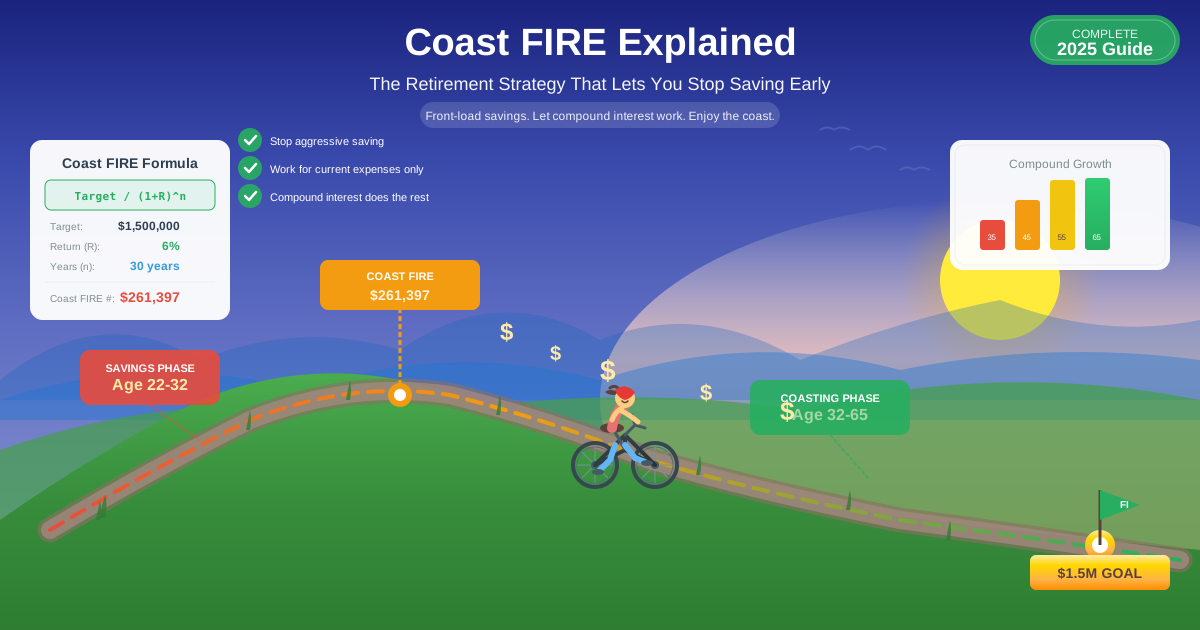
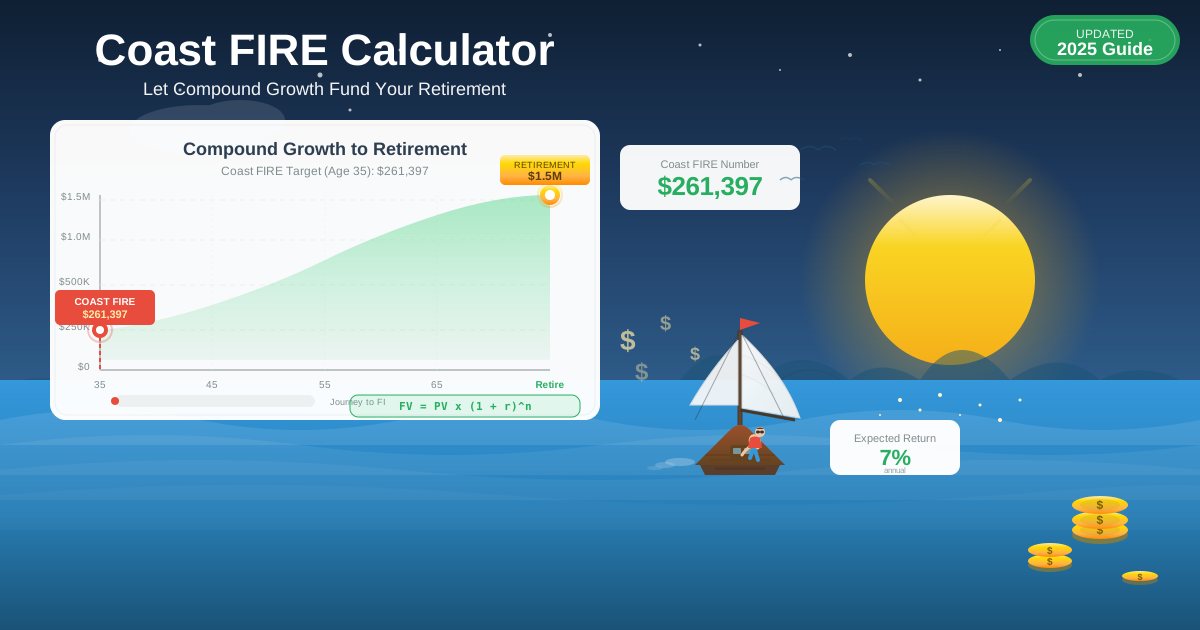
Contributing to a retirement account like a SEP IRA or Solo 401(k) is a win-win. You're building your future nest egg while simultaneously getting a significant, above-the-line tax deduction. This reduces your AGI, which can lower your income tax bracket and potentially make you eligible for other tax credits. Planning for retirement and reducing your tax bill go hand-in-hand. See how your savings strategy impacts your long-term financial independence with our Coast FIRE Calculator.
Consider an S Corp Election
Once your freelance business generates significant profit (typically $60k+), it might be worth exploring an S Corporation election with a tax professional. As an S Corp, you pay yourself a "reasonable salary," which is subject to FICA/SE tax. Any remaining profit can be taken as a "distribution," which is not subject to self-employment tax. This can lead to substantial tax savings but comes with more administrative complexity and costs (like payroll).
Holistic Financial Planning
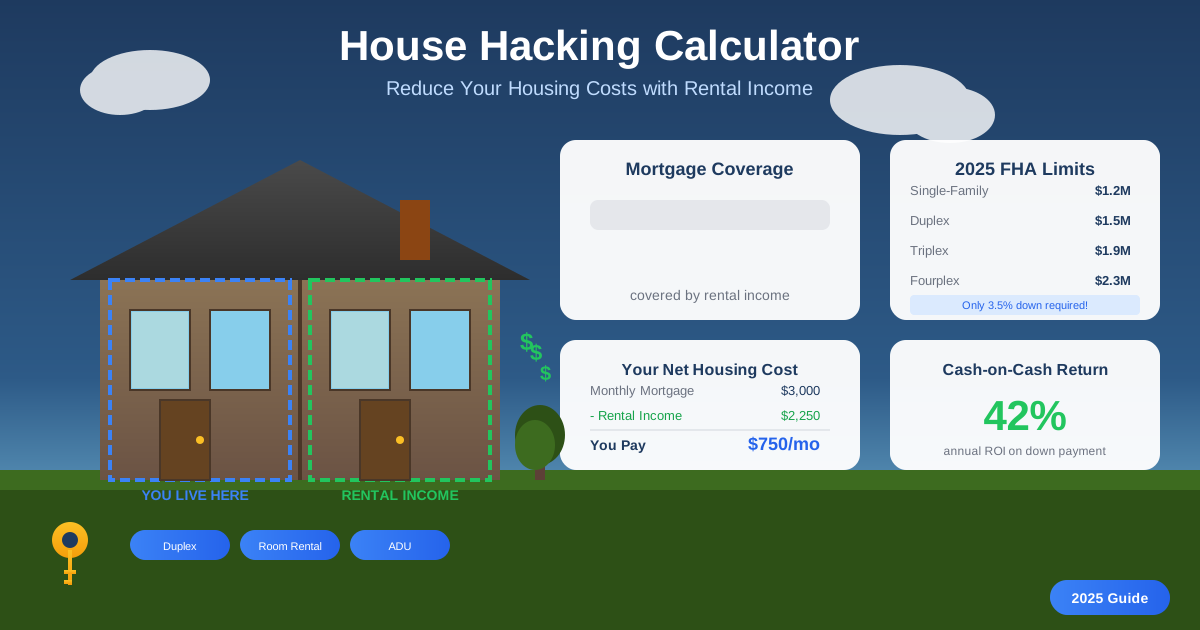
Thinking creatively about your entire financial picture can unlock new opportunities. For instance, strategies that lower your cost of living, like house hacking, can free up significant capital. This extra cash flow makes it easier to max out retirement accounts or meet your quarterly tax obligations without stress. While not a direct tax deduction, modeling scenarios with a tool like our House Hacking Calculator can reveal powerful ways to improve your bottom line and overall financial health.
Conclusion: Take Control of Your Freelance Finances
Self-employment tax isn't something to fear; it's something to plan for. By understanding how it's calculated, diligently tracking your business expenses, and paying your estimated taxes on time, you can remove the anxiety and uncertainty from your financial life.
Being a freelancer means being the CEO of You, Inc. A smart CEO knows their numbers, minimizes their liabilities, and plans for the future. The key is to be proactive. Set aside a percentage of every payment you receive (25-35% is a safe starting point) into a separate savings account specifically for taxes. Use tools to your advantage, and don't be afraid to consult with a tax professional as your business grows.
Ready to eliminate the guesswork and get a clear picture of what you'll owe? Use our free Self-Employment Tax Calculator now to get an accurate estimate and stay ahead of your tax obligations.