2027 Social Security COLA: Project Your Benefits Step-by-Step
Your Guide to the 2027 Social Security COLA Projection
Will your Social Security check keep pace with the cost of living in 2027? For millions of current and future retirees, this isn't just a casual question—it's a critical component of their financial stability. The annual Social Security Cost-of-Living Adjustment, or COLA, is designed to protect the purchasing power of your benefits against inflation. But waiting until the official announcement in late 2026 leaves little time for planning.
While we don't have a crystal ball, we can use economic data, historical trends, and expert forecasts to make an educated projection for the 2027 COLA. This guide will not only walk you through how to estimate your potential 2027 benefits but also show you how to integrate that number into a broader, more resilient retirement strategy. We'll explore how to maximize your income, create supplementary revenue streams, and use free, privacy-focused financial tools to build a comprehensive plan. By the end of this article, you'll have a clear, actionable framework for securing your financial future, with your projected 2027 Social Security benefits as a foundational piece.
Understanding the Social Security COLA
Before we look ahead to 2027, it's essential to understand what the COLA is and how the Social Security Administration (SSA) calculates it. This knowledge forms the bedrock of any accurate projection.
What is COLA and Why Does It Matter?
The Cost-of-Living Adjustment is an annual increase in Social Security and Supplemental Security Income (SSI) benefits. Its sole purpose is to ensure that the value of your benefits doesn't erode over time due to inflation. When the price of goods and services—like groceries, gasoline, and healthcare—goes up, the COLA helps your monthly check go up, too.
For the nearly 72 million Americans who receive Social Security, the COLA is a financial lifeline. Without it, a fixed benefit amount would buy less and less each year, potentially pushing many retirees into financial hardship. It's the mechanism that helps maintain your standard of living throughout your retirement years.
How is the COLA Calculated?
The SSA doesn't arbitrarily pick a number. The COLA is directly tied to a specific measure of inflation: the Consumer Price Index for Urban Wage Earners and Clerical Workers (CPI-W). Here’s a simplified breakdown of the process:
- Data Collection: The Bureau of Labor Statistics (BLS) calculates the CPI-W monthly, tracking the average change in prices paid by urban wage earners for a basket of consumer goods and services.
- Comparison Period: The SSA compares the average CPI-W from the third quarter (July, August, September) of the current year to the average CPI-W from the third quarter of the last year a COLA was determined.
- Percentage Increase: The percentage increase between these two averages becomes the COLA for the following year. For example, the COLA announced in October 2024 (which applies to benefits in 2025) will be based on the change in CPI-W from Q3 2023 to Q3 2024.
- No COLA in Deflation: If there is no increase in the CPI-W (or if it decreases), there is no COLA. Your benefits will not go down.
The official announcement is typically made in mid-October, with the adjustment reflected in benefits paid out starting in January of the next year.
Projecting the 2027 Social Security COLA: An Educated Guess
Predicting inflation three years into the future is challenging, but we can analyze trends and expert forecasts to create a reasonable range of possibilities. This exercise is crucial for long-term financial planning.
Analyzing Historical COLA Trends
Looking at past COLAs provides valuable context. The adjustments can be highly volatile, reflecting the economic climate of the time. Here's a look at the last decade:
| Year | COLA Percentage |
|---|---|
| 2017 | 0.3% |
| 2018 | 2.0% |
| 2019 | 2.8% |
| 2020 | 1.6% |
| 2021 | 1.3% |
| 2022 | 5.9% |
| 2023 | 8.7% |
| 2024 | 3.2% |
As you can see, the historic high of 8.7% in 2023 was an outlier driven by post-pandemic inflation, while other years saw much more modest increases. Most economists expect future COLAs to return to the more moderate 2-4% range as inflation normalizes.
Current Economic Indicators and Forecasts for 2027
To project the 2027 COLA, we need to consider the economic forces at play. Currently, the Federal Reserve is focused on bringing inflation down to its target rate of 2%. While progress has been made, persistent inflation in some sectors could keep rates slightly elevated.
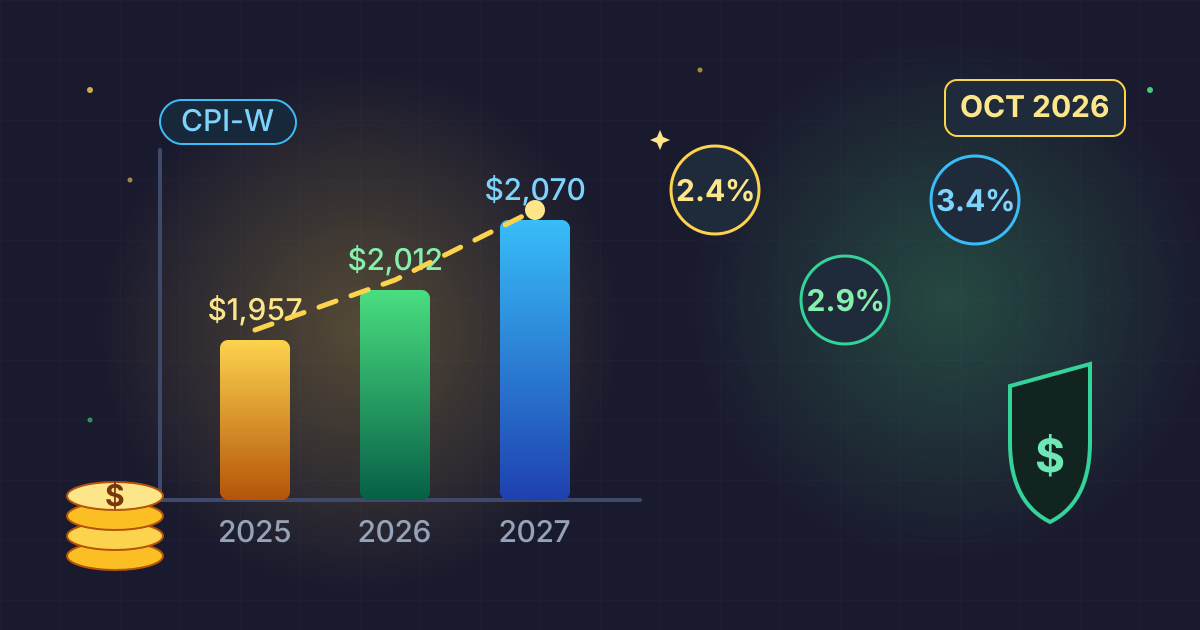
Many non-partisan organizations, like The Senior Citizens League and the Congressional Budget Office, provide long-range forecasts. While specific 2027 numbers are speculative, the general consensus points towards a normalization of inflation. Based on these trends, a reasonable estimated range for the 2027 COLA is between 2.4% and 3.4%.
Disclaimer: This is an unofficial projection for planning purposes only. The official COLA will be announced by the SSA in October 2026.
A Step-by-Step Guide to Estimating Your 2027 Benefit
Now, let's translate these projections into a dollar amount for your personal budget. This is a multi-year calculation.
Step 1: Find Your Current Benefit Amount
Log in to your my Social Security account on the SSA.gov website to find your current monthly benefit or your latest estimated benefit statement if you haven't yet retired.
For our example, let's assume your current benefit is $1,900 per month.
Step 2: Project Your Benefit for 2025 First, we need to apply a projected COLA for 2025. Based on current trends, let's use an estimate of 3.0%.
Calculation: $1,900 x 1.030 = $1,957 (Your estimated 2025 benefit)
Step 3: Project Your Benefit for 2026 Next, apply a projected COLA for 2026 to your new, higher 2025 benefit amount. Let's estimate the 2026 COLA at 2.8%.
Calculation: $1,957 x 1.028 = $2,011.80 (Your estimated 2026 benefit)
Step 4: Project Your Final 2027 Benefit Finally, apply our projected 2027 COLA. We'll use the midpoint of our range, 2.9%.
Calculation: $2,011.80 x 1.029 = $2,070.14 (Your estimated 2027 benefit)
In this scenario, your monthly benefit would increase by approximately $170 over the next three years. Performing this calculation gives you a tangible number to build into your long-term budget.
Beyond COLA: Building a Resilient Retirement Plan
A COLA estimate is just one piece of a much larger puzzle. To truly secure your retirement, especially in an uncertain economic future, you need a holistic financial plan. Relying solely on Social Security, even with COLAs, is a risky strategy. Let's explore how to strengthen your financial position.
Maximizing Your Benefits Before Retirement
Your Social Security benefit is calculated based on your 35 highest-earning years. If you're still working, you have the power to influence that number. Working longer, increasing your income, and ensuring all your earnings are reported correctly can significantly boost your lifetime benefits.
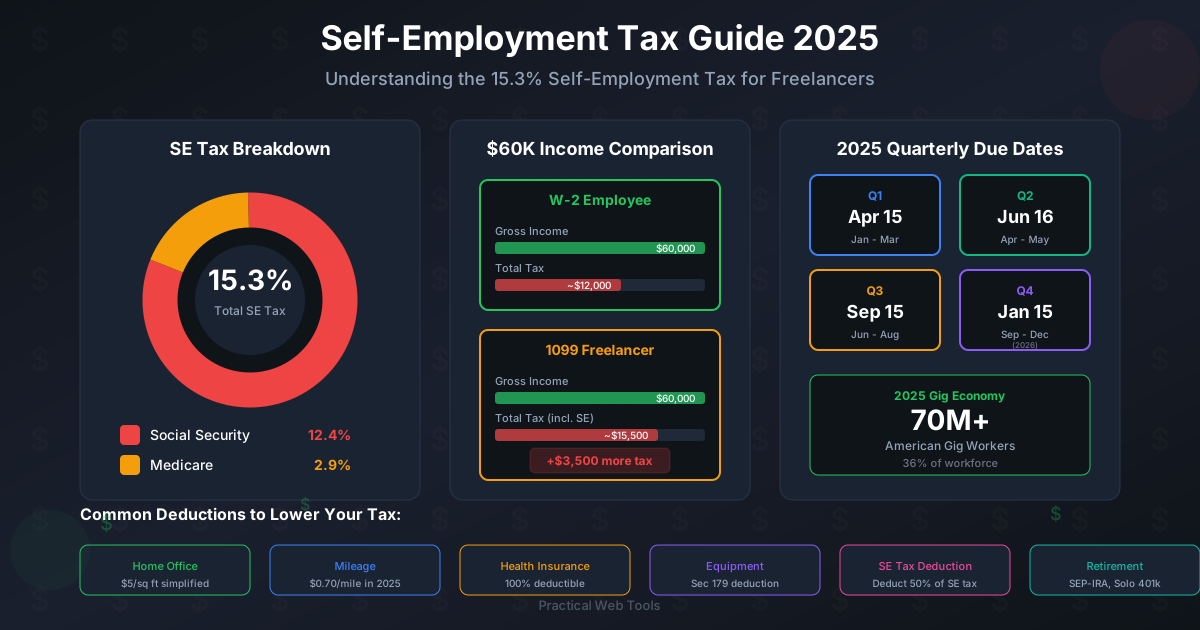
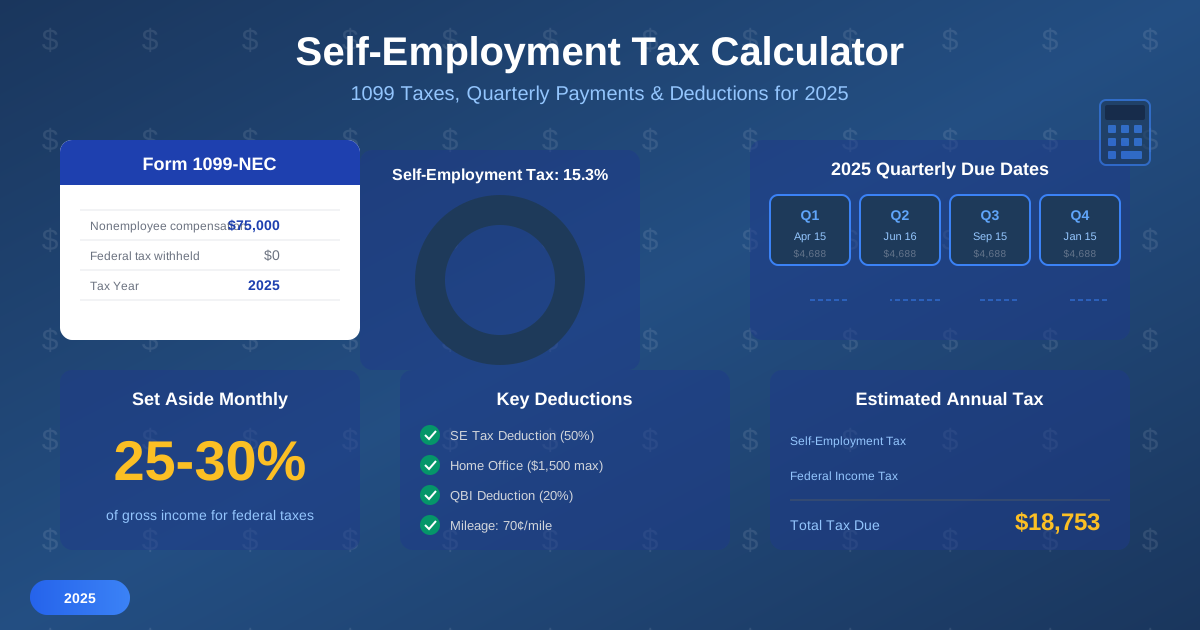
This is particularly important for those who are self-employed. Your contributions to Social Security come directly from your self-employment taxes. Accurately calculating and paying these taxes not only keeps you compliant with the IRS but also ensures you're building a robust earnings record for a higher future benefit. If you have a side hustle or run your own business, understanding your tax obligations is key. You can use our free Self-Employment Tax Calculator to estimate what you owe, which directly funds your future Social Security payments.
Creating Additional Income Streams in Retirement
Diversifying your income sources is the best defense against inflation and market volatility. Your Social Security check should be a stable foundation, not your entire financial structure. Consider these strategies to supplement your retirement income:
- Part-time work or consulting: Leverage your decades of professional experience.
- Rental income: Invest in real estate or rent out a room in your home.
- Dividend-paying stocks: Build a portfolio that generates passive income.
- Annuities: Purchase a product that provides a guaranteed income stream.
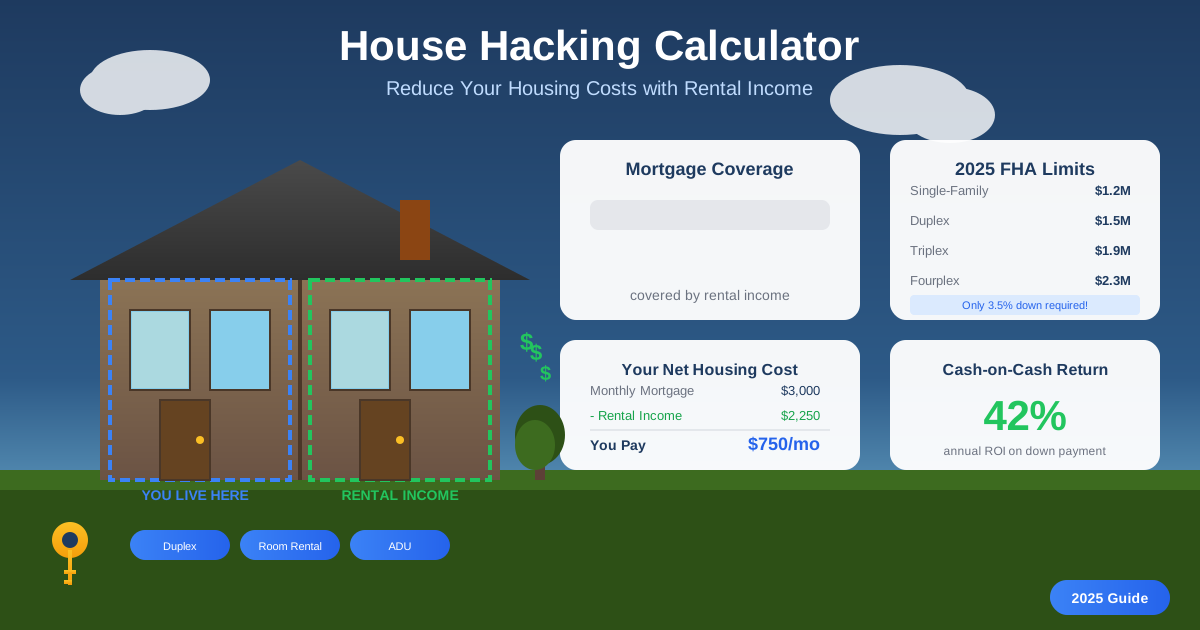
One increasingly popular and accessible strategy is house hacking. By renting out a portion of your primary residence—like a spare bedroom, basement apartment, or duplex unit—you can generate significant monthly income to supplement your Social Security. This can help cover your mortgage, property taxes, and other living expenses, freeing up your retirement benefits for other needs. Our House Hacking Calculator can help you analyze the numbers to see if this is a viable and profitable option for your property.
Are You on Track for Your Retirement Goals?
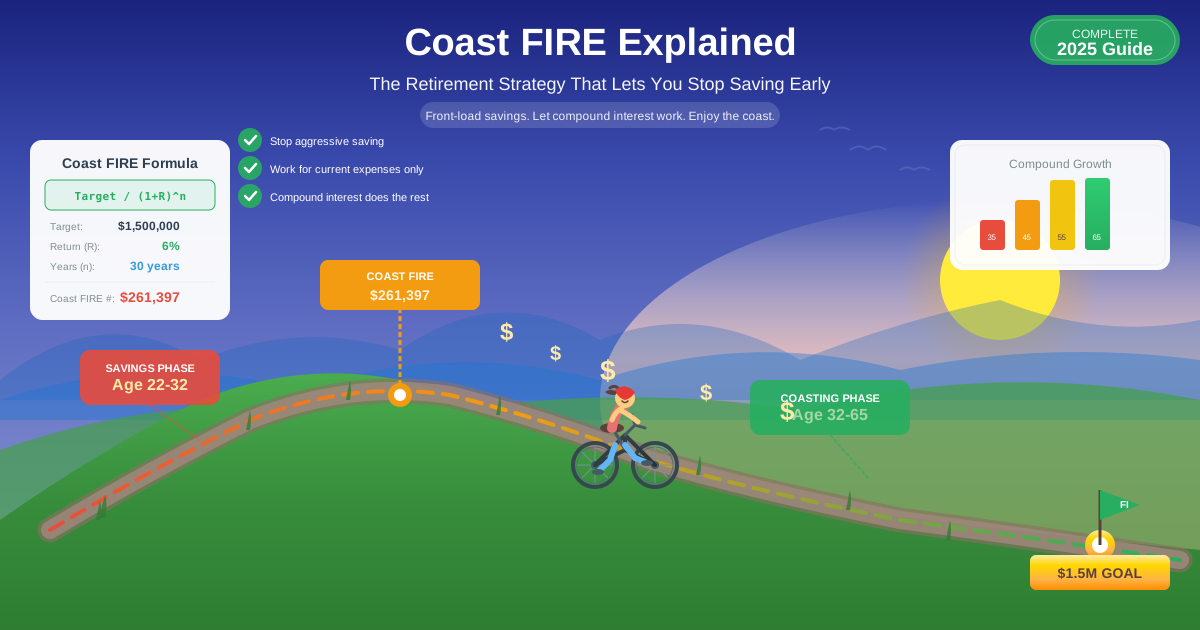
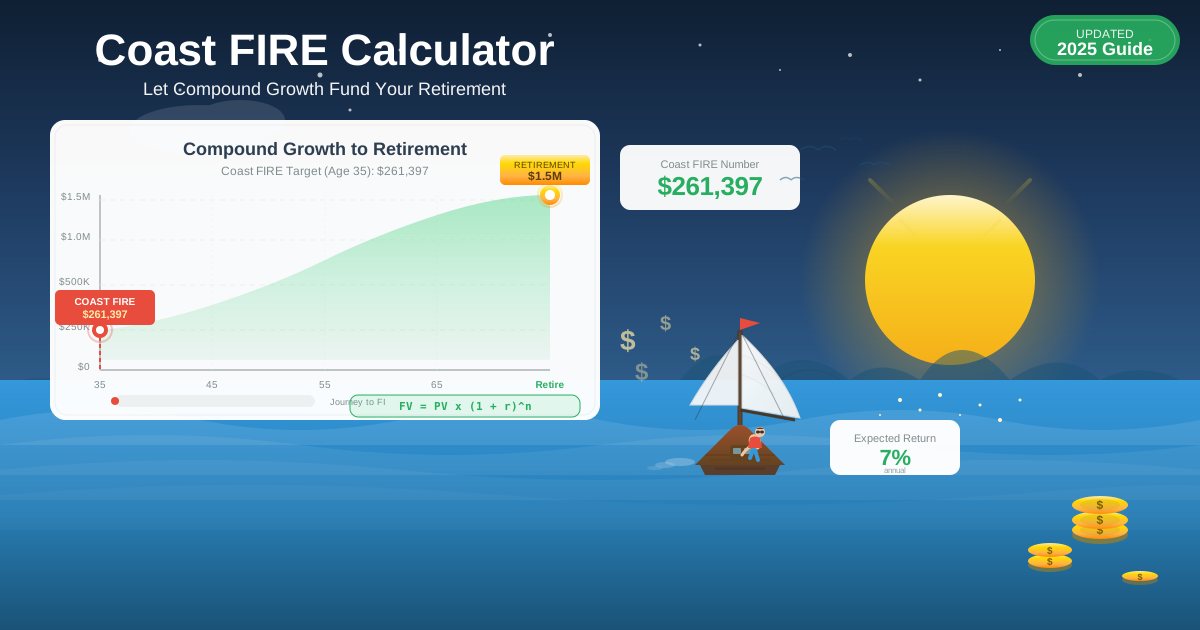
Whether you're aiming for a traditional retirement at 67 or pursuing Financial Independence, Retire Early (FIRE), it's crucial to know where you stand. Understanding concepts like your savings rate and investment growth trajectory is empowering. Tools that help you visualize your progress can provide motivation and clarity. For instance, the Coast FIRE Calculator can show you how much you need to invest by a certain age to let the power of compounding take over, allowing you to "coast" to your retirement goal. This approach can work in tandem with your Social Security plan, providing two powerful engines for your financial future.
How to Create a Secure PDF of Your Financial Projections
As you use online calculators to map out your financial future, it's wise to keep a record of your projections. Creating a secure PDF of your results provides a static, offline document you can save for your records or share with a financial advisor. Here’s how to do it on any of our tool pages:
- Step 1: Get Your Results. Navigate to a tool like the House Hacking Calculator or Self-Employment Tax Calculator and input your financial data to generate your results.
- Step 2: Open the Print Dialog. Use the keyboard shortcut
Ctrl + P(on Windows) orCmd + P(on Mac), or go to your browser's menu and select "Print." - Step 3: Change the Destination. In the print window that appears, look for a field labeled "Destination" or "Printer." Click it and select "Save as PDF" from the list of options.
- Step 4: Adjust Settings (Optional). You can often adjust settings like layout (portrait or landscape) and margins to ensure the PDF looks clean and captures all the necessary information.
- Step 5: Save the File. Click the "Save" button and choose a secure location on your computer to store your financial plan. Give it a clear name like "2027_Retirement_Projections.pdf".
This simple process creates a professional-looking document that archives your hard work and planning.
Take Control of Your Financial Future
Projecting your 2027 Social Security COLA is more than an academic exercise; it's a proactive step toward building a secure and comfortable retirement. While the exact percentage remains to be seen, you now have the methodology to make a strong estimate and, more importantly, a framework for building a financial plan that doesn't depend on any single variable.
By understanding how COLA works, maximizing your earning potential, and exploring diverse income streams, you can build a resilient strategy that weathers economic shifts. The future is uncertain, but your preparation doesn't have to be.
Don't wait for official announcements to shape your future. Start planning for your 2027 retirement today by exploring our full suite of free, secure, and privacy-focused finance calculators. Take control of your financial journey now!