Sales Tax Calculator: The Ultimate Guide for Shoppers (2024)

Your Guide to Calculating Sales Tax on Purchases
Have you ever taken an item to the checkout counter, confident you know the exact price, only to be surprised by a higher total? That unexpected increase is almost always due to sales tax. It’s a small but significant part of nearly every purchase we make, yet many of us don’t fully understand how it works. This guide is here to change that.
We'll break down what sales tax is, why it varies so dramatically from one city to the next, and how you can calculate it yourself. More importantly, we'll show you why using a sales tax calculator is the smartest, fastest, and most accurate way to manage your purchase costs and stay on top of your budget. Let's demystify that number on your receipt and empower you to be a more informed consumer.
What is Sales Tax? A Simple Breakdown
At its core, sales tax is a form of consumption tax. It's a percentage-based tax levied by a government on the sale of goods and services. When you buy a new coffee maker, a pair of jeans, or even a digital subscription, the government takes a small cut. This revenue is a critical source of funding for public services like schools, roads, public safety, and infrastructure.
It's important to distinguish sales tax from other taxes you might encounter:
- Income Tax: This is a tax on the money you earn from work, investments, or other income streams.
- Property Tax: This is a tax on the value of real estate you own.
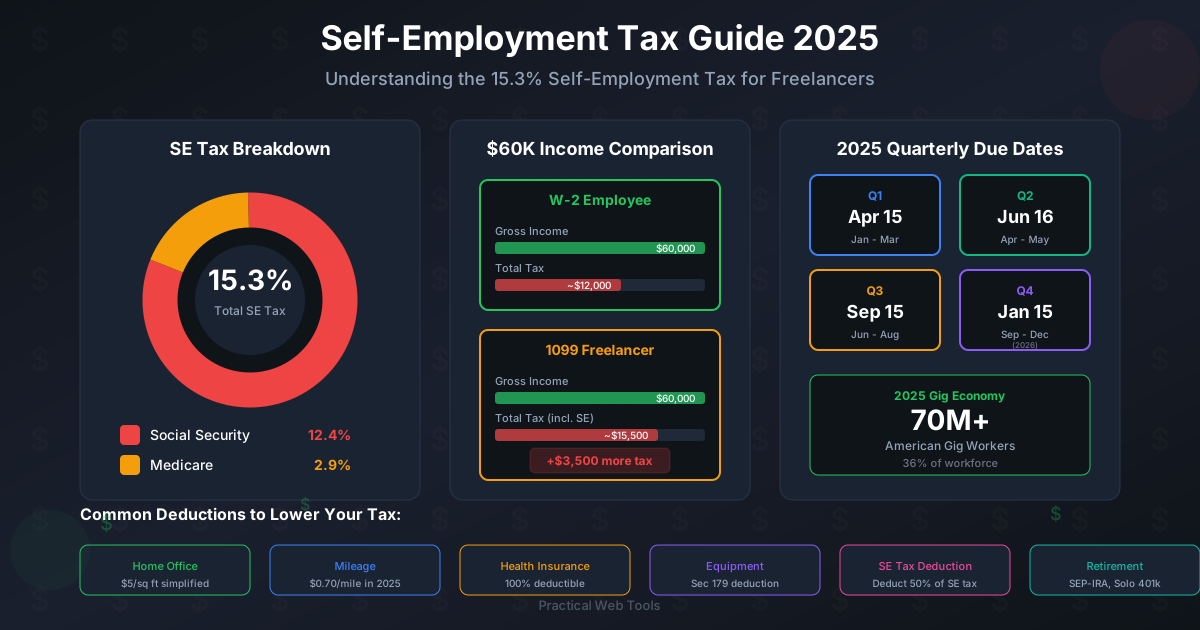
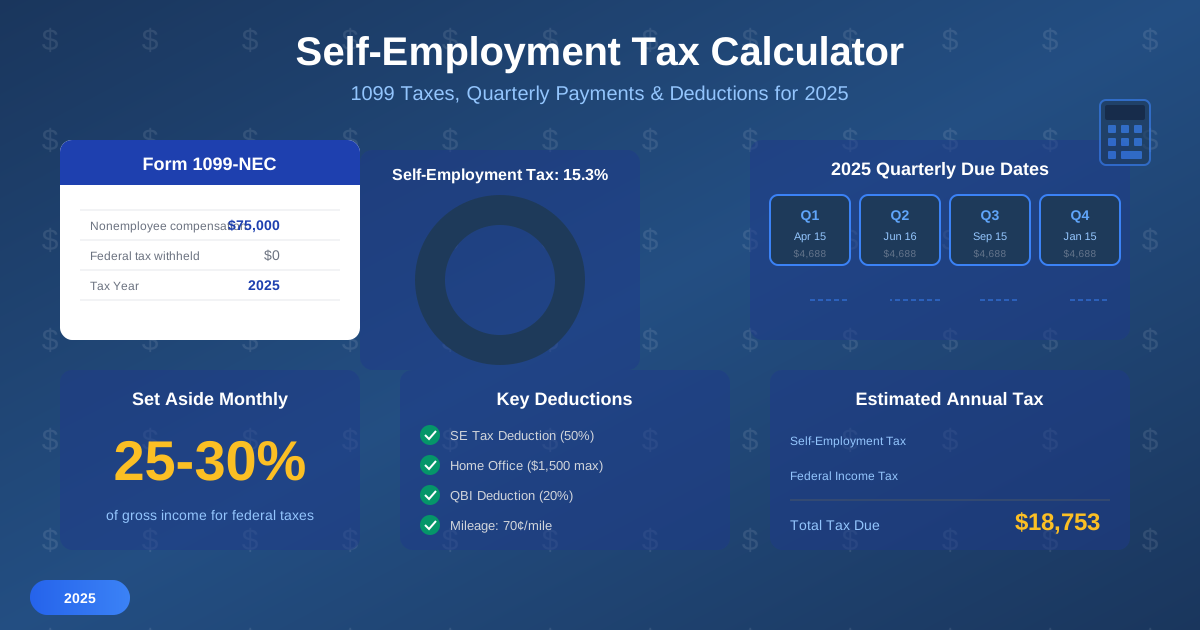
- Self-Employment Tax: If you're a freelancer or run your own business, this tax covers your Social Security and Medicare contributions. Managing these distinct business taxes is crucial, and a tool like our Self-Employment Tax Calculator can be invaluable for estimating what you owe.
Sales tax is unique because it's collected at the point of sale. The retailer is responsible for collecting the tax from you, the consumer, and then remitting it to the appropriate government agencies. This makes you an essential part of the state and local funding process with every purchase you make.
Why Sales Tax Rates Vary So Much
One of the most confusing aspects of sales tax in the United States is its lack of uniformity. The rate you pay in one city can be completely different from the rate in a town just ten miles away. This variation is due to the multiple layers of government that can impose a sales tax. It's not just one single rate; it's a combination of several.
Here’s a breakdown of the typical layers:
- State-Level Tax: This is the foundational sales tax rate set by the state legislature. Most, but not all, states have one. As of 2024, five states do not have a statewide sales tax: Alaska, Delaware, Montana, New Hampshire, and Oregon (often remembered by the acronym NOMAD).
- County-Level Tax: On top of the state tax, many county governments add their own percentage to fund local services.
- City-Level Tax: Municipalities can also add a city-specific sales tax.
- Special District Taxes: Sometimes, special-purpose districts (like for transportation, arts, or stadiums) are given the authority to levy their own sales tax within their boundaries.
Your final sales tax rate is the sum of all these applicable layers. This is why a zip code is often the most accurate way to determine the exact rate.
Sales Tax Rate Examples
To illustrate this, let's look at a simplified example of how rates can stack up:
| Tax Layer | Description | Example Location (Hypothetical) | Rate |
|---|---|---|---|
| State Tax | The base rate for the entire state. | State of California | 7.25% |
| County Tax | An additional rate for a specific county. | Los Angeles County | 2.25% |
| City Tax | A further addition by the municipality. | City of Santa Monica | 0.50% |
| Combined Rate | The total rate paid by the consumer. | Santa Monica, CA | 10.00% |
This table demonstrates why simply knowing the state tax rate isn't enough to accurately calculate your total cost.
How to Calculate Sales Tax Manually: The Formula
While a calculator is the easiest method, understanding the manual calculation is key to financial literacy. It’s a straightforward, three-step process.
Step 1: Find the Net Price and Your Local Tax Rate
First, you need two pieces of information:
- Net Price: This is the price of the item or service before any tax is applied (the sticker price).
- Sales Tax Rate: You need the total, combined sales tax rate for the specific location of the purchase. You can usually find this with a quick search for "sales tax rate for [City, State]" or by checking your state's Department of Revenue website.
Crucial Tip: Remember to convert the sales tax percentage into a decimal for the calculation. To do this, simply divide the percentage by 100. For example, a 7.5% tax rate becomes 0.075.
Step 2: Calculate the Sales Tax Amount
Use the following formula to determine how much tax you'll be paying:
Sales Tax Amount = Net Price × Sales Tax Rate (as a decimal)
Step 3: Calculate the Total Cost
Finally, add the sales tax amount to the original net price to find your grand total:
Total Cost = Net Price + Sales Tax Amount
A Worked Example
Let's say you're buying a new tablet that costs $799. You're in a city where the combined sales tax rate is 8.25%.
- Convert the rate to a decimal:
8.25% / 100 = 0.0825 - Calculate the sales tax:
$799 × 0.0825 = $65.92(rounded to the nearest cent) - Calculate the total cost:
$799 + $65.92 = $864.92
So, your final price for the tablet would be $864.92.
The Power of a Sales Tax Calculator
Understanding the manual formula is great, but in the real world, a dedicated sales tax calculator is far more efficient. Practical Web Tools offers a suite of free, privacy-focused tools, and a sales tax calculator fits perfectly into that philosophy by simplifying a complex financial task.
Here are the primary benefits of using a calculator:
- Accuracy: A calculator eliminates the risk of human error. No more mistakes in decimal conversion or simple arithmetic that could throw off your budget.
- Speed: Get an instantaneous result. This is perfect for when you're shopping and want to quickly compare the final cost of items or check a receipt for accuracy.
- Convenience: The best calculators have built-in, up-to-date databases of tax rates. Instead of searching for the correct rate yourself, you can simply enter a zip code and let the tool do the heavy lifting.
- Reverse Calculations: Some advanced calculators can also perform reverse calculations. If you have a final receipt total, you can use it to figure out the original price and the amount of tax paid.
Advanced Sales Tax Scenarios
Sales tax isn't always as simple as applying a rate to a product. Here are a few common complexities to be aware of:
Sales Tax on Services vs. Goods
Traditionally, sales tax applied mainly to tangible goods. However, this is changing. Many states now tax a wide range of services, from landscaping and car repairs to digital streaming subscriptions. Whether a service is taxable is determined entirely by state and local law.
Online Purchases and Economic Nexus
For a long time, many online purchases were effectively tax-free if the seller didn't have a physical presence in the buyer's state. The 2018 Supreme Court decision in South Dakota v. Wayfair, Inc. changed everything. Now, states can require online retailers to collect sales tax if they meet certain sales volume or transaction thresholds in that state (a concept known as "economic nexus"). As a result, you should expect to pay sales tax on almost all of your online purchases today.
Tax-Exempt Items and Sales Tax Holidays
Not everything is taxable. Most states provide exemptions for certain categories of goods deemed necessities. Common examples include:
- Unprepared food (groceries)
- Prescription and some over-the-counter drugs
- Certain medical devices
Additionally, many states offer "sales tax holidays" on specific weekends during the year. These are typically timed for back-to-school season and temporarily remove sales tax from items like clothing, school supplies, and sometimes computers.
How Understanding Sales Tax Fits into Your Broader Financial Picture
Mastering the concept of sales tax is a small but foundational piece of overall financial wellness. Every dollar you can account for is a dollar you can put toward your larger goals.
- Accurate Budgeting: When you create a budget, you need to account for the total cost of goods, not just the sticker price. Consistently underestimating your spending by 5-10% due to tax can derail your entire financial plan.
- Planning for Large Purchases: For a big-ticket item like a car, furniture, or major electronics, the sales tax can amount to hundreds or even thousands of dollars. This is a significant sum that must be factored into your savings plan.
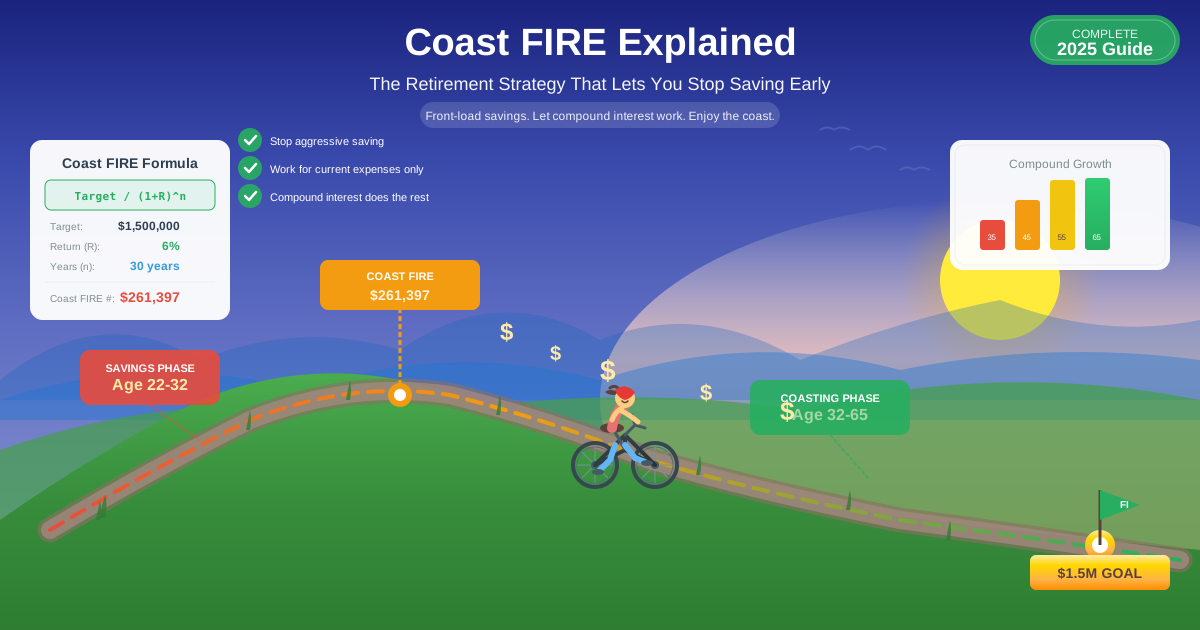
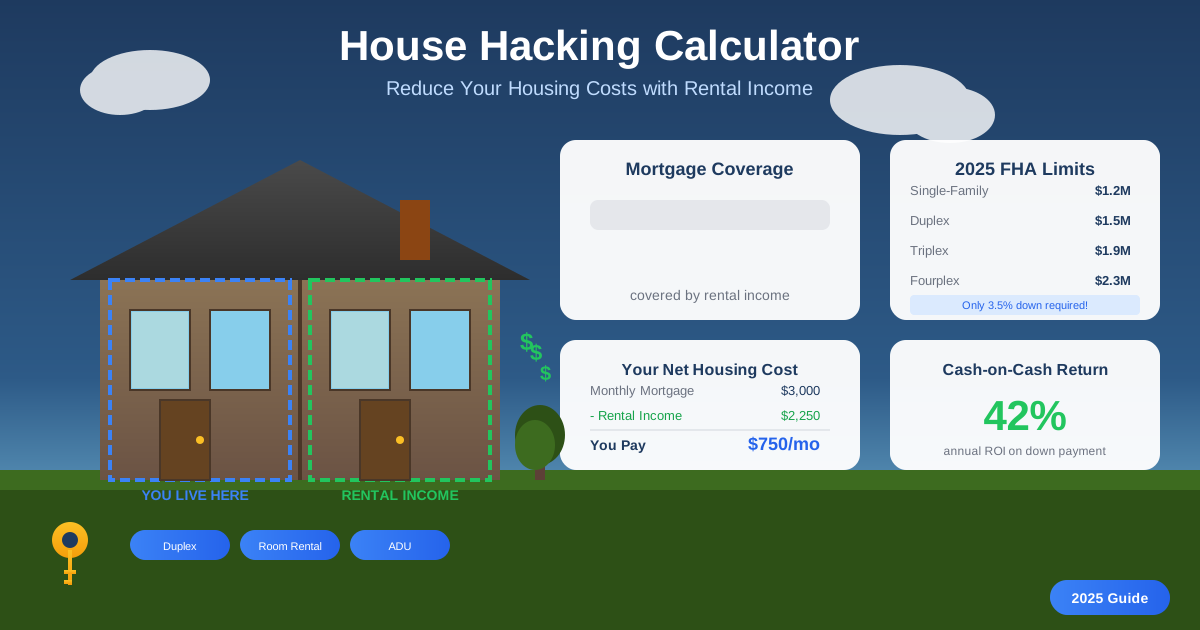
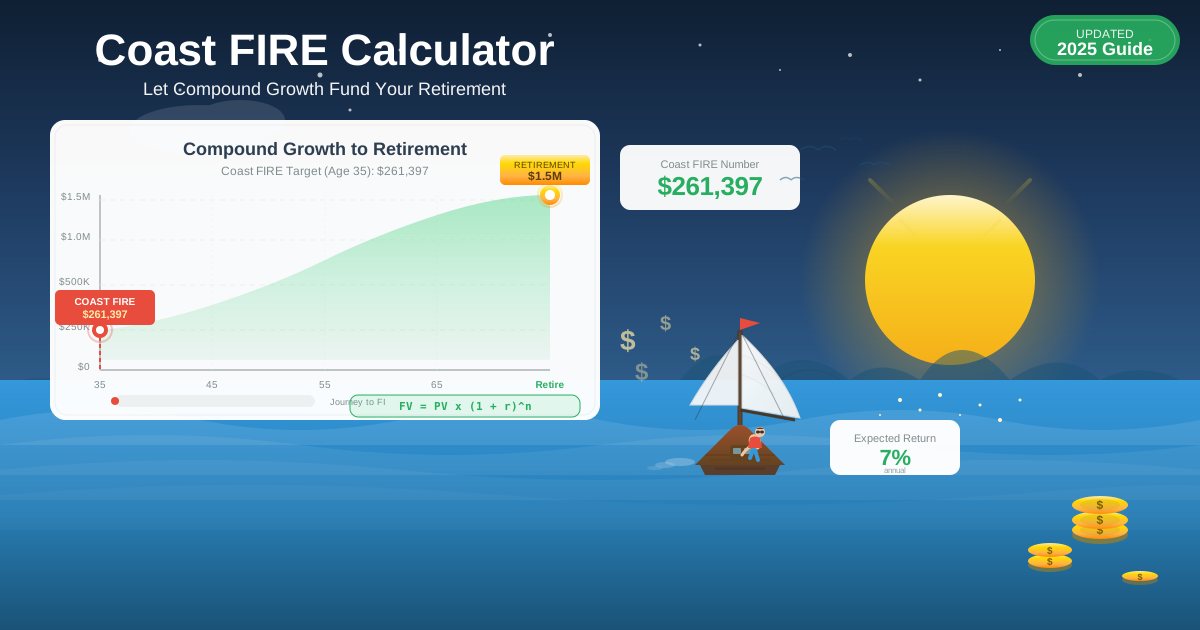
- Achieving Long-Term Goals: Diligence in the small details of your daily finances is what enables you to achieve major milestones. Accurately tracking your spending, including tax, frees up capital that can be used for investing or saving. It's the first step on a journey toward ambitious goals, like making a smart property investment using a tool like our House Hacking Calculator or planning for early financial independence with our Coast FIRE Calculator.
By understanding and anticipating sales tax, you move from being a reactive spender to a proactive financial planner.
Conclusion: Take Control of Your Purchase Power
Sales tax is an unavoidable part of our economic lives, but it doesn't have to be a mystery. By understanding that it's a layered tax that varies by location, you're already ahead of the curve. While knowing the manual formula is empowering, using a reliable sales tax calculator is the most practical way to ensure accuracy and save time.
Being an informed consumer means knowing the true cost of your purchases. This knowledge helps you budget more effectively, plan for large expenses, and ultimately, achieve your financial goals with greater confidence.
Ready to take the next step in mastering your finances? Explore the full suite of free, easy-to-use financial tools at Practical Web Tools. From tax estimators to investment calculators, we're here to help you make smarter financial decisions every day.