Pension Calculator: Your Ultimate Retirement Planning Guide
Your Financial Future in Focus: Demystifying Retirement Planning
"Have I saved enough for retirement?" It's a question that whispers in the back of our minds, growing louder as the years go by. For many, retirement feels like a distant, foggy concept—a destination without a clear map. We know we need to save, but how much is enough? Will our nest egg last? The uncertainty can be paralyzing.
What if you had a tool that could cut through that fog? A personal financial GPS that could show you exactly where you are, where you're headed, and what adjustments you need to make to reach your destination comfortably. That tool exists, and it's called a pension calculator.
This comprehensive guide will walk you through everything you need to know about using a pension calculator for effective retirement planning. We'll break down the complex inputs into simple terms, show you how to interpret the results, and provide actionable strategies to bridge any gaps in your savings. Forget the anxiety and uncertainty; it's time to take control and build a clear, confident path to the retirement you deserve.
What is a Pension Calculator and Why is it Essential?
A pension calculator, often called a retirement calculator, is a digital tool designed to project your future retirement income. By inputting key details about your current financial situation and future goals, it simulates the growth of your investments over time to estimate the size of your retirement fund and the income it can generate.
Think of it as a financial time machine. It allows you to peer into your future and see the long-term consequences of the financial decisions you make today. But its true power isn't just in prediction; it's in empowerment.
Here’s why using one is non-negotiable for serious retirement planning:
- It Provides Clarity: A calculator transforms the abstract goal of "saving for retirement" into a tangible number. Seeing a concrete figure you need to aim for is incredibly motivating.
- It Identifies Shortfalls Early: The worst time to discover you haven't saved enough is when you're about to retire. A calculator can flag a potential shortfall decades in advance, giving you ample time to course-correct.
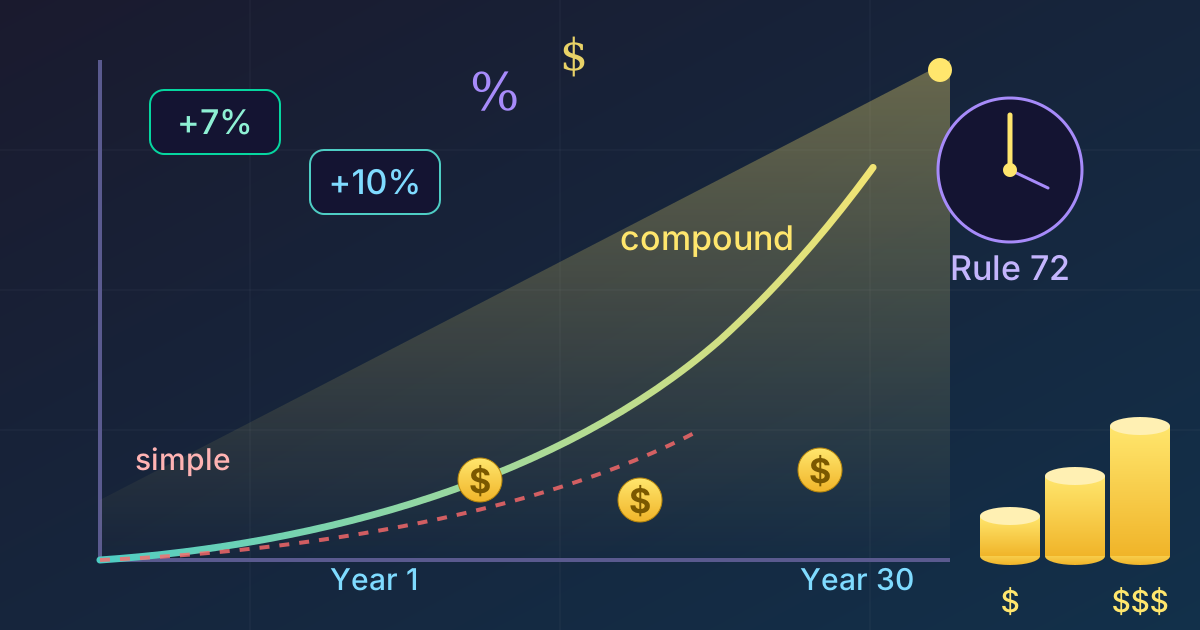
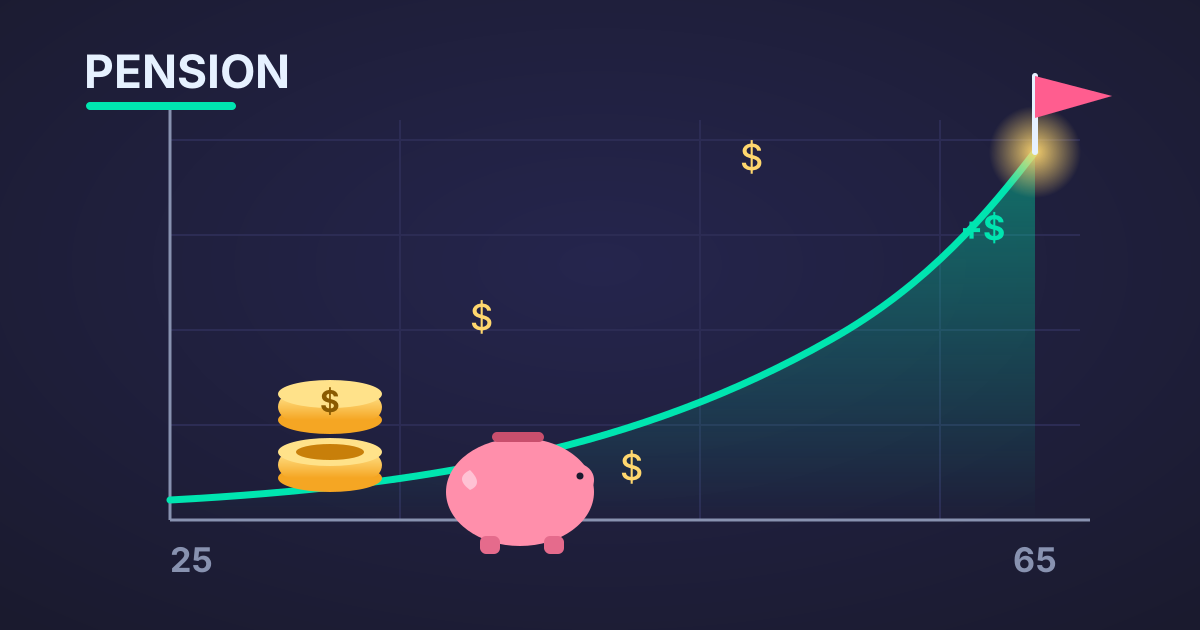
- It Illustrates the Power of Compounding: Nothing demonstrates the magic of compound interest like watching a graph of your savings curve steeply upward over time. It's a powerful visual reminder of why starting early and staying consistent is so critical.
- It Enables Scenario Planning: What happens if you increase your savings by just 2%? What if you delay retirement by three years? A calculator allows you to model these different scenarios instantly, helping you make informed decisions about your financial trade-offs.
The Key Inputs: What a Pension Calculator Needs From You
To give you an accurate projection, a pension calculator needs some information. Garbage in, garbage out. The more precise your inputs, the more reliable the results will be. Let's break down the typical data points you'll need to gather.
Personal Information
- Current Age: Your starting point on the timeline.
- Desired Retirement Age: When you plan to stop working. This defines the length of your accumulation phase.
Savings & Contributions
- Current Retirement Savings: The total amount you have saved for retirement right now across all accounts (401(k), IRAs, etc.).
- Annual Salary: Your current gross annual income.
- Contribution Rate: The percentage of your salary you contribute to your retirement accounts. Be sure to specify if this is pre-tax (like a traditional 401(k)) or post-tax (like a Roth IRA).
- Employer Match: If your employer offers a 401(k) match (e.g., "50% of the first 6% you contribute"), this is crucial information. It's essentially free money and has a massive impact on your savings.
Projections & Assumptions
- Expected Rate of Return: This is an educated guess about how much your investments will grow on average each year. It's wise to be conservative. A rate of 6-7% is a common long-term estimate for a balanced portfolio. Many calculators also ask for a lower rate of return during retirement, as your portfolio will likely become more conservative.
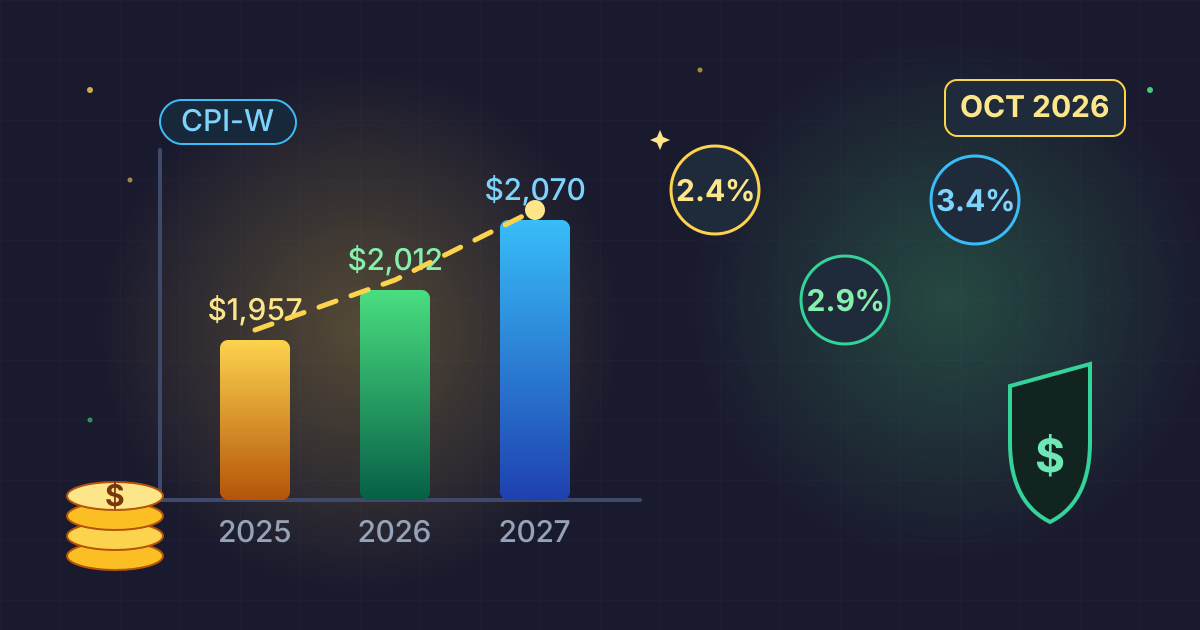
- Expected Inflation Rate: A critical factor. An average inflation rate of 2-3% is a standard assumption. This ensures your results are shown in today's dollars, reflecting your future purchasing power.
- Desired Annual Retirement Income: How much money do you want to live on each year in retirement? A common rule of thumb is to aim for 70-80% of your pre-retirement income, but this is highly personal.
- Other Income Sources: Will you receive a government pension, Social Security, or rental income in retirement? Factoring these in gives a more complete picture.
Step-by-Step: How to Use a Pension Calculator Effectively
Now that you have your data, it's time to put the calculator to work. Following a structured process will ensure you get the most out of the tool.
-
Step 1: Gather Your Financial Documents: Before you start, collect your most recent pay stub, statements for all your retirement accounts (401(k), IRA, brokerage), and your latest Social Security statement (available online).
-
Step 2: Choose a Reputable Calculator: Many online tools are available from financial institutions and independent websites. Ensure the calculator you choose is comprehensive and allows you to adjust all the key variables mentioned above.
-
Step 3: Enter Your Data Accurately: Carefully input the information you gathered. Double-check your numbers. A simple typo in your current savings or contribution rate can drastically alter the results.
-
Step 4: Analyze the Initial Results: The calculator will present a projection, often as a graph and a final number. It might show you a projected retirement nest egg, the annual income it can support, and whether you have a surplus or a shortfall compared to your goal.
-
Step 5: Play with the Variables (Scenario Analysis): This is the most important step. Don't just accept the first result. Use the calculator to answer key questions:
- "What if I increase my contribution by 1% each year?"
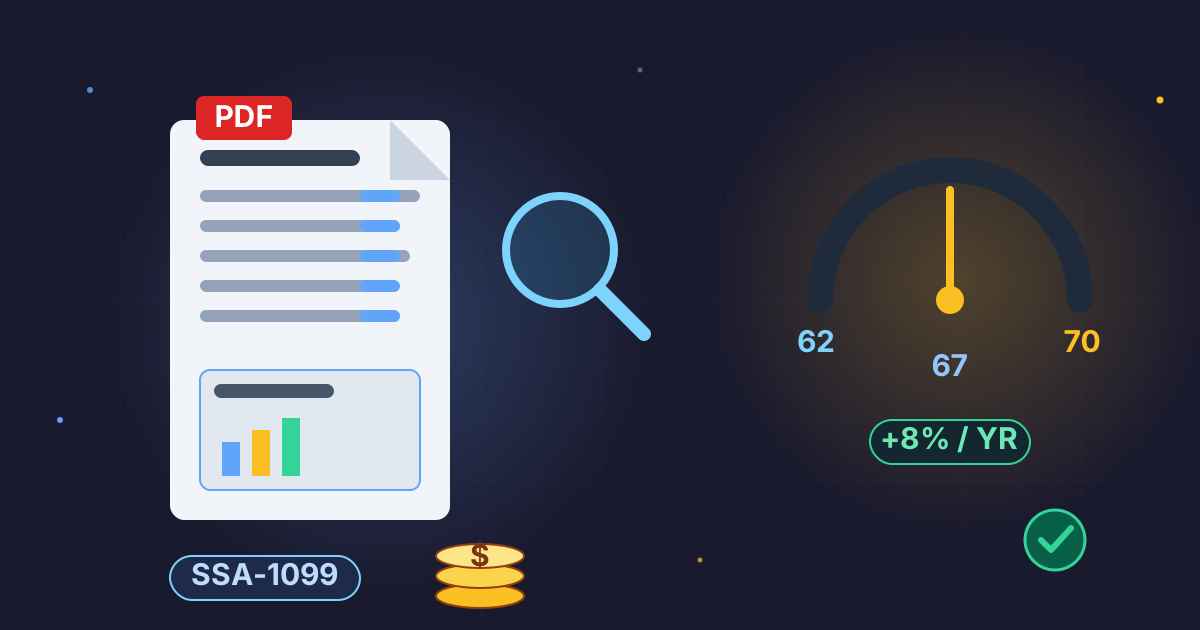
- "What impact does retiring at 62 versus 67 have?"
- "How does a lower-than-expected investment return affect my final number?"
By running these different scenarios, you move from passive observation to active planning.
Strategies to Bridge Your Retirement Gap
Did the calculator reveal a potential shortfall? Don't panic. The whole point of this exercise is to identify issues while you still have plenty of time to fix them. Here are powerful, actionable strategies to get you back on track.
1. Increase Your Contribution Rate
Even a small increase can have a massive impact thanks to compounding. Bumping your savings rate from 8% to 10% might seem small now, but over 30 years, it can translate to hundreds of thousands of extra dollars.
2. Maximize Your Employer Match
If you are not contributing enough to get your full employer match, you are leaving free money on the table. This should be your absolute first priority. There is no other investment that offers a guaranteed 50% or 100% return.
3. Consider Alternative Income Streams
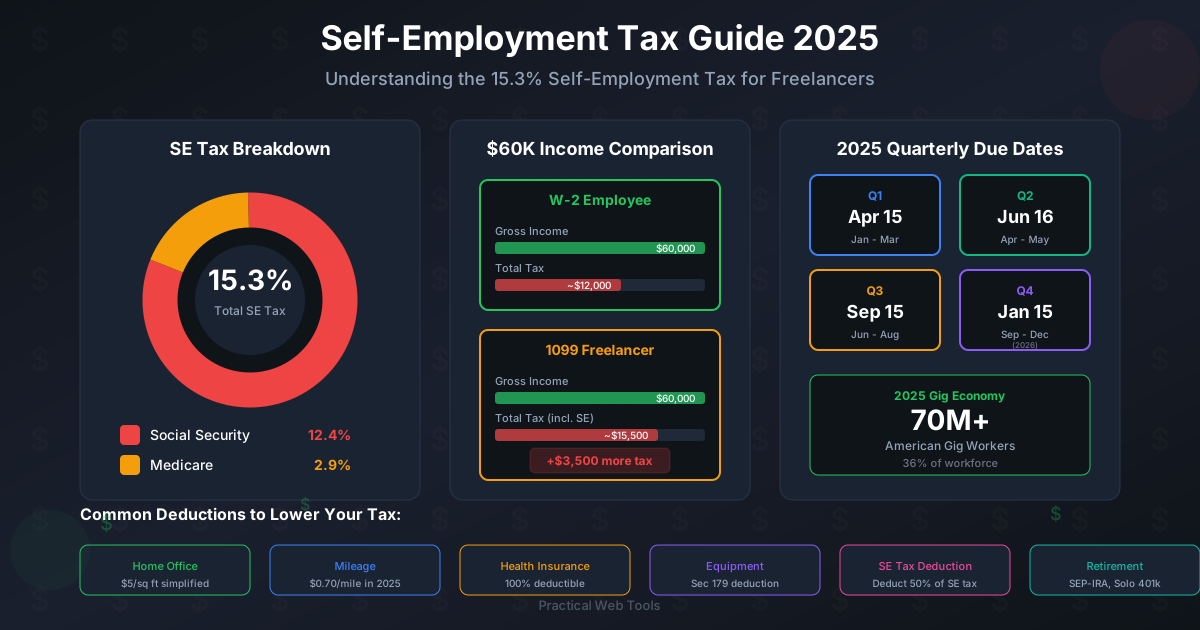
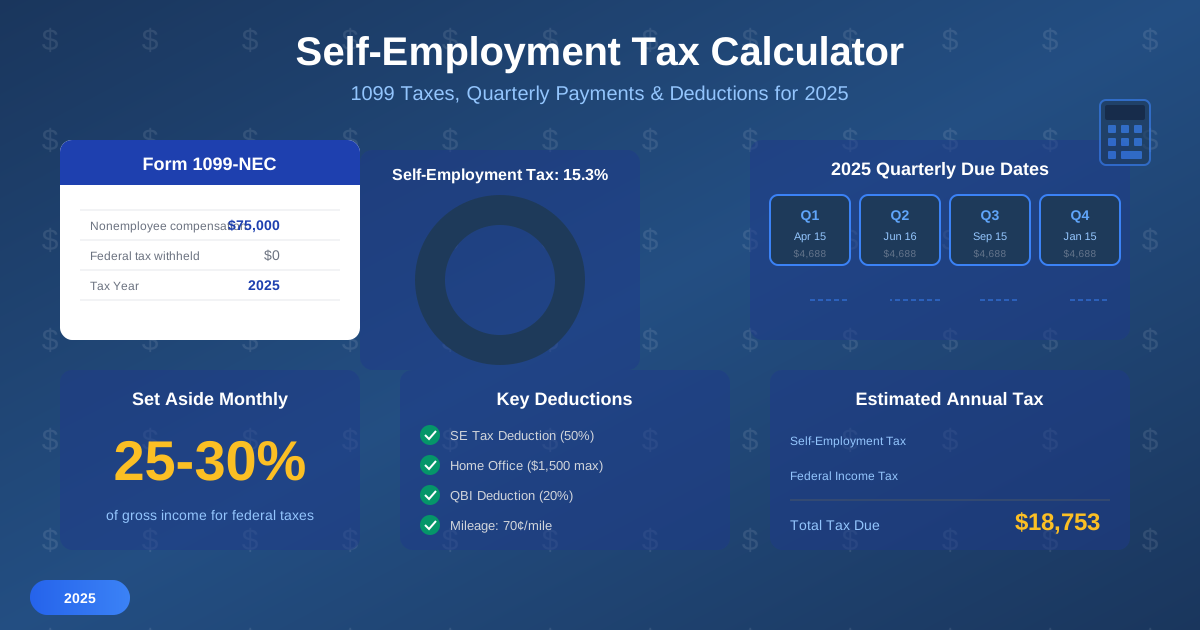
Boosting your income allows you to boost your savings. This could involve freelancing, starting a side business, or investing in income-generating assets. If you're exploring self-employment, remember to account for taxes. A tool like the Self-Employment Tax Calculator can help you understand your obligations so there are no surprises.
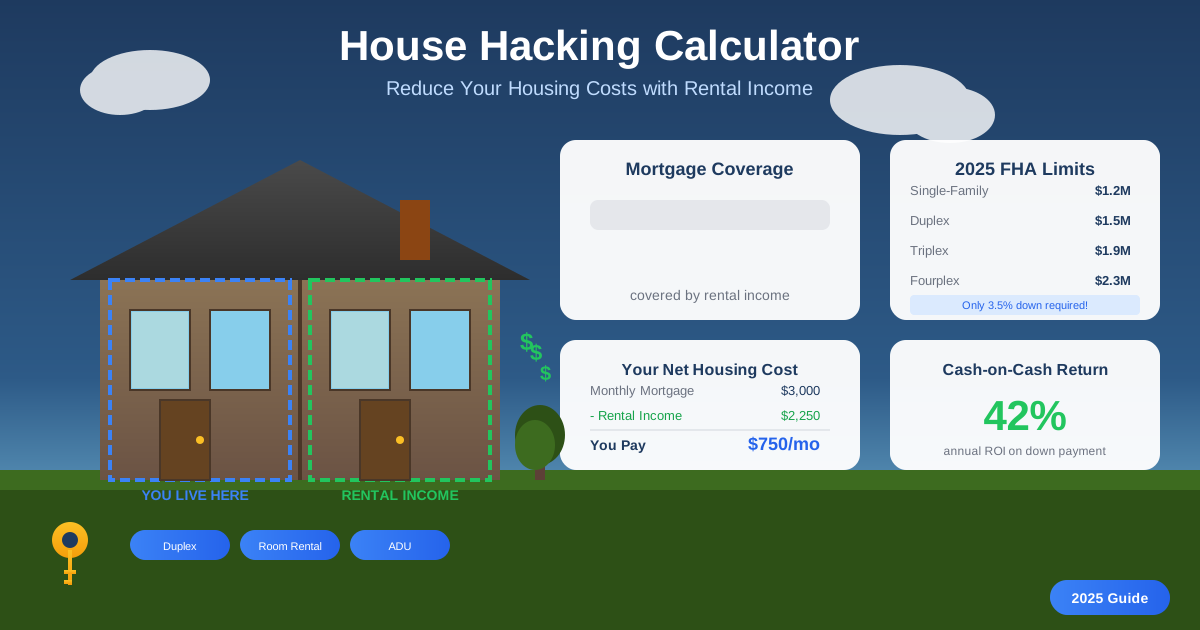
Another powerful strategy is to reduce your largest expense: housing. House hacking—renting out a portion of your primary residence—can drastically cut your living costs and provide a new income stream. You can model potential scenarios with our House Hacking Calculator to see how this could accelerate your retirement savings.
4. Re-evaluate Your Timeline
Working just a few years longer can be incredibly powerful. It gives your investments more time to grow and reduces the number of years your nest egg needs to support you. Run the numbers in the calculator to see the dramatic effect of retiring at 68 instead of 65.
Advanced Retirement Planning Concepts
As you become more comfortable with the basics, you can explore more advanced strategies and ideas that offer different paths to financial security.
Defined Benefit vs. Defined Contribution Plans
It's helpful to know the type of plan you have. Defined Benefit plans (traditional pensions) are increasingly rare. They guarantee a specific monthly payout in retirement, usually based on your salary and years of service. Defined Contribution plans (like a 401(k) or 403(b)) are far more common today. You and your employer contribute to an investment account, but the final amount depends on your contributions and investment performance. Most online pension calculators are designed for defined contribution plans.
The FIRE Movement and Coast FIRE
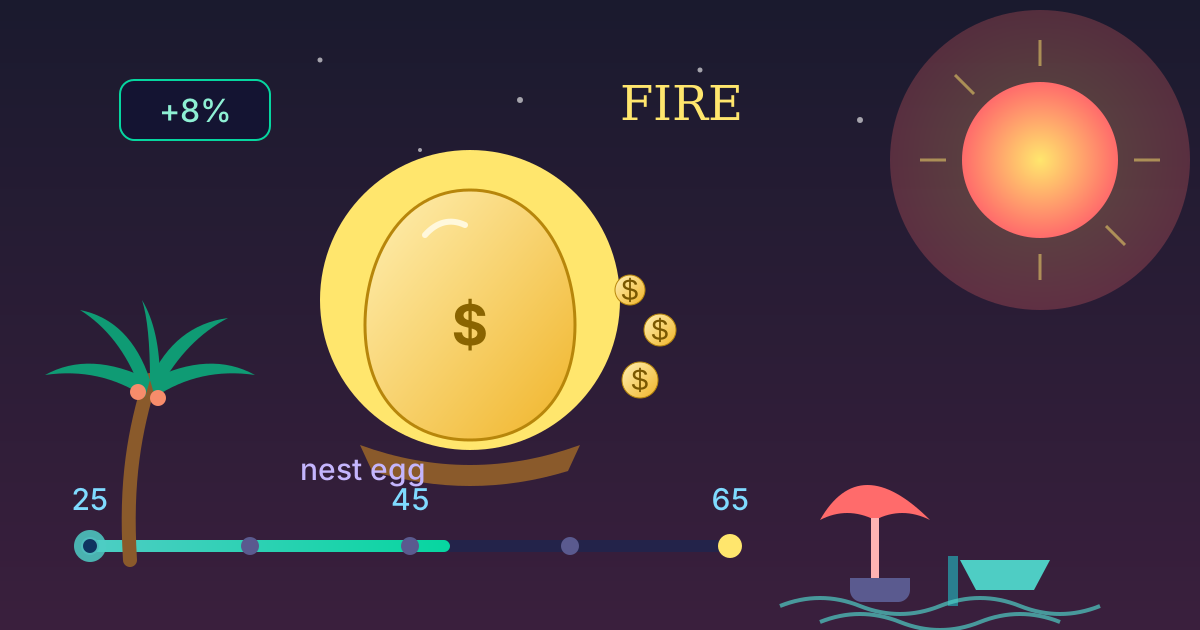
The Financial Independence, Retire Early (FIRE) movement champions aggressive saving and investing to retire decades earlier than is traditional. While not for everyone, its principles of mindful spending and high savings rates can be valuable.
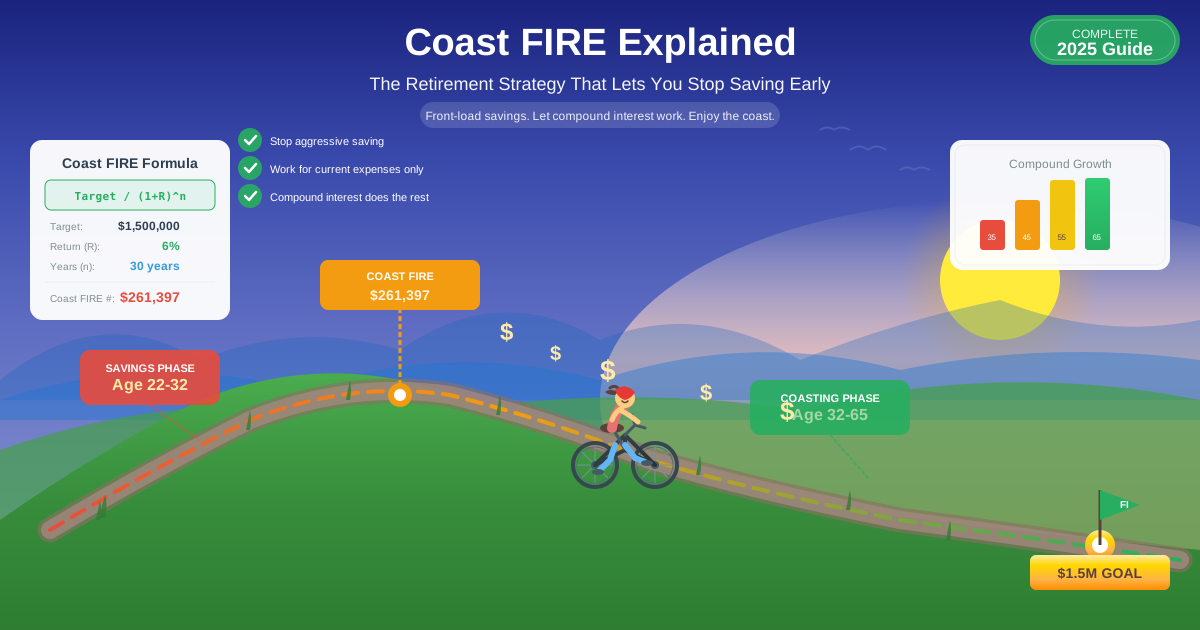
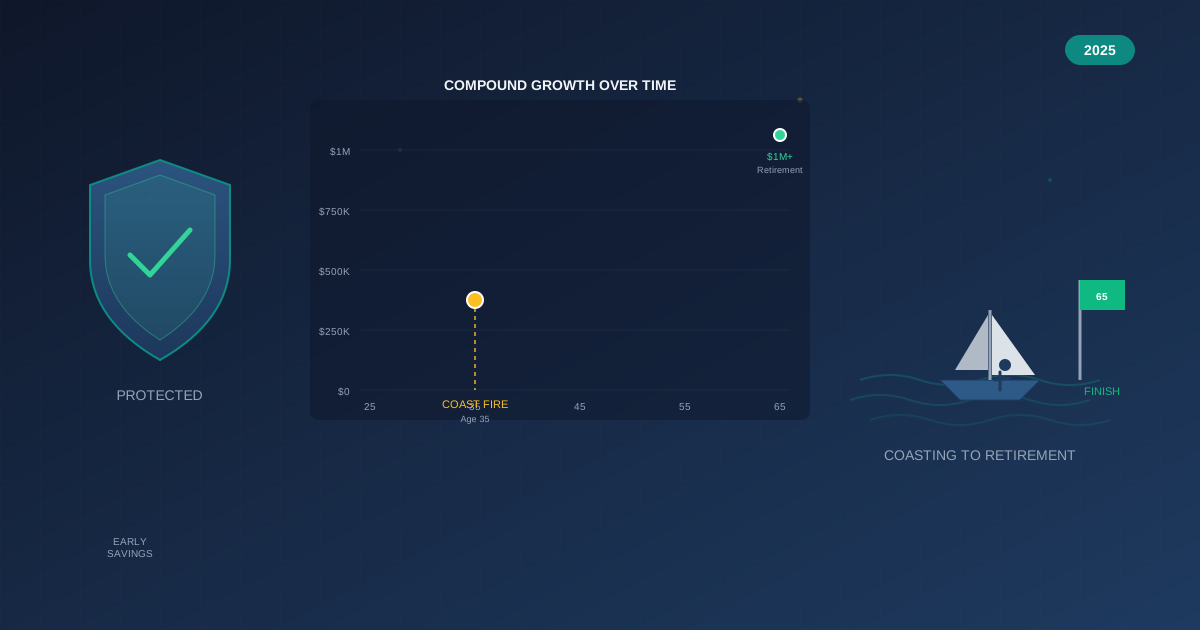
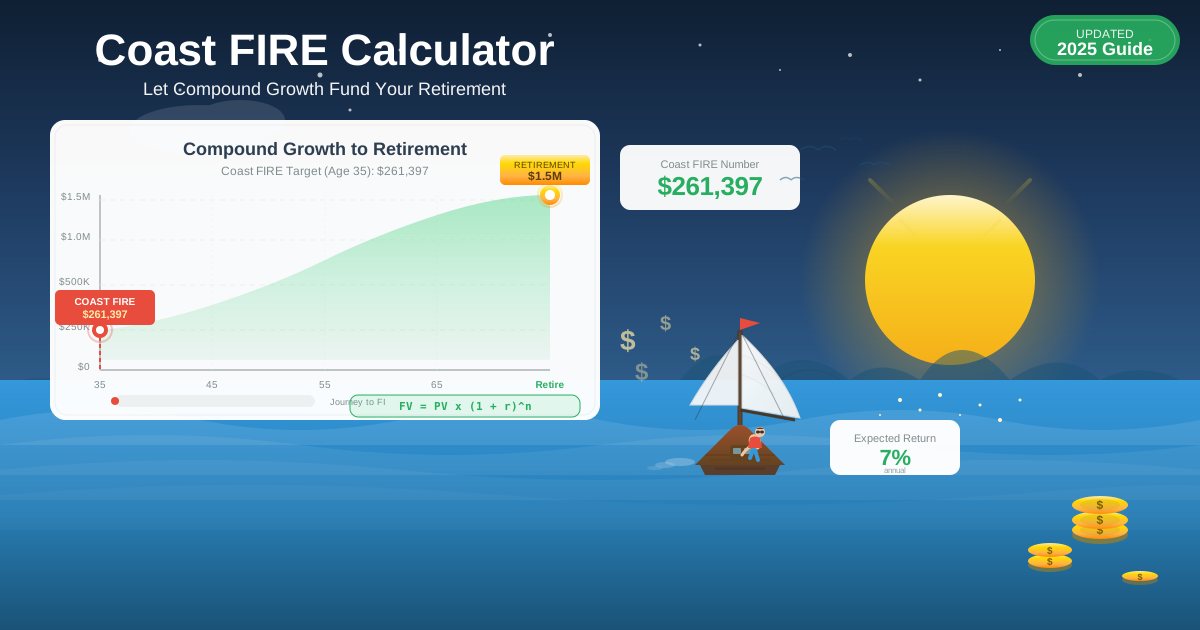
A more accessible variation is Coast FIRE. This is the point at which you have enough in your retirement accounts that, without any further contributions, your nest egg will grow (or "coast") to a sufficient size by the time you reach traditional retirement age. Reaching Coast FIRE provides immense flexibility—you no longer have to save for retirement and can choose to downshift your career, pursue a passion project, or work part-time. It's a powerful milestone that shifts the focus from accumulation to lifestyle. To see when you might reach this goal, you can use our dedicated Coast FIRE Calculator to chart your unique path.
Common Pitfalls and How to Avoid Them
As you use pension calculators, be aware of these common mistakes:
- Being Overly Optimistic: Using a 10% or 12% rate of return might look great, but it's not a reliable long-term average. Stick to conservative estimates (6-7%) to create a more resilient plan.
- Forgetting About Fees: High investment fees can be a major drag on your returns over time. A 1% fee might not sound like much, but on a $1 million portfolio, that's $10,000 every single year. Be mindful of the expense ratios on your funds.
- Ignoring Inflation: A $2 million nest egg in 30 years won't have the same purchasing power as $2 million today. Always use a calculator that factors in inflation to give you a realistic picture of your future lifestyle.
- The "Set It and Forget It" Mindset: Your life will change. You'll get raises, change jobs, and your goals may shift. Retirement planning is not a one-time event. Revisit your plan and re-run the calculations at least once a year to ensure you're still on track.
Conclusion: Take Control of Your Financial Future Today
A pension calculator is more than just a tool for crunching numbers; it's a tool for building confidence. It demystifies the future, replaces anxiety with a clear plan, and empowers you to make intelligent decisions that will compound for decades to come.
The journey to a secure retirement begins with a single step: understanding where you stand. By using this guide and the tools at your disposal, you can map out your course, navigate the challenges, and build the financial future you've always envisioned.
Don't just read about planning—start doing it. Explore our suite of free, privacy-focused finance calculators on Practical Web Tools to take concrete steps toward your goals. Your future self will thank you.