ROI Calculator: Your Ultimate Guide to Measuring Profitability
Your Guide to Calculating Return on Investment (ROI)
In the world of business and finance, decisions are driven by data. Whether you're a seasoned investor, a startup founder, a marketing manager, or simply someone trying to make smarter personal finance choices, one question reigns supreme: "Is this worth it?" Answering that question with confidence requires a powerful, yet surprisingly simple, metric: Return on Investment (ROI).
Making a decision without understanding its potential return is like navigating without a map. You might get lucky, but you're more likely to end up lost. This comprehensive guide will serve as your map. We'll demystify ROI, break down the formula, walk through practical examples, and show you how to use this essential metric to measure profitability and drive success in any venture. Forget guesswork; it's time to master the art of data-driven decision-making.
What is Return on Investment (ROI)?
Return on Investment (ROI) is a performance measure used to evaluate the efficiency or profitability of an investment. In simple terms, it tells you how much money you made (or lost) on an investment relative to its cost. It is typically expressed as a percentage, making it an easy way to compare the returns of different investments.
A positive ROI means the investment generated a profit, while a negative ROI means it resulted in a loss. For example, an ROI of 150% means that for every dollar you invested, you got your dollar back plus an additional $1.50 in profit.
Why is Calculating ROI Crucial for Success?
Understanding and consistently calculating ROI is not just an academic exercise; it's a fundamental practice for sustainable growth and sound financial management. Here’s why it's so critical:
- Informed Decision-Making: ROI provides a clear, quantitative basis for choosing between different opportunities. Should you invest in a new marketing campaign, upgrade your equipment, or purchase a rental property? ROI helps you compare these options apples-to-apples.
- Performance Measurement: It allows you to measure the success of past decisions. By analyzing the ROI of various projects, you can identify what worked, what didn't, and why, enabling you to refine your strategy for the future.
- Resource Allocation: Businesses and individuals have limited resources (money, time, personnel). ROI analysis helps you allocate those resources to the initiatives that promise the highest returns, maximizing your overall efficiency.
- Securing Funding: If you're seeking funding from investors or applying for a loan, demonstrating a strong projected ROI for your business plan is essential. It proves that you have a viable strategy for generating profit.
The Core ROI Formula: A Simple Breakdown
At its heart, the ROI formula is straightforward. It measures the net profit of an investment against its initial cost.
The Formula:
ROI = (Net Return on Investment / Cost of Investment) x 100%
Let's break down the two main components:
- Net Return on Investment (Net Profit): This is the total earnings from the investment minus the total cost of the investment. It can be calculated as
Final Value of Investment - Initial Cost of Investment. - Cost of Investment (Initial Cost): This includes all the money you put into the investment to get it started. This could be the purchase price of a stock, the total ad spend for a marketing campaign, or the cost of new software and training.
The result is multiplied by 100 to express it as a percentage.
How to Calculate ROI: A Step-by-Step Guide
Calculating ROI is a simple process once you have all the necessary figures. Here’s a clear, step-by-step guide to follow.
Step 1: Determine the Net Return (or Net Profit)
First, you need to calculate the total financial gain from your investment. This isn't just the final sale price; it's the final value minus what you initially paid.
Formula: Net Return = Final Value (or Current Value) - Initial Cost
For example, if you bought a stock for $1,000 and sold it for $1,300, your net return is $300.
Step 2: Determine the Total Cost of Investment
The next step is to accurately identify the total cost. This must include all associated expenses, not just the purchase price. Overlooking costs is a common mistake that leads to an inflated ROI figure.
Examples of costs include:
- Purchase price or initial capital outlay
- Transaction fees or commissions
- Maintenance and repair costs
- Marketing and advertising spend
- Training and implementation fees
Step 3: Apply the Formula
Now, plug your numbers into the ROI formula.
Formula: ROI = (Net Return / Total Cost of Investment) x 100%
Using our stock example: The net return was $300, and the initial cost was $1,000.
ROI = ($300 / $1,000) x 100% = 0.3 x 100% = 30%
Step 4: Interpret the Result
The final step is to understand what the percentage means. In our example, a 30% ROI indicates that the investment generated a profit equal to 30% of its original cost. This is a positive return and, in most contexts, a very good outcome.
A Practical ROI Calculation Example
Let's apply this to a real-world business scenario. Imagine a small e-commerce business runs a digital marketing campaign on social media to promote a new product.
-
Cost of Investment:
- Ad Spend: $2,000
- Cost of hiring a graphic designer for ads: $500
- Total Cost of Investment = $2,500
-
Return on Investment:
- The campaign generates $10,000 in new sales revenue.
- The cost of goods sold (COGS) for these products is $4,000.
- Gross Profit from Campaign = $10,000 (Revenue) - $4,000 (COGS) = $6,000
Now, let's calculate the Net Return:
- Net Return = $6,000 (Gross Profit) - $2,500 (Cost of Investment) = $3,500
Finally, we calculate the ROI:
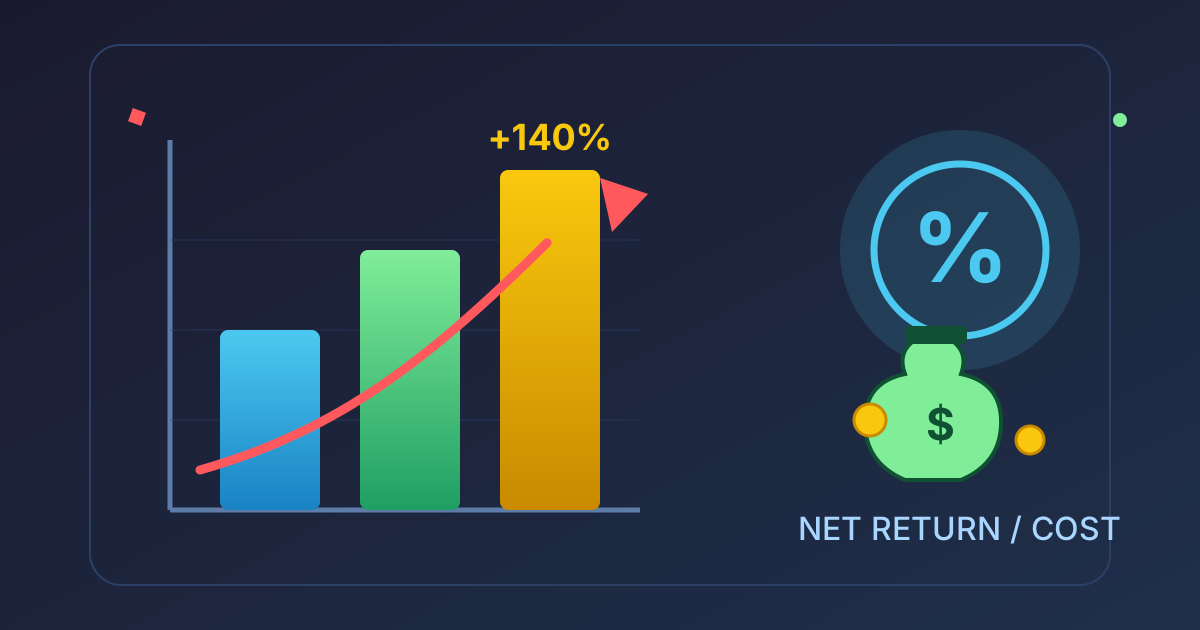
- ROI = ($3,500 / $2,500) x 100% = 1.4 x 100% = 140%
Interpretation: The marketing campaign generated a 140% return on investment. For every $1 spent on the campaign, the business made a profit of $1.40.
What Constitutes a "Good" ROI?
This is one of the most common questions, and the answer is always: it depends. A "good" ROI is not a single number but is relative to several factors:
- Industry: Different industries have different benchmarks. A 10% ROI might be excellent for a stable, low-risk utility company, while a tech startup might aim for much higher returns to justify its high risk.
- Risk: Higher-risk investments should be expected to yield a higher potential ROI. If a low-risk government bond offers a 5% return, a high-risk venture capital investment needs a potential ROI of 100% or more to be attractive.
- Time Frame: An ROI of 20% over one year is fantastic. An ROI of 20% over ten years is much less impressive. This is why it's often helpful to use Annualized ROI (more on that below).
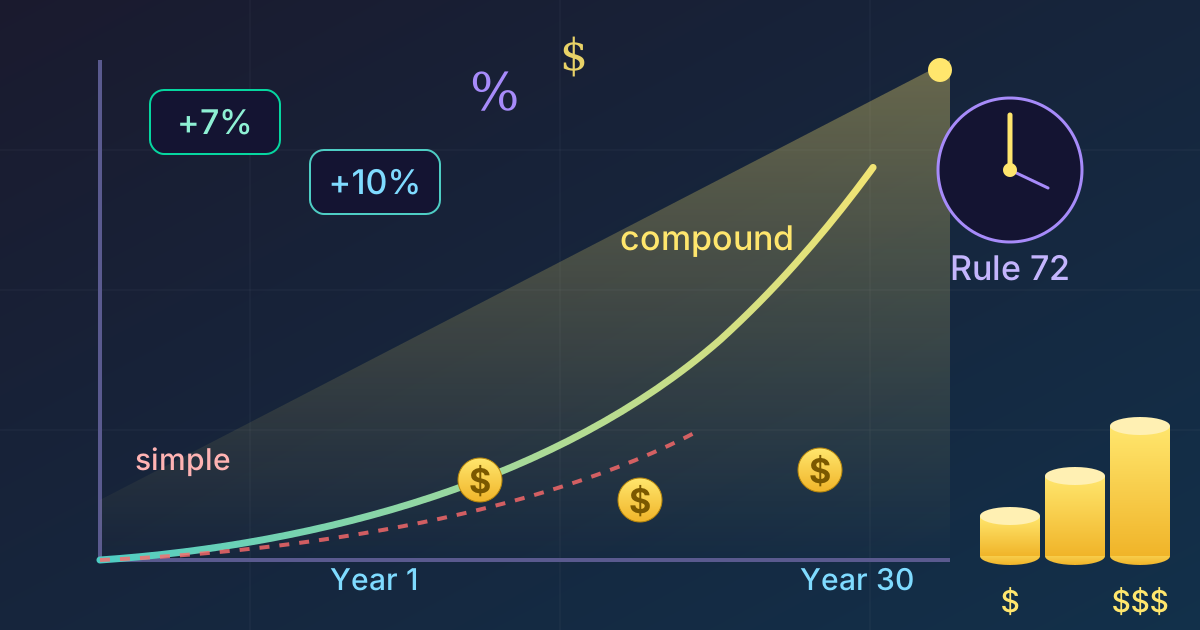
- Opportunity Cost: A good ROI is one that is better than your next best alternative. If you could earn a guaranteed 7% in an index fund, any investment with a projected ROI of less than 7% might not be worth the additional effort or risk.
A general rule of thumb often cited is that an annual ROI of 7-10% is considered good, as it outpaces average inflation and matches the historical average return of the stock market. However, this is just a baseline.
The Limitations of ROI: What It Doesn't Tell You
While ROI is an invaluable metric, it's not perfect. Being aware of its limitations is key to using it effectively.
- It Ignores the Time Factor: The basic ROI formula does not account for how long it takes to generate the return. A 50% ROI achieved in six months is far superior to a 50% ROI that takes five years to realize. To address this, you can use the Annualized ROI formula.
- It Doesn't Account for Risk: ROI simply shows the return, not the level of risk undertaken to achieve it. Two projects might have the same 25% ROI, but if one was a safe bet and the other was highly speculative, they are not truly comparable on this metric alone.
- It Can Be Manipulated: The calculation is only as accurate as the inputs. If costs are underestimated or returns are overestimated, the resulting ROI figure will be misleading.
- It Overlooks Non-Financial Benefits: Some investments yield benefits that are difficult to quantify financially, such as improved brand reputation, increased employee morale, or enhanced customer satisfaction. ROI cannot capture this value.
ROI in Action: Applications Across Different Fields
ROI is a versatile metric that can be applied to virtually any scenario where an investment is made. Here are a few examples.
ROI in Marketing
Marketing departments live and die by ROI. It's used to justify budgets and determine which channels (e.g., email marketing, SEO, paid ads, content marketing) provide the best returns. A positive marketing ROI proves that the campaigns are generating more revenue than they cost.
ROI in Real Estate Investing
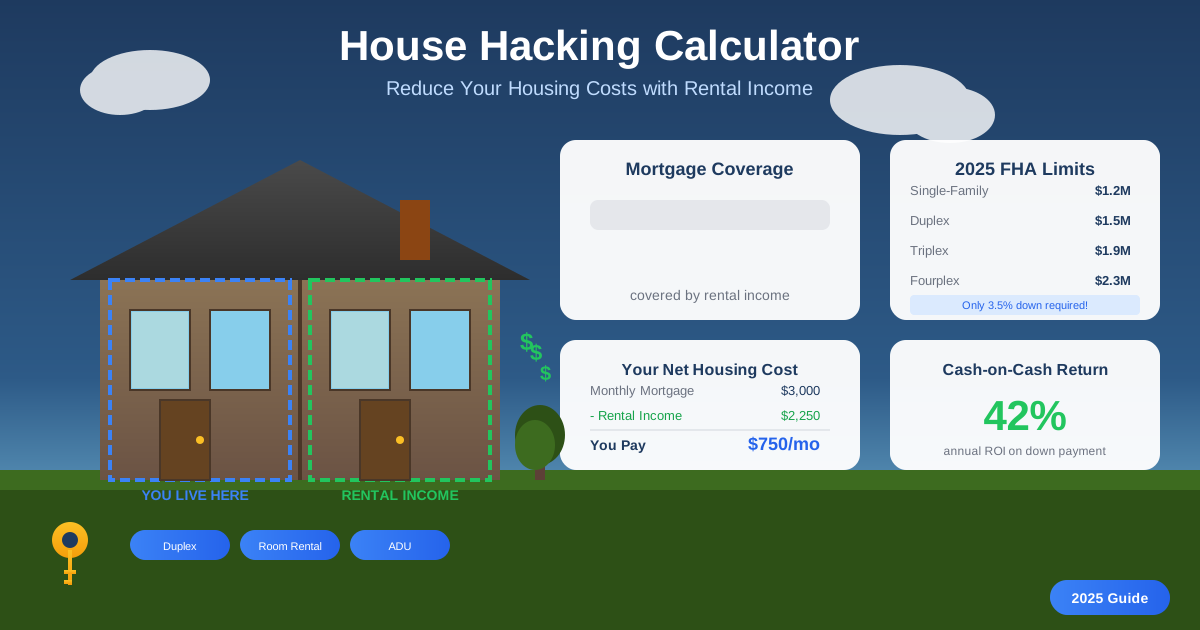
For property investors, ROI is a cornerstone of deal analysis. It helps them evaluate the profitability of a rental property or a fix-and-flip project. The 'Cost of Investment' here includes the purchase price, closing costs, and renovation expenses. The return includes rental income and/or the final sale price. For those exploring creative real estate strategies, understanding potential returns is key. For instance, using a House Hacking Calculator can help you project the ROI of living in one unit of a multi-family property while renting out the others.
ROI for SaaS Businesses
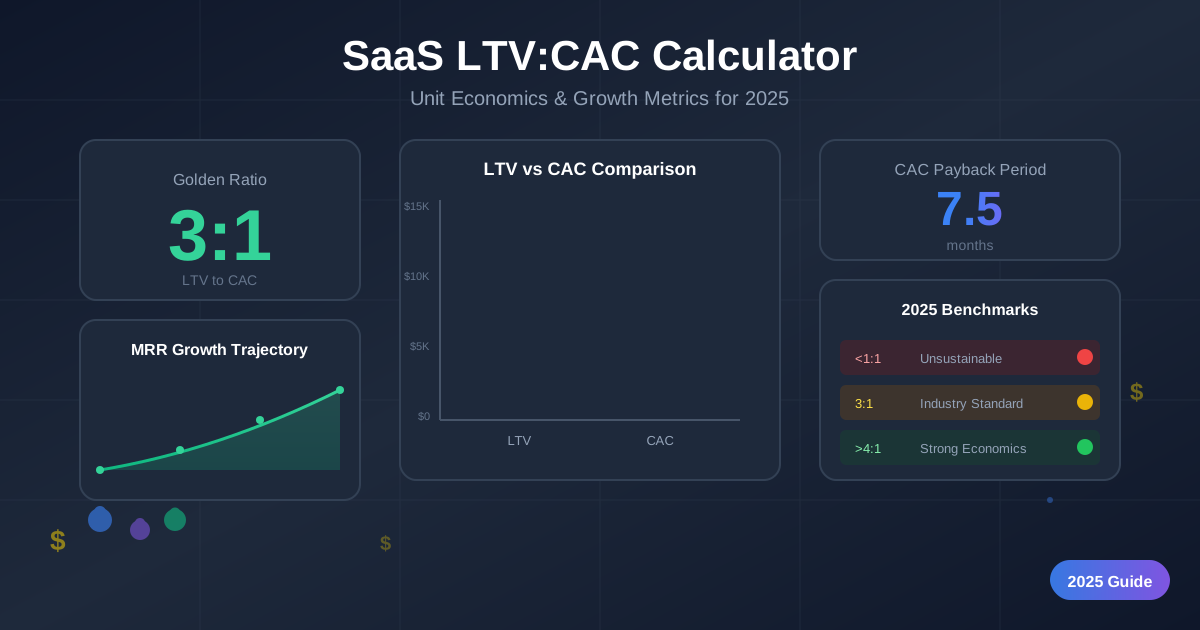
Software-as-a-Service (SaaS) companies often focus on customer-centric metrics. A key calculation is comparing the Lifetime Value (LTV) of a customer to the Customer Acquisition Cost (CAC). The LTV/CAC ratio is essentially a form of ROI that measures the return on the investment made to acquire a new customer. A higher ratio indicates a more profitable business model. Tools like our SaaS LTV/CAC Calculator are specifically designed to help businesses measure this critical form of ROI.
ROI in Personal Finance
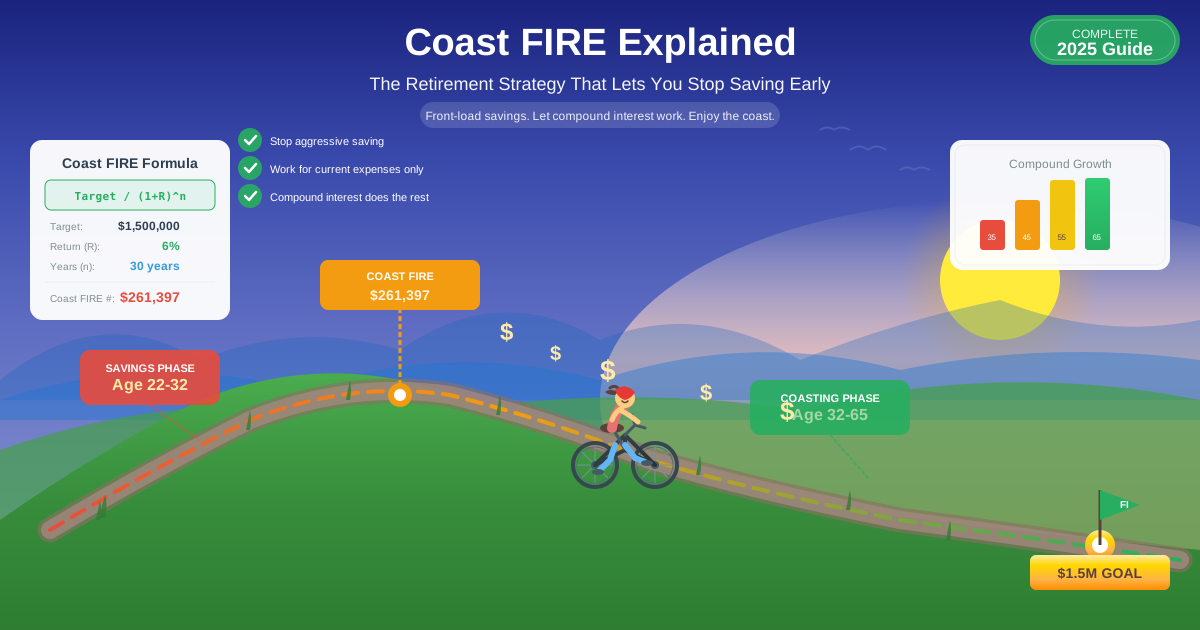
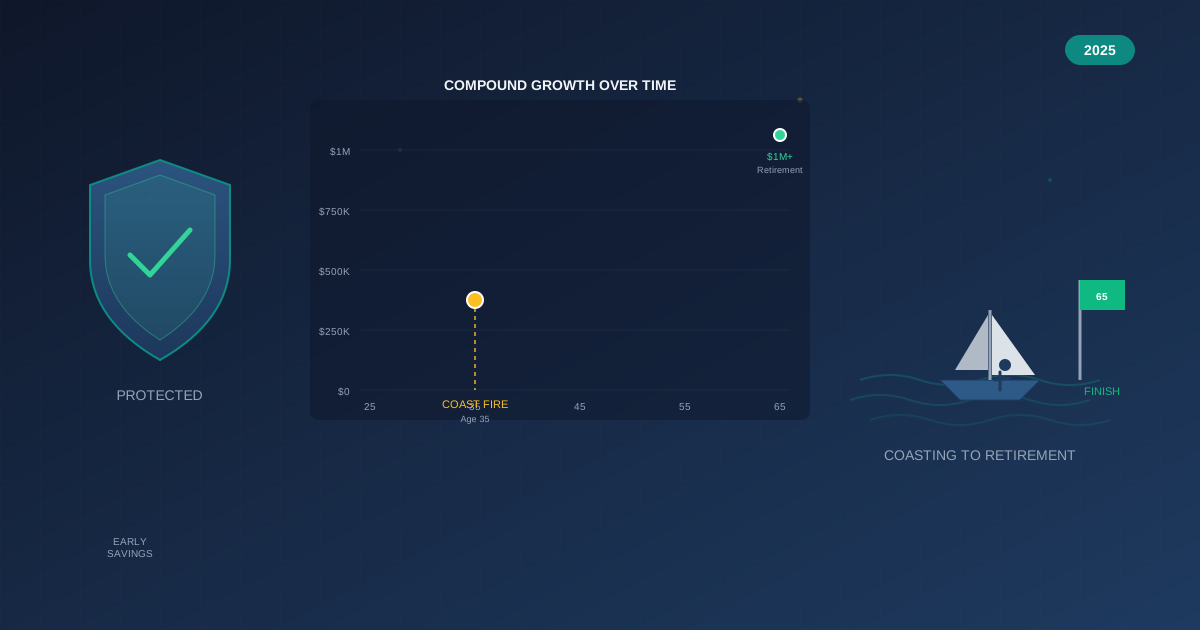
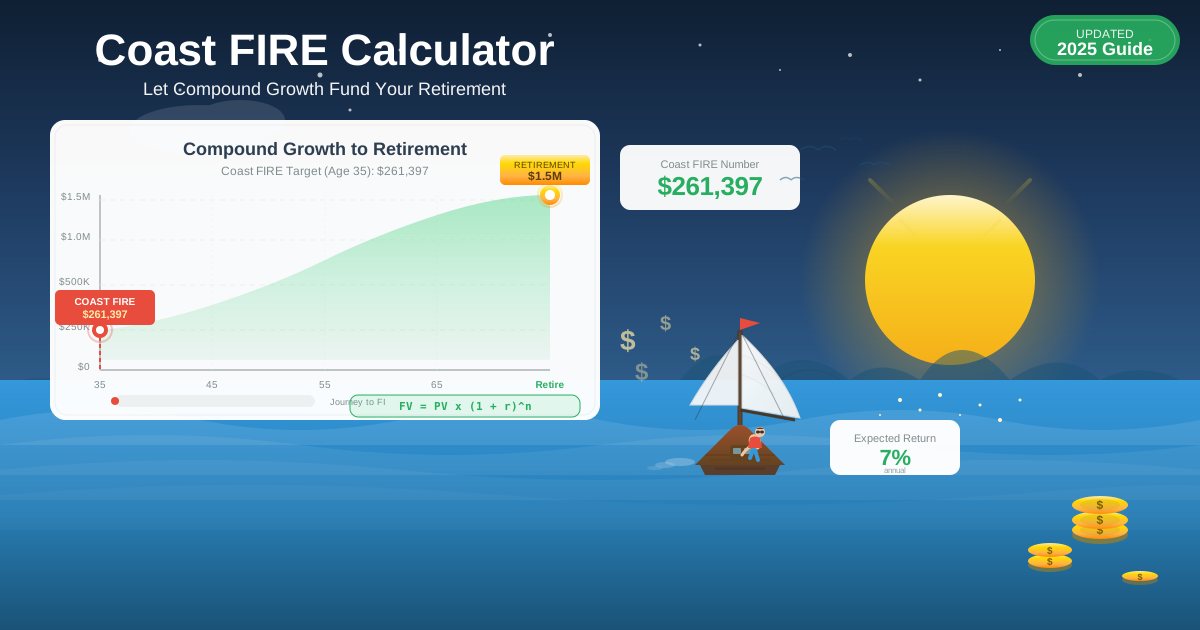
Individuals use ROI to evaluate personal investments, such as stocks, bonds, or mutual funds. It's also used for bigger life decisions. Is a master's degree worth the cost? You can calculate the ROI by comparing the cost of tuition and lost wages against the projected increase in lifetime earnings. This long-term view of investment is fundamental to financial independence strategies. Calculating your investment returns is a core part of planning for the future, whether you're aiming for traditional retirement or using a strategy modeled by a Coast FIRE Calculator to determine when you've invested enough to let compounding do the rest of the work.
Advanced ROI Concepts: Beyond the Basics
For a more nuanced analysis, you can use more advanced versions of the ROI formula.
Annualized ROI
Annualized ROI provides a more accurate comparison between investments held for different periods. It calculates the equivalent annual return of an investment.
Formula: Annualized ROI = [(1 + ROI) ^ (1 / n) - 1] x 100%
Where 'n' is the number of years the investment is held. This formula standardizes returns to a yearly timeframe, making it much easier to compare a 6-month investment with a 3-year one.
Social Return on Investment (SROI)
SROI is a framework for measuring and accounting for a much broader concept of value. It seeks to quantify social, environmental, and economic outcomes. It's primarily used by non-profits, charities, and socially conscious enterprises to assess the impact of their work beyond pure financial return.
Conclusion: Making Smarter Decisions with ROI
Return on Investment is more than just a formula; it's a mindset. It trains you to think critically about every expenditure of time, money, and effort. By consistently asking, "What is the potential return?", you shift from making decisions based on intuition to making them based on evidence.
Mastering ROI calculation empowers you to identify and prioritize the most profitable opportunities, justify your decisions with hard data, and ultimately drive greater success in your business and personal financial life.
Ready to put your knowledge into practice? Explore the suite of free financial tools at Practical Web Tools. From specialized calculators for real estate and SaaS to tools for long-term financial planning, we have everything you need to start making smarter, data-driven decisions today.