The 401(k) Calculator: Your Roadmap to a Secure Retirement

Your Financial Future in Focus: Why the 401(k) Calculator is Your Most Important Tool
Retirement can feel like a distant, abstract concept. It's a destination on a map without clear roads, often pushed aside for more immediate financial concerns. But what if you could pull that future into sharp focus? What if you had a tool that could act as your personal financial GPS, showing you not just where you are, but where you're heading and the different routes you can take to get there? That's the power of a 401(k) calculator.
Many people contribute to their 401(k) on autopilot, setting a contribution rate once and rarely thinking about it again. While any saving is good, this passive approach leaves an incredible amount of potential on the table. A 401(k) calculator transforms you from a passenger to the driver of your retirement journey. It demystifies the complex interplay of contributions, company matches, market growth, and time, translating it all into a tangible vision of your future wealth.
This comprehensive guide will walk you through everything you need to know about using a 401(k) calculator. We'll break down each input, show you how to interpret the results, and provide actionable strategies to maximize your growth. More than just a numbers game, this is about empowering you to make informed decisions that will profoundly impact your quality of life for decades to come.
First, What Exactly is a 401(k)?
Before diving into the calculator, let's quickly recap the fundamentals. A 401(k) is an employer-sponsored retirement savings plan that offers significant tax advantages. It's named after a section of the U.S. Internal Revenue Code.
Here are its key features:
- Employee Contributions: You contribute a portion of your paycheck directly to the account.
- Tax Advantages: With a Traditional 401(k), your contributions are pre-tax, lowering your current taxable income. You pay taxes when you withdraw the money in retirement. With a Roth 401(k), you contribute after-tax dollars, but your qualified withdrawals in retirement are tax-free.
- Employer Match: This is a crucial benefit. Many employers will match your contributions up to a certain percentage of your salary. It's essentially free money and a guaranteed return on your investment.
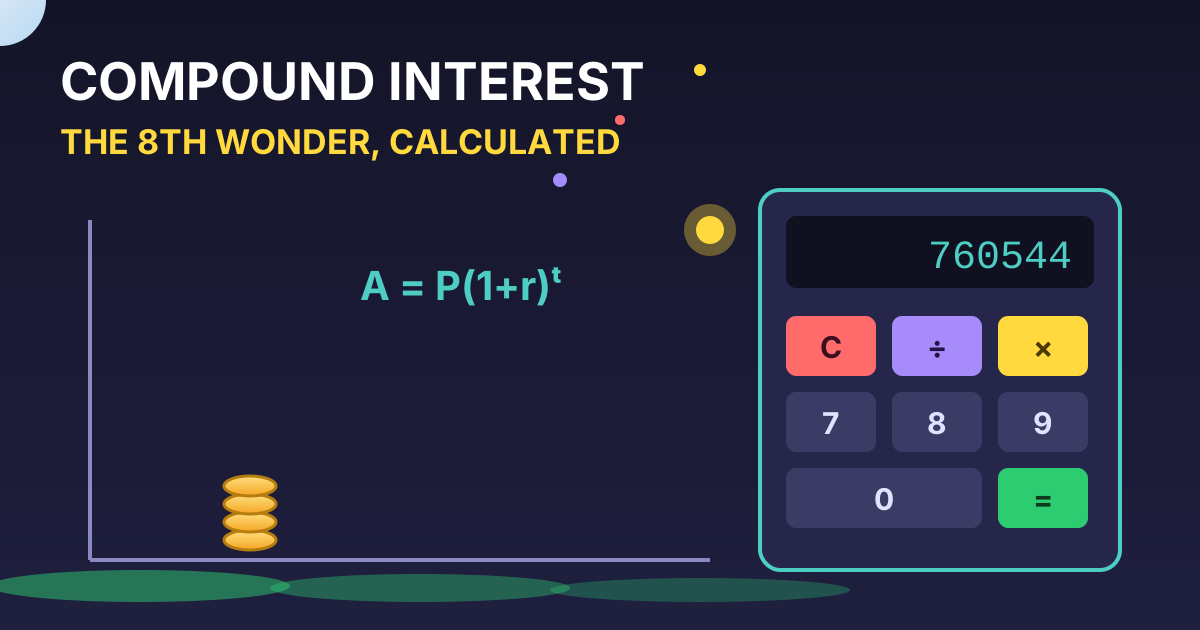
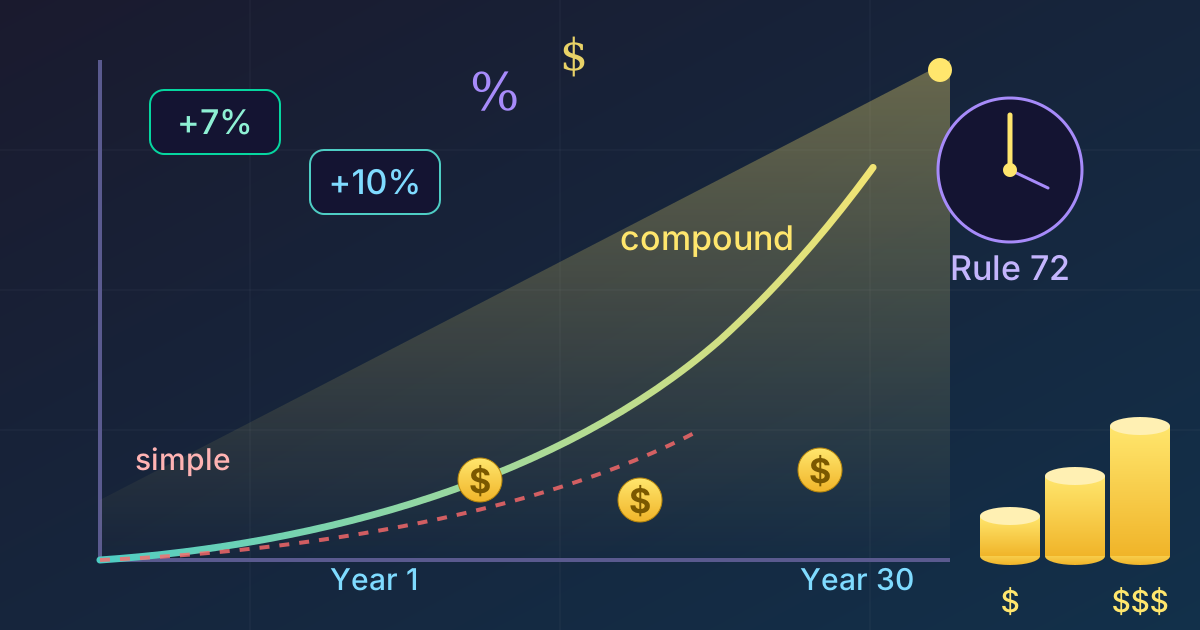
- Investment Growth: The money in your 401(k) is invested in funds you choose (like mutual funds or target-date funds), allowing it to grow over time through the power of compound interest.
Understanding these basics is the foundation for using a calculator effectively.
Decoding the 401(k) Calculator: Key Inputs Explained
A 401(k) calculator is only as good as the data you provide. Accurate inputs lead to a realistic projection of your future. Let's break down the essential fields you'll need to fill in.
Current Age & Retirement Age
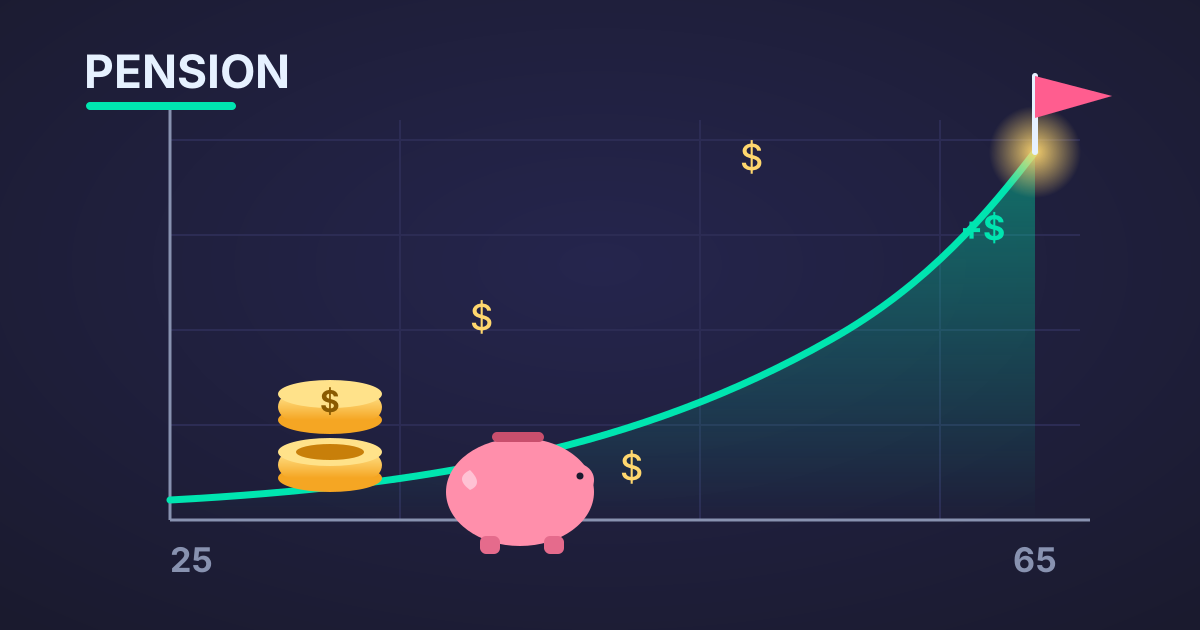
This one is straightforward. Your current age and the age you plan to retire set the timeline for your investment growth. The longer your time horizon, the more significant the impact of compound interest will be.
Current Annual Salary
Your gross annual salary before taxes. This figure is used to calculate your contribution amount and the potential employer match, as both are typically based on a percentage of your pay.
Annual Salary Increase (%)
Be realistic here. While you might hope for large raises, a conservative estimate of 2-4% is a common and sensible projection for long-term planning. This accounts for cost-of-living adjustments and modest promotions over your career.
Current 401(k) Balance
Log into your 401(k) provider's website to get the exact current value of your account. This is your starting point, the seed from which your future retirement fund will grow.
Contribution Rate (%)
This is the percentage of your pre-tax salary you contribute to your 401(k) with each paycheck. This is one of the most powerful variables you can control. Even a 1% increase can make a massive difference over 20 or 30 years.
Employer Match
This is a critical input. Find your company's matching formula in your benefits handbook or HR portal. Common formulas include:
- 100% match up to 4%: Your employer contributes a dollar for every dollar you save, up to 4% of your salary.
- 50% match up to 6%: Your employer contributes 50 cents for every dollar you save, up to 6% of your salary. In this case, to get the full match (3% of your salary), you need to contribute 6%.
Always contribute at least enough to get the full employer match. Anything less is leaving free money on the table.
Annual Rate of Return (%)
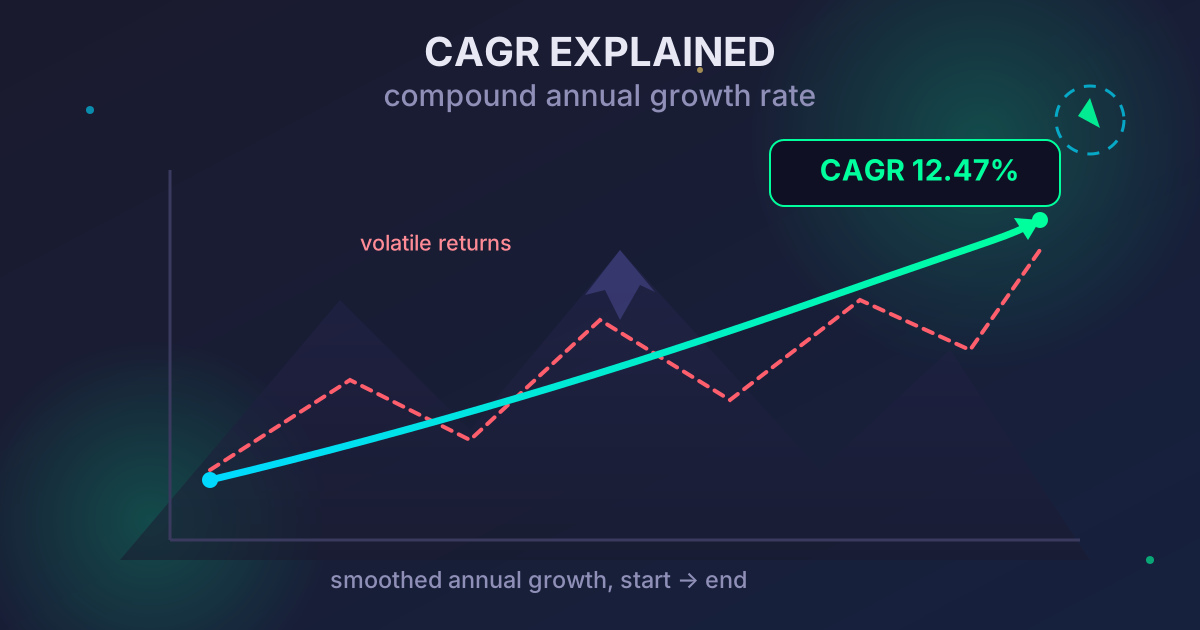
This is an educated guess about the average annual return your investments will generate. Historical stock market returns have averaged around 7-10% annually, but past performance is not a guarantee of future results. A conservative estimate of 5-7% is often used for long-term planning to account for market volatility.
How to Use a 401(k) Calculator: A Step-by-Step Guide
Now that you understand the inputs, let's put them into action.
- Step 1: Gather Your Information: Before you open a calculator, collect all the necessary data: your latest pay stub, your 401(k) statement, and your company's matching policy.
- Step 2: Input Your Baseline Scenario: Enter your current information as accurately as possible. This will give you a projection based on your current path. Don't be discouraged if the number seems low—this is just a starting point.
- Step 3: Analyze the Results: The calculator will typically show you a graph and a final projected balance at retirement. Pay attention to how much of that balance comes from your contributions, the employer match, and investment growth. The growth portion is often the largest, illustrating the power of compounding.
- Step 4: Play with the Variables: This is where the magic happens. Ask "what if?" and adjust the inputs to see the impact.
- What if I increase my contribution by 2%?
- What if I work three years longer?
- What if my annual return is 1% lower than I expected?
- What if I get a promotion and can increase my savings rate to 15%?
By running these different scenarios, you can build a tangible plan. You might find that increasing your contribution by just $50 per paycheck could result in tens or even hundreds of thousands of extra dollars in retirement.
Maximizing Your 401(k): Strategies to Supercharge Your Growth
The calculator is a diagnostic tool; now it's time for the treatment plan. Here are proven strategies to boost your retirement savings.
1. Capture the Full Employer Match
We've said it before, but it bears repeating: this is the single most important step. Contributing enough to secure the full employer match provides an immediate, guaranteed 50% or 100% return on your investment. There is no other investment that can promise that.
2. Embrace Auto-Escalation
Many 401(k) plans offer an "auto-escalation" feature. This automatically increases your contribution rate by 1% each year. This small, incremental change is often barely noticeable in your take-home pay, but it leverages your growing salary to significantly boost your savings over time without you having to think about it.
3. Review Your Investment Choices
Don't just set it and forget it. Your 401(k) offers a menu of investment options. For beginners, a Target-Date Fund is often a great choice. It automatically adjusts its asset allocation to become more conservative as you approach your target retirement date. For those more comfortable with investing, building a diversified portfolio of low-cost index funds is another excellent strategy.
Managing Your Retirement Data: The Importance of Digital Archiving
As you chart your course to retirement, you'll accumulate a significant amount of important digital paperwork. This includes your annual 401(k) statements, prospectuses for your chosen funds, and saved reports from the 401(k) calculator you use to track your progress.
Keeping these documents organized is crucial for long-term planning and record-keeping. A great habit is to create a digital folder for each year, saving all relevant PDFs and financial statements. Over decades, however, these files can add up and consume a lot of storage space.
A simple and effective solution is to Compress Files into a single, manageable archive for each year. Creating a ZIP or 7Z file for "Retirement_2024" not only saves valuable disk space but also keeps your crucial documents neatly bundled and protected.
Furthermore, when you consult with a financial planner, you'll likely need to share these records. If your advisor uses a different operating system or prefers a specific archive format, our suite of free tools can help. You can easily convert your archives from ZIP to 7Z or other formats to ensure seamless and professional communication. Managing your financial data efficiently is a key, often overlooked, part of a sound retirement strategy.
Common 401(k) Pitfalls to Avoid
Being aware of common mistakes can be just as valuable as knowing what to do.
- Delaying a Start: The biggest advantage you have is time. Starting in your 20s vs. your 30s can mean hundreds of thousands of dollars in difference due to lost compounding.
- Cashing Out When Changing Jobs: When you leave an employer, it can be tempting to cash out your 401(k). This is a costly mistake. You'll pay income taxes plus a 10% penalty, and you'll forfeit all future growth on that money. Always roll it over into your new employer's 401(k) or an Individual Retirement Account (IRA).
- Ignoring Fees: All investment funds charge fees (expense ratios). Even a small difference of 0.5% in fees can erode tens of thousands of dollars from your portfolio over time. Opt for low-cost index funds whenever possible.
- Panicking During Market Downturns: The market goes up and down. It's natural to feel nervous during a downturn, but the worst thing you can do is sell your investments low. Stay the course, trust your long-term plan, and continue contributing. You are essentially buying shares at a discount.
Conclusion: Take Control of Your Financial Future Today
The 401(k) calculator is more than just a tool for crunching numbers; it's a window into your future. It empowers you to move from passive hope to active, confident planning. By understanding its inputs, experimenting with different scenarios, and implementing smart saving strategies, you can build a clear and achievable roadmap to a comfortable and secure retirement.
The journey of a thousand miles begins with a single step. Take that step today. Gather your financial information, use a 401(k) calculator to see where you stand, and make one small adjustment to improve your trajectory. Your future self will thank you for it.
Ready to get all your digital files in order? Explore the full suite of free, privacy-focused utilities at Practical Web Tools to manage your documents with ease.