Your Money Roadmap: Financial Planning from Your 20s to 60s

Your Financial Journey: A Decade-by-Decade Guide to Building Wealth
Does thinking about your financial future fill you with a mix of ambition and anxiety? You're not alone. The path to financial security can seem long and complicated, like a map with no clear directions. The good news is that with a bit of planning, you can create a clear, actionable roadmap tailored to every stage of your life. Financial planning isn't a one-time task; it's a dynamic process that evolves as you do.
What works for a 22-year-old just starting their career won't be the right strategy for a 55-year-old planning for retirement. Each decade brings new opportunities, challenges, and priorities. Understanding these shifts is the key to making smart money moves that build on each other, leading to long-term wealth and peace of mind.
This comprehensive guide will serve as your financial GPS, breaking down the key priorities, goals, and strategies for your 20s, 30s, 40s, 50s, and 60s. Let's start building your roadmap to financial freedom.
In Your 20s: Laying the Foundation
Your 20s are the most critical decade for your financial future. Not because you'll be earning the most, but because you have the most powerful asset on your side: time. The habits you build now will have a compounding effect that can lead to incredible wealth down the road.
Primary Focus: Building strong financial habits, managing debt, and starting to invest.
Key Action Steps for Your 20s:
- Create a Realistic Budget: This is non-negotiable. A budget isn't about restriction; it's about control. A popular method is the 50/30/20 rule: 50% of your after-tax income goes to needs (rent, utilities, groceries), 30% to wants (dining out, hobbies, travel), and 20% to savings and debt repayment.
- Build an Emergency Fund: Life is unpredictable. An emergency fund is your safety net against job loss, medical bills, or unexpected repairs. Aim to save 3 to 6 months' worth of essential living expenses in a high-yield savings account where it's accessible but not too easy to spend.
- Tackle High-Interest Debt: Debt from credit cards or personal loans can be a major drag on your financial growth. Make a plan to pay down any debt with an interest rate above 7-8% as aggressively as possible. Student loan debt is often lower interest, so focus on making consistent payments there while prioritizing higher-interest debt.
- Start Investing for Retirement (Seriously!): If your employer offers a 401(k) or similar retirement plan with a match, contribute at least enough to get the full match. It's literally free money. Beyond that, consider opening a Roth IRA, which allows your investments to grow tax-free.
- Establish and Protect Your Credit: Your credit score impacts everything from loan interest rates to insurance premiums. Pay your bills on time, keep your credit card balances low, and check your credit report annually for errors.
- Organize Your Digital Financial Life: You're already accumulating important digital documents: pay stubs, loan agreements, bank statements, and tax forms. Start a good habit now by organizing them into folders by year. To save space and keep related documents together, you can use a free tool to Compress Files into a single, password-protected archive for each year. This makes record-keeping clean and secure from day one.
In Your 30s: The Acceleration Phase
Your 30s are often a period of significant growth, both personally and professionally. Your income is likely increasing, and you may be hitting major life milestones like getting married, buying a home, or starting a family. This is the time to build on the foundation you laid in your 20s.
Primary Focus: Increasing savings rate, planning for major life goals, and protecting your growing assets.
Key Action Steps for Your 30s:
- Increase Your Retirement Contributions: As your income grows, so should your savings rate. The goal is to be saving at least 15% of your pre-tax income for retirement. Every time you get a raise or a bonus, dedicate a portion of it to increasing your 401(k) or IRA contributions before you get used to the extra cash.
- Plan for Major Life Events: Buying a house requires a significant down payment, closing costs, and a new homeowner's emergency fund. Having children brings new expenses, from childcare to future education costs. Plan for these goals by setting up dedicated savings accounts.
- Get Serious About Insurance: Your financial responsibilities are growing, so your safety net needs to as well. This is the decade to get adequate life insurance (especially if you have dependents) and disability insurance to protect your income in case of illness or injury.
- Avoid Lifestyle Creep: It's tempting to upgrade your lifestyle with every pay raise. While you should enjoy the fruits of your labor, be conscious of "lifestyle creep"—the tendency for your spending to rise with your income. This can prevent you from reaching your long-term goals. Keep your fixed costs manageable and prioritize saving and investing.
- Start Saving for College (If Applicable): If you have children, consider opening a 529 plan. These tax-advantaged investment accounts are a powerful way to save for future education expenses.
In Your 40s: The Peak Earning Years
For many, the 40s represent peak earning years. Your career is established, and your income is likely at its highest. The goal now is to leverage this position to supercharge your savings and solidify your long-term financial plan.
Primary Focus: Maximizing savings, paying down debt, and beginning estate planning.
Key Action Steps for Your 40s:
- Max Out Your Retirement Accounts: If possible, aim to contribute the maximum allowed by law to your 401(k) and IRA. This is the time to be as aggressive as your budget allows with retirement savings.
- Pay Down Your Mortgage: With retirement a couple of decades away, consider making extra payments toward your mortgage principal. Entering retirement mortgage-free can significantly reduce your living expenses.
- Rebalance Your Portfolio: Your investment risk tolerance may be changing. Check in on your investment allocation to ensure it still aligns with your goals and timeline. You may want to gradually shift to a slightly more conservative mix as you get closer to retirement.
- Create an Estate Plan: It's time to think about protecting your family and your assets. Work with an attorney to create essential documents like a will, a living will (healthcare directive), and durable powers of attorney for finances and healthcare. This ensures your wishes are carried out and makes things easier for your loved ones.
- Consolidate and Archive Financial Records: By now, you have two decades of financial records. It's a good time to digitize and organize everything. If you have old archives in different formats, you might need to standardize them. For example, using a free online RAR to ZIP converter can help you consolidate all your archives into a more common format, making them easier to manage and access.
In Your 50s: The Pre-Retirement Push
The 50s are the final stretch before the retirement finish line. Your focus shifts from accumulation to preservation and detailed planning. The decisions you make in this decade will directly shape what your retirement lifestyle looks like.
Primary Focus: Utilizing catch-up contributions, defining your retirement vision, and creating a detailed retirement budget.
Key Action Steps for Your 50s:
- Use Catch-Up Contributions: The IRS allows individuals age 50 and over to contribute extra money to their retirement accounts. Take full advantage of these catch-up provisions for your 401(k) and IRA to give your nest egg a final boost.
- Envision Your Retirement: What do you want your retirement to look like? Do you plan to travel, take up new hobbies, or work part-time? Answering these questions will help you estimate your retirement spending needs more accurately.
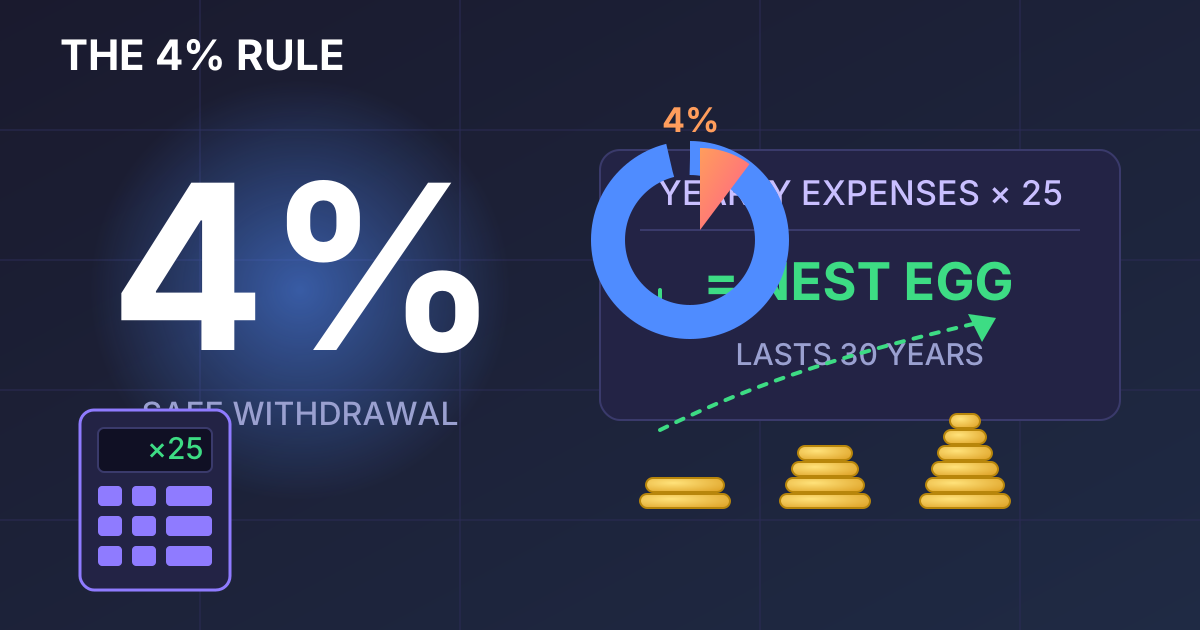
- Estimate Your Retirement Income: Get a clear picture of your potential income streams. Check your estimated Social Security benefits, review any pension plans, and calculate how much you can sustainably withdraw from your investment portfolio (a common rule of thumb is the 4% rule).
- Plan for Healthcare Costs: Healthcare is one of the biggest expenses in retirement. Research your options, including Medicare, supplemental policies (Medigap), and long-term care insurance. If you have a Health Savings Account (HSA), continue funding it—it's triple-tax-advantaged and can be used for medical expenses in retirement.
- Review and Manage Important Documents: Your financial advisor might send you comprehensive retirement projections or estate plans in various compressed formats. If you receive a large .7z file, our handy 7Z to ZIP tool can convert it to a more universally accessible format for your personal records.
In Your 60s: Retirement and Legacy
Congratulations, you've made it! Whether you're fully retired or just beginning to transition, your 60s are about enjoying the life you've built while managing your resources wisely to ensure they last.
Primary Focus: Capital preservation, creating a sustainable withdrawal strategy, and legacy planning.
Key Action Steps for Your 60s:
- Develop a Withdrawal Strategy: This is crucial. Work with a financial advisor to determine the most tax-efficient way to draw income from your various accounts (e.g., taxable brokerage, tax-deferred 401(k)s, tax-free Roth IRAs). The sequence of withdrawals can have a big impact on how long your money lasts.
- Optimize Your Social Security: The age at which you claim Social Security significantly affects your monthly benefit. You can claim as early as 62, but your benefit will be permanently reduced. Waiting until your full retirement age (or even age 70) results in a much larger monthly payment. Analyze your health, savings, and other income sources to make the best decision for your situation.
- Manage Required Minimum Distributions (RMDs): Once you reach a certain age (currently 73), the IRS requires you to start taking withdrawals from most retirement accounts. Failing to take your RMDs results in steep penalties, so be sure to plan for them.
- Update Your Estate Plan and Beneficiaries: Life circumstances change. Review your will, trusts, and beneficiary designations on all your accounts (life insurance, IRAs, 401(k)s) to ensure they still reflect your current wishes. This is one of the most important steps in securing your legacy.
Your Financial Journey Starts Today
No matter which decade you're in, the most important step you can take is the next one. Financial planning isn't about perfection; it's about progress. Use this guide as a roadmap, but remember that it's okay to take detours. The key is to stay engaged with your finances, make conscious decisions, and adjust your plan as your life evolves.
Start by tackling one action item from your current decade. Build momentum. The peace of mind that comes from having a clear financial plan is one of the best investments you'll ever make.
While you're organizing your financial future, don't forget to manage your digital present. For simple, secure ways to handle your documents, explore the suite of free file management tools at Practical Web Tools. From compressing sensitive records to converting archive formats, we have the tools to help you stay organized.